
Livraison le jour même ou le lendemain

Qualité garantie

Débloquez vos offres de bienvenue: Livraison GRATUITE | Jusqu'à -80 % | 30 jours d'essai gratuits à JoyPlus
Téléchargez l'application
A 1 l, 8-cup Bodum French press meets a very simple need: making several coffees in a single brew, without pods or paper filters. However, the stated capacity and the French press’s appearance are not enough to help you make the right choice. The type of filter, materials and ease of cleaning will have a much greater impact on everyday use.
Before ordering a Bodum French press, here are the main pitfalls to avoid and the criteria to check.
For manufacturers, a “cup” generally means a small serving of coffee, not a 30 cl mug. A 1-litre French press can therefore serve up to 8 small cups, but considerably fewer large bowls or mugs. This capacity is very practical for a family breakfast or coffee to share after a meal. For one person, however, it may mean making more coffee than necessary.
A permanent stainless steel filter means you do not need to buy disposable filters and allows more natural oils through than a paper filter. The coffee therefore has more body and a richer texture. On the other hand, a mesh that is too wide may let particles through. Conversely, too fine a grind will slow the plunger and make brewing less enjoyable.
The claim “dishwasher-safe” should apply to all the components: carafe, plunger, lid, handle and frame. Depending on the model, hand washing may be recommended to protect plastic parts or coloured finishes. Even when described as heat-resistant, a glass carafe should be protected from thermal shock.
For entertaining or preparing several coffees in the morning, a 1-litre, 8-cup French press offers plenty of capacity. Do keep a little spare room in mind: the ground coffee and plunger take up part of the carafe. A 350 ml model will be better suited to one person or two small servings.
Also check that the French press will fit easily on your worktop and in your cupboard. The handle should allow you to pour without touching the glass, while the lid should stay firmly in place as you lower the plunger.
Borosilicate glass is commonly used for containers exposed to changes in temperature. It is not unbreakable, however: a fall, a knock against the sink or a sudden change from cold to hot can be enough to crack it.
To minimise the risks:
A Bodum French press is used with a fairly coarse grind. Pour hot water over the coffee, leave it to brew for a few minutes, then lower the plunger slowly and straight down. Pressing too quickly may cause splashes or move the French press.
The stainless steel filter is reusable and can generally be dismantled for rinsing. Clean the mesh thoroughly to prevent coffee oils from building up. This method is ideal for anyone who enjoys a French press that produces rich, aromatic coffee, provided you are happy with the possibility of a few fine particles at the bottom of the cup.
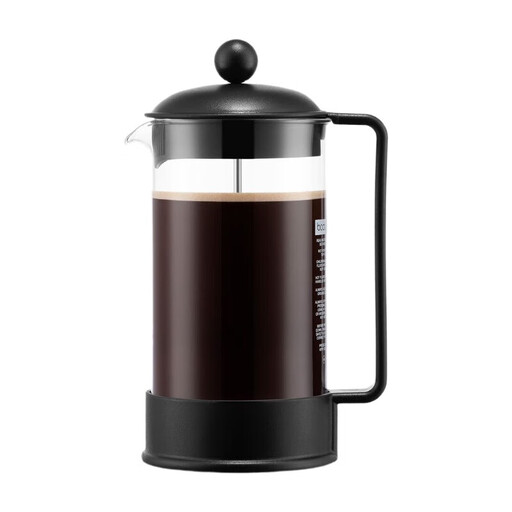
Why it suits this profile: Its one-litre capacity is just as suitable for first attempts as it is for regular family use. The BPA-free plastic frame stated by the manufacturer makes it easy to handle without adding unnecessary weight.
The permanent filter means you do not need to keep buying consumables, while the stated capacity reduces the need to brew repeatedly when several people are drinking coffee.
Borosilicate glass carafe, stainless steel plunger and components stated to be dishwasher-safe.
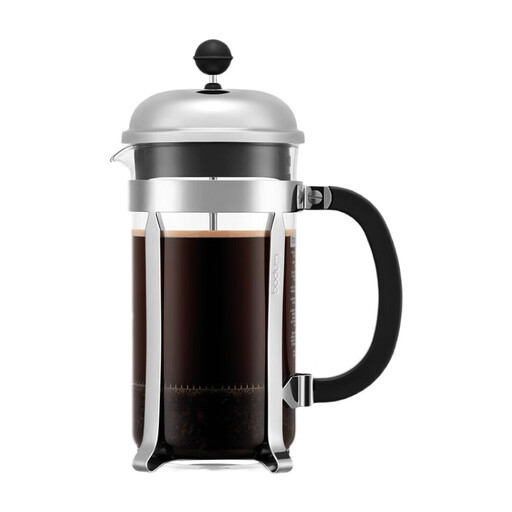
Why it suits this profile: The Chambord range combines classic styling with a stainless steel frame and transparent carafe that sits beautifully on any table.
The metal structure supports the carafe and avoids relying on an entirely plastic outer frame. Even so, it should be protected from knocks and sudden temperature changes.
1-litre capacity, fine stainless steel filter and components stated to be dishwasher-safe.
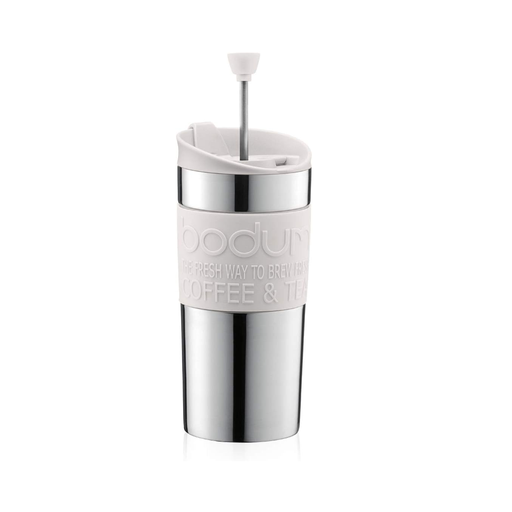
Why it suits this profile: With its 350 ml capacity, this portable format is ideal for commuting, the office and travelling. Its double-wall stainless steel construction is also more reassuring than carrying a large glass carafe in a bag.
Its compact size means you do not have to carry a large glass carafe. However, note that the manufacturer states that the lid is not completely leakproof. Always transport it upright.
Vacuum insulation, non-slip silicone band and integrated silicone and mesh filter.
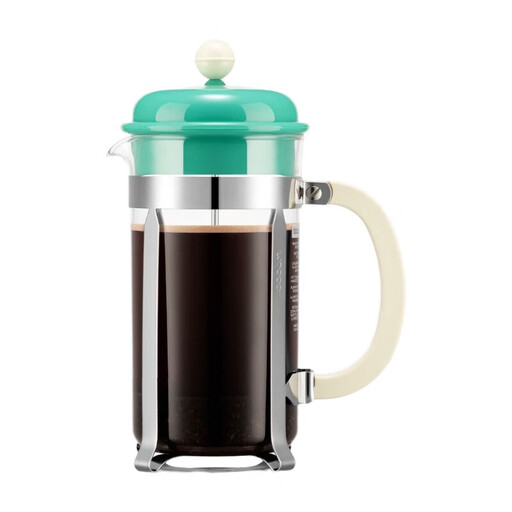
Why it suits this profile: The ocean-green handle and lid add a splash of colour to your kitchen, while the one-litre capacity allows you to serve several guests.
The product details specify a permanent stainless steel filter, so there is no need to keep buying paper filters. Even so, check the cleaning instructions before putting it in the dishwasher.
Borosilicate glass carafe, one-litre capacity and a choice of colours to match the French press to your home.
We have brought together a comprehensive, real-time selection of products that meet these demanding criteria and European safety regulations.
Use a coarse grind and hot water, without bringing it to a vigorous boil. Pour gradually, stir gently, then leave to brew according to your preferences. Lower the plunger without forcing it: if there is significant resistance, the grind is probably too fine or the filter is blocked.
After each brew, empty the coffee grounds, dismantle the plunger and rinse the mesh thoroughly. A more intensive clean will prevent oils from building up and lingering flavours from developing. If your French press is dishwasher-safe, always check the model’s product details before placing its individual parts in the dishwasher.
The commercial 1-litre capacity generally corresponds to around 8 small cups. The actual amount served depends on how much water you use, the quantity of ground coffee and the size of your mugs.
Choose a coarse grind, suited to a relatively long brewing time. A fine grind will pass more easily through the mesh, leave more sediment in the cup and make it harder to lower the plunger.
Its lifespan depends mainly on how you handle the carafe, how well you maintain the filter and the condition of the moving parts. Replace the glass as soon as a crack or chip appears. Avoid thermal shock and never force the plunger.