
Livraison le jour même ou le lendemain

Qualité garantie

Débloquez vos offres de bienvenue: Livraison GRATUITE | Jusqu'à -80 % | 30 jours d'essai gratuits à JoyPlus
Téléchargez l'application
Bodum double-wall glasses have plenty going for them: transparent, elegant and visually lightweight, they showcase everything from espresso to cocktails and desserts. However, not every model is suited to the same uses. Between small espresso glasses, 270 ml formats and larger 400 to 450 ml capacities, the wrong choice can quickly end up at the back of a cupboard.
Before ordering a set, three factors deserve your attention: the actual capacity, compatibility with your appliances and the precautions specific to glassware. This 2026 selection reviews the main formats to help you make the right choice, without being swayed by vague marketing claims.
The double wall creates a layer of air between two glass surfaces. It limits heat exchange with your hand and the surrounding air, while also reducing condensation on the outside when serving a cold drink. It does not, however, maintain a constant temperature for hours.
The result depends mainly on the starting temperature, the volume poured, the room temperature and whether a lid is used. A Bodum thermal glass therefore slows cooling or warming, but it will never replace an insulated bottle.
Specifications can vary from one collection to another, and even from one size to another. Certain borosilicate glass tumblers, including some Canteen and Bistro references, are advertised as microwave- and oven-safe within the limits specified by the manufacturer. Other Pavina Paris models advise against using these appliances.
The best approach is to check the product page for the exact reference rather than relying solely on the collection name. You should also avoid pouring a boiling-hot drink into a cold glass, and never place a hot glass on a wet or very cold surface.
Several Bodum double-wall glasses feature a small silicone valve beneath the base. It balances the pressure between the two walls. This component should never be removed or handled with a sharp object.
A damaged valve, a chip on the rim or even the slightest crack is sufficient reason to discard the glass, especially if it is intended for a hot drink.
A 400 ml glass may seem particularly versatile, but it will also take up more space in the dishwasher and cupboards. Conversely, a double-wall espresso glass is not well suited to a latte or a large tea.
Borosilicate glass is widely used for drinkware designed for hot beverages. It generally withstands temperature changes better than ordinary glass, but it is not unbreakable. The Bodum models featured here are described as being made from borosilicate glass, with several mouth-blown designs.
This manufacturing method can result in slight differences in appearance from one piece to another. Handle the glasses with care and avoid stacking them unless they are specifically designed for it.
Models advertised as dishwasher-safe should be positioned so they cannot collide with other items. Hand-washing with a soft sponge can help preserve transparency, particularly on coloured finishes or mouth-blown pieces.
Compatibility for one model does not automatically apply to the entire collection. Always check the product page for dishwasher, microwave and oven instructions for the specific product you choose.
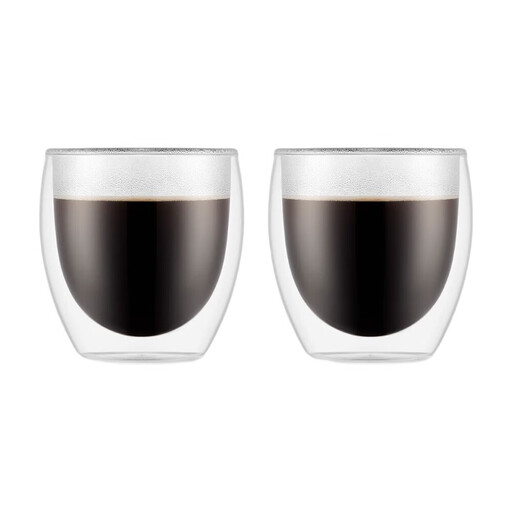
Why this model suits this profile: An easy-to-adopt duo for everyday use, equally at home with coffee and tea, cold drinks or a cocktail to share.
At 250 ml, it saves you from paying for a larger format you may never use. The product page states that it is dishwasher-safe; confirm this before ordering, depending on the specific variant.
Set of 2, borosilicate glass, double-wall construction and a versatile format for both hot and cold drinks.
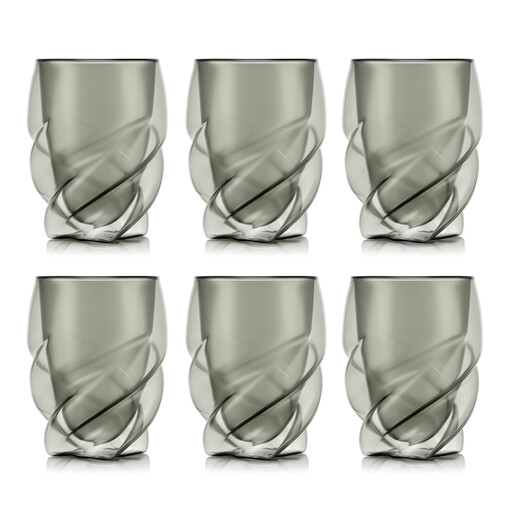
Why this model suits this profile: Its capacity works equally well for everyday meals and larger gatherings. The transparent grey tint adds a decorative touch while keeping the drink visible.
The set of six is ideal for entertaining, but make sure you have enough storage space. The product page mentions dishwasher compatibility and advises against using the microwave or oven.
Six 270 ml glasses, mouth-blown borosilicate glass and double-wall construction.
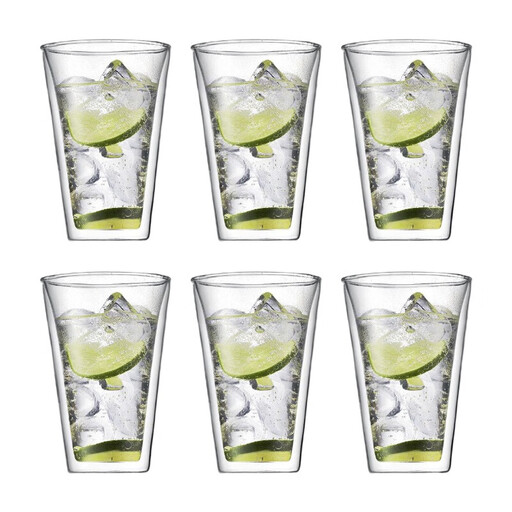
Why this model suits this profile: Its generous capacity easily accommodates long coffees, iced cocktails, soups, cereal and generously portioned desserts served in glasses.
The capacity is specified for each glass, so you will not confuse the total volume of the set with that of an individual piece. The pressure-balancing valve must not be removed.
Set of 6, 400 ml per glass, mouth-blown borosilicate glass and stated suitability for hot and cold drinks.
For a small serving, the Bodum Canteen 100 ml or Bodum Bistro 150 ml will be better suited than a large glass. The Bistro, sold as a set of 2, is advertised as dishwasher- and microwave-safe; nevertheless, check the usage limitations that apply to your specific item.
For a latte, iced coffee or smoothie, the 350 to 450 ml formats provide more room for milk, foam and ice. Larger Bodum Bistro glasses with a handle may also be more comfortable to hold. They remain fragile, however, and should be handled with the same care as any other glass tableware.
Explore an updated selection of glasses suited to different uses, capacities and storage needs at home.
Borosilicate glass is designed to withstand temperature changes better than conventional glass. It can still break, however. Avoid thermal shock and consult the instructions for the model you have chosen before pouring in a very hot liquid.
Several models are advertised as dishwasher-safe, including certain Pavina, Canteen and Bistro references. Position them so they do not touch plates or cutlery. To preserve their transparency, hand-washing with a soft sponge remains the safest option.
There is no standard lifespan: it depends on impacts, washing cycles, storage and temperature changes. Inspect the rim, base and walls regularly. Any glass with a crack, chip or damaged valve should be discarded, even if the defect appears minor.