
Livraison le jour même ou le lendemain

Qualité garantie

Débloquez vos offres de bienvenue: Livraison GRATUITE | Jusqu'à -80 % | 30 jours d'essai gratuits à JoyPlus
Téléchargez l'application
Running along a road, cycling in the city, swimming several times a week or quietly listening to music at the office don't call for the same type of earphones. Yet product listings often mix up battery life, water resistance, noise cancellation and comfort, without always clarifying the limits of each feature.
Before buying Bluetooth wireless earphones, three common pitfalls keep cropping up:
In-ear earphones sit inside the ear canal and block out more external noise. This design can be useful on public transport, at work, or for listening to music in a noisy environment, especially with earphones with noise cancellation.
For running and cycling, open-ear models keep your ears uncovered. Bone conduction earphones transmit vibrations through the area in front of the ear, without blocking the ear canal. They make it easier to hear conversations, announcements or traffic, but a volume that's too high can still mask some important sounds.
The fit is also worth checking: a headband behind the head, an ear hook or in-ear tips aren't suited to the same activities or the same ear shapes. A gradual trial and a moderate volume are essential, especially during prolonged activity.
The IP marking usually consists of two digits or letters. The first refers to protection against solid particles and the second to water resistance. In practice:
Waterproof Bluetooth earphones intended for swimming should therefore be examined with caution. Bluetooth struggles to pass through water: for swimming earphones, built-in MP3 storage can prove more useful than simply connecting to your phone. After a session, rinse and then dry the device thoroughly. Never charge a port or magnetic contacts while they are still damp.
Compare the battery life of the earphones on their own with that provided by the charging case. A model advertised as offering 30 hours may only deliver a few hours of listening per charge.
For long workouts, wireless earphones with MP3 storage mean you don't need to carry a smartphone. The Verbex X7S and Mojawa RunPlus both claim 32 GB of internal storage, while the Verbex X7S states a battery life of around 8 to 10 hours depending on the version.
For calls, also check for a microphone and the feature actually being used. Microphone noise reduction, often called ENC, is mainly designed to make your voice clearer. It doesn't necessarily replace active noise cancellation intended for music listening.
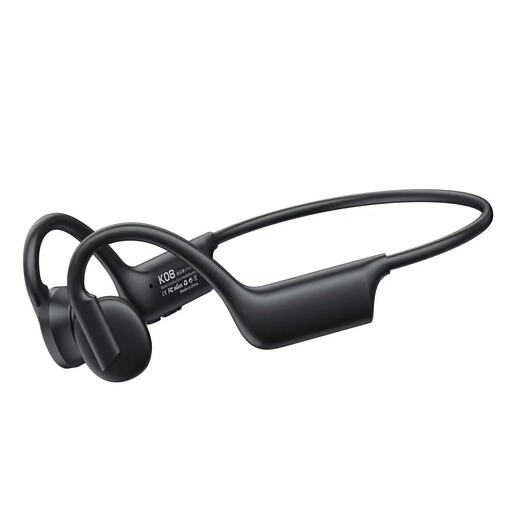
Why this choice suits this profile: Its open design and stated weight of around 25 g make it an interesting model for a first experience, whether on foot, by bike or in the gym.
The stated IPX5 rating does not allow it to be presented as a model suitable for immersion. It is better suited to sweat and splashes.
Bluetooth, built-in microphone, stated battery life of around 7 to 10 hours and open design for outdoor activities.
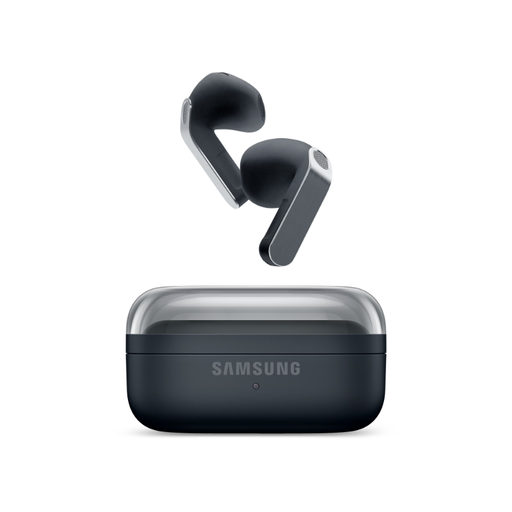
Why this choice suits this profile: This in-ear model is aimed at users who prioritise audio quality, calls and integration with the Samsung ecosystem.
Its listing distinguishes the earphones' battery life — up to 6 hours without ANC and 5 hours with ANC — from that provided by the case.
Adaptive ANC, calls with microphone processing, 360° audio and wireless charging for the case. The case should not be immersed.

Why this choice suits this profile: Its 32 GB of storage and stated IPX8 protection target athletes who want to train without a phone, including around a pool.
Standalone MP3 playback avoids relying on Bluetooth underwater. However, you must follow the instructions and dry the contacts before charging.
Open-ear bone conduction design, built-in microphone, Bluetooth controls and 32 GB of internal storage.
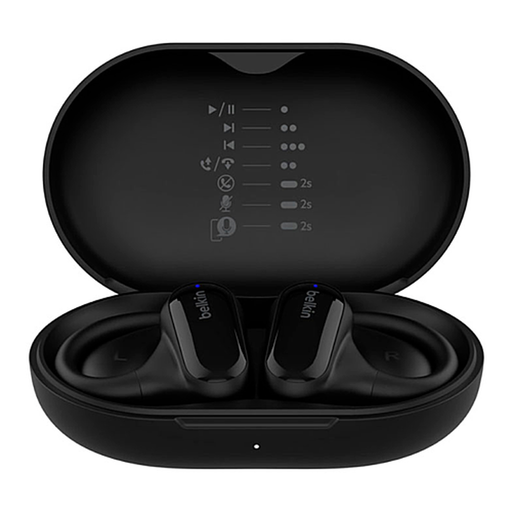
Why this choice suits this profile: Its open-ear design, multipoint connection and microphone with ENC make switching between computer and smartphone easy.
The IPX5 rating makes it suitable for splashes and sweat, not for swimming.
Up to 8 hours of listening stated, 26 hours with the case, Bluetooth 5.3 and simultaneous connection to two devices.
We've put together a comprehensive, real-time updated selection of products that meet these demanding criteria, while complying with European safety regulations.
The Bluetooth connection is severely limited underwater. For swimming, choose a model whose instructions explicitly mention this use and prioritise built-in MP3 storage. A high IP rating alone is not enough to confirm compatibility with pool lengths.
The lifespan depends on the battery, the number of charge cycles, heat, humidity and frequency of use. To keep them longer, avoid extreme temperatures, only charge them when they are dry and store them in their case. Replace them if the battery swells, heats up abnormally or shows signs of damage.
Open-ear earphones are suitable for those who want to maintain some awareness of their surroundings. Models with ANC offer more isolation and may be preferable on public transport or for focused listening. On a bike, on the road, no device replaces the visual and auditory attention essential for safety.