
Livraison le jour même ou le lendemain

Qualité garantie

Débloquez vos offres de bienvenue: Livraison GRATUITE | Jusqu'à -80 % | 30 jours d'essai gratuits à JoyPlus
Téléchargez l'application
Bluetooth wireless earbuds have become a staple on public transport, for remote working, taking calls and enjoying leisure time. But behind a sometimes-flattering spec sheet lie real differences between a budget pair and earbuds built for heavy daily use.
Before you place your order, keep an eye out for three common pitfalls:
For everyday use, look at each of these separately:
A model claiming 30 hours of total battery life won't necessarily last 30 hours straight. The Edifier X1 Lite, for example, offers up to 26 hours with the case, while the Edifier X5 Pro goes up to 31 hours with the case. In both cases, these are values measured under specific conditions, not a promise of continuous playback.
Frequent travellers might also want to look at the Huawei FreeClip, whose spec sheet claims up to 36 hours of listening with the case. For an over-ear headset, the JBL Tune JBLT530BTLAVEU Lavender offers up to 76 hours. Bear in mind, though: this product is not an in-ear earbud.
True Wireless Bluetooth earbuds work without any cable between the two earpieces. Their compact design is ideal on public transport and they're easy to stow away, but how well they stay in place varies greatly from one ear shape to another.
In-ear earbuds fitted with silicone tips generally provide more effective passive isolation. Check that they come with multiple tip sizes and test how well they stay in while walking before you wear them for sport. Models with ear hooks or an open design, like the Huawei FreeClip, may suit people who don't like having a tip pushed into their ear canal.
During long listening sessions, weight also matters. The Huawei FreeBuds Pro 5 weigh around 5.5 g per earbud, compared with roughly 5.1 g for the Samsung Galaxy Buds4 Pro. These figures give you a rough idea, but the shape of the earbud is often more important than a few tenths of a gram.
Earbuds with active noise cancellation combine microphones and electronic processing to reduce certain external sounds. This feature is especially useful on trains, planes or in an open-plan office, though it does use more power. A transparency mode is also handy for hearing announcements or staying aware of your surroundings.
For calls, compare the following:
When it comes to moisture resistance, IP54 means limited protection against dust and splashes, while IP57 offers better protection under the conditions set by the standard. Neither rating turns your earbuds into swimming accessories. The Samsung Galaxy Buds4 Pro and Huawei FreeBuds Pro 5 both carry an IP57 certification for the earbuds, with restrictions on immersion and the charging case.
The models below are grouped according to their stated features and the use they seem best suited for. Always check the product page to confirm what's in the box, compatibility with your phone and the warranty terms.

Why this fits the profile: This True Wireless model focuses on simple setup, Bluetooth 5.4 and a practical in-ear design for commuting and everyday use.
The spec sheet clearly separates the 26 hours of total battery life from the 15-minute fast charge, which provides around 1.5 hours of listening. The IP54 rating should be understood as protection against sweat and splashes, not full waterproofing.
13 mm dynamic driver, claimed low latency of 60 ms and a microphone with call processing.
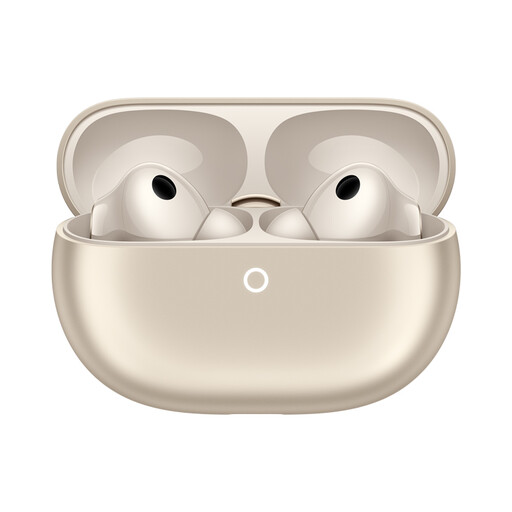
Why this fits the profile: Users looking for active noise cancellation, dual-device connectivity and advanced settings will find a comprehensive set of premium features here.
Battery life figures are broken down separately depending on whether ANC is on and which codec is used. The spec sheet also states that IP57 is not suitable for showering or swimming.
ANC, transparency mode, dual-device connectivity, USB-C charging and wireless charging up to 5 W.
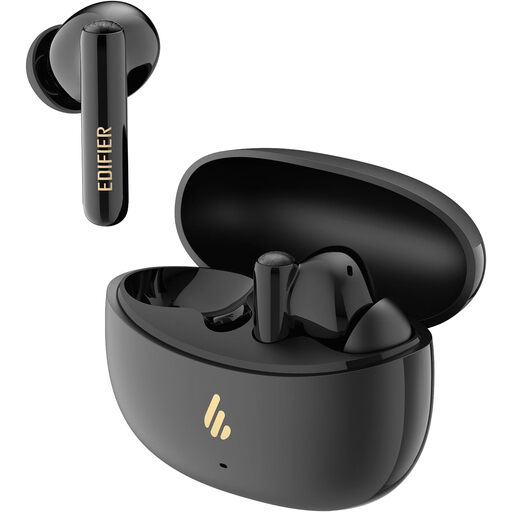
Why this fits the profile: Its gaming mode, hybrid ANC and IP55 rating make it ideal for frequent travel, mobile gaming and long listening sessions.
The spec sheet separates the earbud's battery life, up to 7 hours, from the total with the case, up to 31 hours. The IP55 rating protects against splashes and dust, but not against immersion.
Bluetooth 5.3, 10 mm dynamic driver, customisation app and claimed fast charging.

Why this fits the profile: This model is aimed at people who regularly use Galaxy devices and want to bring together music, calls, gaming and custom controls within a single ecosystem.
The spec sheet details battery life with and without ANC, as well as the limitations of IP57. It also confirms compatibility with USB-C charging and wireless charging.
Dual-driver system, ANC, six microphones, claimed 24-bit/96 kHz audio and Bluetooth 6.1 latency according to the spec sheet.
We've rounded up the products that best meet these selection criteria and European safety requirements, in a comprehensive list updated in real time.
Start by charging the earbuds and their case, then open the lid and turn on Bluetooth in your phone's settings. Next, select the model name from the list of available devices. If pairing fails, put the earbuds back in their case, turn Bluetooth off and on again, and check that they aren't already connected to another device.
It depends on the built-in battery, the number of charge cycles, exposure to heat and how well you look after them. Clean the contacts with a dry cloth, avoid excessive moisture and don't leave the case in a very hot environment. Because the batteries are built in, they're generally not designed to be replaced by the user.
The multipoint feature is especially handy if you often switch between a computer and a phone, particularly when working from home. However, do check exact compatibility with iOS, Android or Windows: automatic switching features may depend on the app and the ecosystem you're using.