
Livraison le jour même ou le lendemain

Qualité garantie

Débloquez vos offres de bienvenue: Livraison GRATUITE | Jusqu'à -80 % | 30 jours d'essai gratuits à JoyPlus
Téléchargez l'application
Bluetooth wireless earbuds are designed to make everyday life simpler. Yet, with battery life figures that include the charging case, noise cancellation measured under very specific conditions, and waterproof ratings that are often misunderstood, the spec sheets can quickly become confusing.
Before you buy true wireless earbuds for commuting, work, calls or exercise, focus on three key criteria: real-world comfort, battery life that matches your listening habits, and the right level of durability for your environment.
When a manufacturer claims 30, 40 or 50 hours of battery life, this figure usually includes the top-ups provided by the charging case. The earbuds themselves may only last a few hours before they need to go back in their case.
To compare wireless earbuds with a charging case, look at each separately:
Bluetooth earbuds with noise cancellation use microphones and electronic processing to reduce certain surrounding sounds. However, the result varies depending on the shape of your ear, how well the ear tips fit, and the type of noise being filtered.
The steady hum of a train or plane is generally easier to reduce than nearby voices or sudden sounds. The percentage a brand highlights should therefore be understood as a figure measured under its own test conditions, not a promise that holds true in every situation.
An in-ear model can offer better passive isolation, but it won't suit every ear. Open-ear earbuds sit outside your ear canal and let more ambient sound in. They can be more comfortable during long listening sessions.
The same logic applies to ratings: IP54, IP55 and IP57 do not mean 'waterproof in all conditions'. These ratings correspond to specific levels of protection against dust and water. They do not automatically make the earbuds suitable for swimming or prolonged immersion.
For working or listening to music for several hours, the weight and pressure on your ear matter just as much as sound quality. In-ear models should come with multiple sizes of ear tips to suit your ear shape. Open or clip-on designs may be better for people who dislike the feeling of a blocked ear.
For exercise, check the stability, sweat resistance and how easy they are to clean. An IP rating should always be interpreted carefully: avoid immersion, direct water jets and storing the earbuds while they are still damp.
ANC earbuds are particularly useful on public transport and in shared spaces. Look for adaptive adjustment, a transparency mode and easy-to-use controls. Transparency mode lets you hear announcements and conversations more easily without removing your earbuds. However, it does not replace the need to stay alert when you're out on the street or cycling.
A dual-driver system, adjustable equaliser or support for an advanced audio codec can appeal to those who enjoy detailed listening. For calls, the number of microphones and ambient noise management give useful clues, but they don't guarantee the same result on a busy street as in a quiet room.
Compatibility with your devices is also worth a look. Apple AirPods integrate particularly well with Apple products, while Samsung Galaxy Buds unlock more features within the Galaxy ecosystem. Soundcore models generally remain compatible with different Bluetooth devices and, depending on the model, offer additional settings in their app.
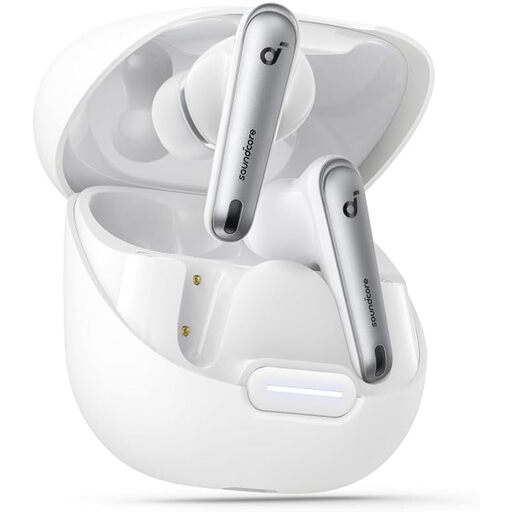
Why this choice suits this profile: This model combines adaptive ANC, a customisable equaliser, Bluetooth 5.3 and up to 10 hours of battery life per charge when ANC is turned off.
The spec sheet separates battery life with and without ANC and clearly states the IPX4 rating. This protects against light splashes, but not against immersion.
Up to 50 hours of battery life with the case and six microphones dedicated to calls.

Why this choice suits this profile: Galaxy users can enjoy advanced features such as 24-bit / 96 kHz audio, 360 Audio and a nine-band equaliser.
The data separates battery life with ANC, without ANC and with the case. The IP57 rating, however, reminds you that these earbuds are not designed for swimming.
Dual-driver speaker, six microphones, USB-C charging and wireless charging.
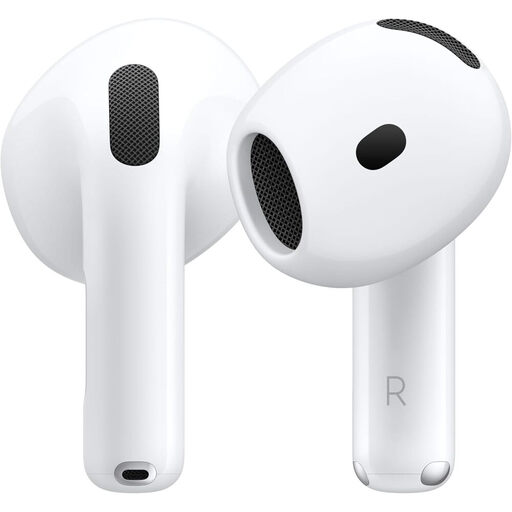
Why this choice suits this profile: Fast pairing, Siri, Find My and seamless continuity between Apple devices make everyday use particularly smooth within this ecosystem.
The spec sheet separates the four hours with ANC per charge from the 30 hours achieved with the case. The IP54 rating rules out any submersion.
H2 chip, personalised spatial audio, USB-C case and wireless charging.
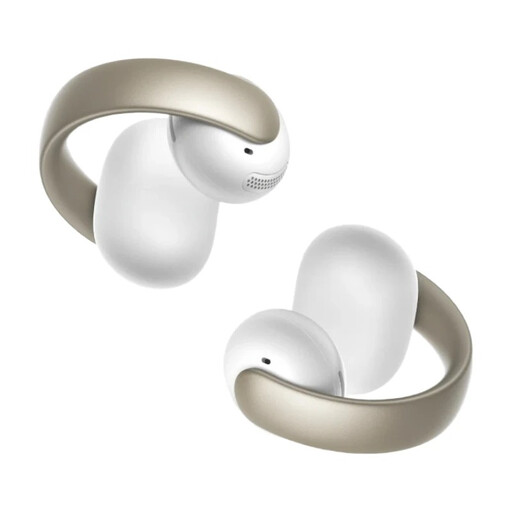
Why this choice suits this profile: Its open, clip-on design is ideal for those who want to listen to music while staying partially aware of their surroundings.
The open design avoids the need for in-ear buds when pressure in the ear canal becomes uncomfortable. However, the IP55 rating must still be respected.
12 mm driver, four microphones and a flexible design claimed to withstand 20,000 flexes.
We've put together a comprehensive, real-time updated list of products that meet these demanding selection criteria while complying with European safety regulations.
Place the earbuds in their case, open it, then turn on Bluetooth in your phone's settings. Select the model name that appears on the screen. For the first connection, you usually need to press and hold the button on the case until the light flashes. The exact procedure may vary from one brand to another.
It all depends on the battery capacity, how often you recharge, the temperature and your listening volume. To preserve battery life, avoid high temperatures, use a compatible charger and don't regularly let the case run completely flat. Also remember to clean the grilles and contacts with a dry cloth.
Yes. ANC and advanced audio processing can reduce the battery life available on a single charge. Always compare the figures quoted with ANC on and off. For long journeys, a charging case and fast charging can be more useful than a battery life promise measured only in standard mode.