
Livraison le jour même ou le lendemain

Qualité garantie

Débloquez vos offres de bienvenue: Livraison GRATUITE | Jusqu'à -80 % | 30 jours d'essai gratuits à JoyPlus
Téléchargez l'application
Bluetooth wireless earbuds have become a staple for daily commutes, work calls, workouts, and video streaming. Yet product specifications do not always make comparisons straightforward. A generous battery life may refer to the charging case rather than the earbuds, while advertised noise cancellation does not guarantee the same level of comfort on the subway, in the office, or out on the street.
Before buying TWS Bluetooth earbuds or Bluetooth headphones, there are three common pitfalls to watch out for.
When a model advertises “30 hours” or “42 hours”, this usually refers to the combined battery life, including the recharges provided by the case. Check each of the following separately:
Listening volume, usage conditions, and active noise cancellation can all reduce the stated battery life. Manufacturer figures should therefore be treated as reference points for comparing models, not as guarantees that apply in every situation.
An IP54, IP55, or IP57 rating indicates resistance defined under specific conditions. It does not mean the earbuds can be submerged without risk. Sweat, a rain shower, and a few splashes are not equivalent to prolonged immersion.
For sports use, earbuds must also stay securely in place. A water-resistant model that fits poorly may prove less practical than a simpler pair that remains stable and comfortable.
Some features depend directly on the ecosystem you use. Apple AirPods integrate naturally with the iPhone, while Samsung Galaxy Buds offer more comprehensive controls with a Galaxy device and the Galaxy Wearable app. Basic Bluetooth connectivity generally works with both Android and iOS, but some advanced options may be limited.
Before checking out, verify compatibility with your phone, tablet, and computer. For remote work, microphone quality and the ease of switching between devices often matter more than having a long list of audio codecs.
Earbuds with active noise cancellation use microphones and electronic processing to reduce some ambient noise. This feature is particularly useful on public transport or in shared workspaces. It is generally more effective against continuous sounds than sudden voices and irregular noise.
ANC does, however, increase power consumption. Compare battery life with noise cancellation both enabled and disabled. A transparency mode can be useful when you need to hear an announcement, exchange a few words, or stay aware of your surroundings. When cycling or navigating traffic, it is safer to maintain sufficient awareness of the environment.
In-ear earbuds often provide better passive isolation, but their ear tips will not suit every ear. Ear-hook designs or open-ear models may be more comfortable for some users, particularly while walking or doing light activity.
Over-ear Bluetooth headphones surround the ear and are well suited to extended listening sessions. They do take up more space in a bag, however. Conversely, lightweight, foldable headphones are easy to carry, but their fit and isolation may be less convincing than those of a larger closed-back model.
When choosing Bluetooth earbuds for calls, look at the number of microphones, whether wind-noise reduction is included, and where the microphones are positioned. These specifications cannot predict every scenario, though: performance also depends on the phone, network, and software being used.
A charging case is highly convenient when travelling, provided you check which connector it uses. USB-C is now standard on most models. Some products also support wireless charging, although the charger may be sold separately. Finally, a “water-resistant” claim should be accompanied by a clearly stated IP rating. If no protection rating is specified, as with the JBL Tune 530BT, avoid rain and moisture.
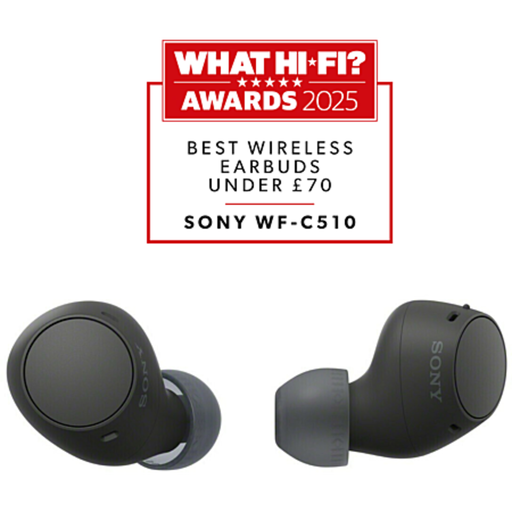
Why this model fits: These TWS earbuds are designed for music, calls, and everyday commuting. With a stated weight of 31 g and a compact case, they slip easily into a bag or pocket.
The product page specifies the recommended use, Bluetooth range of up to 10 m, and the presence of a microphone, without inflating the earbuds’ battery life by counting the case’s capacity as part of it.
Bluetooth, fast charging, charging case included, built-in microphone, and a stated two-year manufacturer’s warranty for new products.
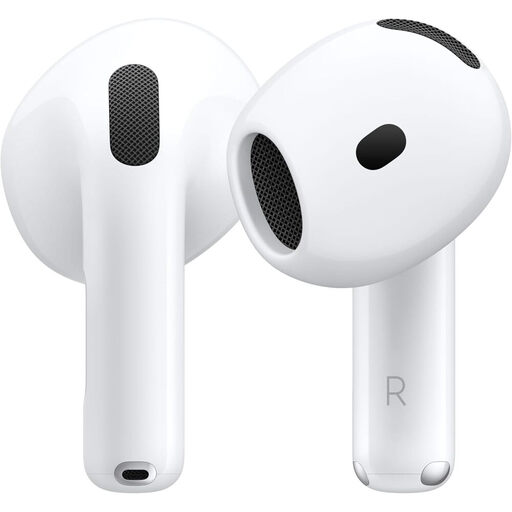
Why this model fits: Pairing with an iPhone or iPad, Siri, Find My, and wireless charging integrate seamlessly into the routines of a household already equipped with Apple products.
The product page states up to 4 hours of listening with ANC and up to 30 hours with the case: these figures should not be confused. An IP54 rating does not make the earbuds suitable for swimming.
H2 chip, advertised personalised spatial audio, Bluetooth 5.3, USB-C case, and charging compatible with Qi and Apple Watch.
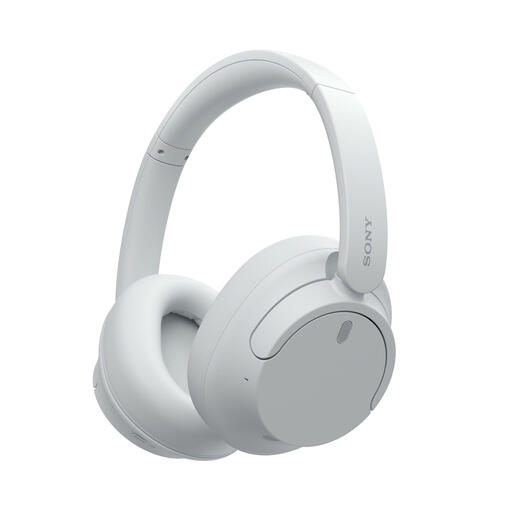
Why this model fits: These over-ear headphones are well suited to video calls, music, and commuting if you prefer not to wear in-ear earbuds.
Stated battery life drops from 50 hours without ANC to 35 hours with ANC enabled. The headphones are not presented as water-resistant, so avoid rain and particularly damp activities.
Bluetooth and wired connectivity, 3.5 mm audio cable included, built-in microphone, USB-C charging, and a stated weight of 192 g.
The Samsung Galaxy Buds4 Pro advertise IP57 protection, six microphones, a two-speaker system, and up to 30 hours of battery life with the case and ANC disabled, according to their product page. Ecosystem-specific features are most valuable when paired with a Galaxy smartphone.
The Huawei FreeClip feature an ear-clip design. Each earbud weighs 5.6 g according to the available information, while battery life reaches up to 36 hours with the case. Their IP54 rating makes them better suited to sweat and light splashes.
The JBL Tune JBLT530BTLAVEU Lavender is a lightweight, foldable 154 g headset with multipoint connectivity and advertised battery life of up to 76 hours. The USB-C cable is not included, and no water resistance is specified—two details to factor into both your budget and your intended use.
We have brought together an up-to-date selection of products that meet these selection criteria and the safety information available for the French market.
Yes. Basic Bluetooth connectivity is generally compatible with both systems. However, fast pairing, certain controls, updates, and audio settings may depend on the manufacturer’s app or the ecosystem you use.
The integrated battery gradually loses capacity over successive charging cycles. To help preserve it, avoid excessive heat, moisture beyond the protection covered by the IP rating, and leaving the earbuds discharged for extended periods. Recharge the case with a compatible cable and adapter, and store the earbuds in their case when not in use.
It does not involve any recurring expense, but it does consume more power. You will therefore need to recharge the device more often if ANC remains enabled. The main cost is the initial purchase, with a charger, replacement ear tips, or a USB-C cable potentially adding to it depending on what is included in the box.