
Livraison le jour même ou le lendemain

Qualité garantie

Débloquez vos offres de bienvenue: Livraison GRATUITE | Jusqu'à -80 % | 30 jours d'essai gratuits à JoyPlus
Téléchargez l'application
Whether for a trip across the globe, a negotiation with a foreign partner, or simply out of cultural curiosity, the language barrier can quickly turn a great experience into a headache. Bluetooth translator earbuds promise a world without linguistic borders. But be warned: the market is flooded with models making tempting promises that, once unboxed, bitterly disappoint.
As a product expert at Joybuy, I test these devices daily. My goal? To help you navigate this tech jungle. To avoid buyer's remorse, let's review the most common pitfalls.
The 3 pitfalls to avoid when buying translator earbuds:
To avoid these pitfalls, rely on objective technical criteria. They, not marketing, reveal the true value of a device.
The number of languages is an easy marketing ploy, but the quality of the translation modes is far more crucial. Check the available modes:
The availability of an offline mode for major languages is the holy grail for travellers, essential in areas where 4G is scarce.
Battery life is judged on two factors: that of the earbuds alone, and the energy reserve provided by the charging case. For wireless earbuds for travel, aim for at least 3 to 4 hours of continuous use, with a case capable of recharging them 3 or 4 times. Fast charging (e.g., 15 minutes of charging for 1 hour of use) is not a gimmick; it's a real everyday advantage.
The best models go beyond simple translation and include game-changing features. An earbud with an LED screen on the case, for example, saves you from pulling out your smartphone to change the language or mode. Likewise, active noise cancellation (ANC) is a must-have for tuning out the din of public transport or cafés and staying focused on your conversation.
Here are a few products that meet different needs, keeping our objective selection criteria in mind.
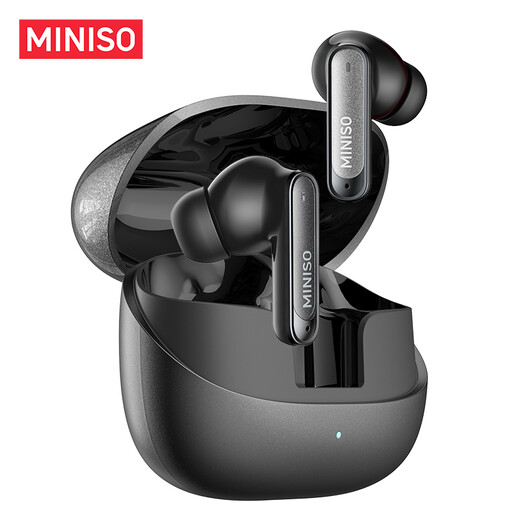
Their strong suit: Perfect for occasional use while travelling or for trying out app-based translation without breaking the bank. They also work perfectly well for everyday music and calls.
Even though they rely on a third-party app, setup is a breeze, and their stable Bluetooth 6.0 connection saves you from the headaches of finicky entry-level models.
Their versatility and excellent value for money. Universal compatibility with iOS and Android devices for music, calls, and access to translation apps.
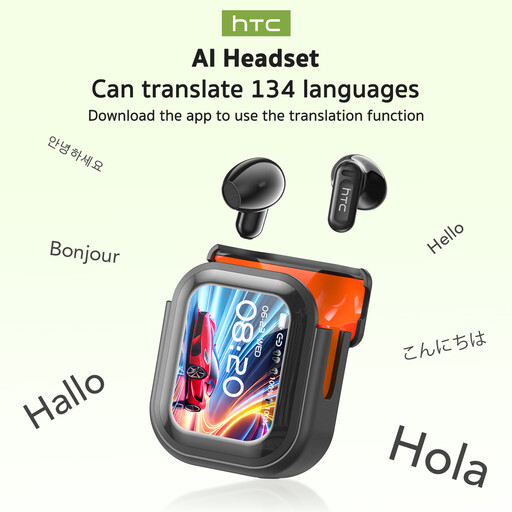
Their strong suit: Designed for frequent travellers and professionals who demand a reliable, high-performance AI translator earbud solution.
Their 12-hour total battery life and integrated touchscreen LED display for controlling translation without a smartphone sidestep the classic pitfalls of battery drain and app dependency.
Support for 135 languages, 8 translation modes, and especially their hybrid active noise cancellation (-50 dB) ensure crystal-clear conversations, even in the chaos of a train station.

Its strong suit: The perfect solution for students, expats, or professionals who want to store their earbuds in style and keep a pristine desk.
This isn't an earbud, but a clever accessory that answers the question: where can I put my earbuds so I don't damage or lose them?
A fun and functional, officially licensed stand that holds most earbuds, smartphones, and other small gadgets.
No more tangled cables and lost earbuds! Tidy up your desk or bag with our selection of accessories that are as practical as they are stylish.
Most models work in tandem with an app on your smartphone. The earbud microphones capture the voice, send it to the app, which then relays it to a translation engine in the cloud. The translation is then delivered directly to your ear. The process is reversed when it's your turn to speak.
For most models and languages, the answer is yes. Instant translation requires computing power that only remote servers (the so-called cloud) can provide. However, premium models offer downloadable language packs for offline use. This is ideal for the most common language pairs (English-Spanish, French-Chinese, etc.), although the quality and smoothness are often a step below the connected mode.
A pocket voice translator is a 100% standalone device, no smartphone needed. It's often more direct for a quick interaction, like asking for a price. Earbuds, on the other hand, are more discreet and immersive. They allow for a much more natural conversation, with each person hearing the translation in their own ear. And of course, they also function as regular earbuds for your music and calls.