
Livraison le jour même ou le lendemain

Qualité garantie

Débloquez vos offres de bienvenue: Livraison GRATUITE | Jusqu'à -80 % | 30 jours d'essai gratuits à JoyPlus
Téléchargez l'application
Are you looking for a Bluetooth speaker to listen to music, give your TV sound a boost, or set the mood for a party? There's certainly no shortage of options, but the spec sheets don't always highlight the most useful information. Power expressed in watts isn't enough to judge sound quality, a waterproof rating doesn't necessarily mean you can submerge it, and the advertised battery life often varies depending on the listening volume.
Here are the criteria to examine to avoid nasty surprises and choose a wireless audio solution that suits your home, your equipment and your habits.
A powerful Bluetooth speaker can go very loud without necessarily delivering balanced sound. The advertised power needs to be considered alongside the type of drivers, the cabinet design and the intended use. In an office, a few dozen watts can be more than enough. In a large room or for an outdoor party, a greater power reserve and good sound dispersion make much more of a difference.
Also be wary of values given without specifying the measurement used: nominal power, maximum power or RMS. The latter is generally the most relevant for comparing several products, provided the measurements were taken under similar conditions.
A waterproof Bluetooth speaker with an IPX5 rating can withstand splashes and low-pressure water jets, but it should not be submerged. The IP67 rating offers superior dust protection and resistance to temporary immersion, under the conditions set by the standard. However, the port covers must be properly closed.
Always consult the manufacturer's instructions: salt water, chlorine, prolonged exposure to rain, or charging when the port is damp can all damage the device.
A wireless speaker isn't necessarily compatible with all your devices. Check for Bluetooth, but also for the connections you might need: USB-C, 3.5mm auxiliary input, USB port for audio files, or HDMI ARC/eARC for a TV.
For watching television, a TV soundbar will often be more practical than a portable speaker. On a computer, two separate speakers can offer a more precise stereo image. As for a system with a subwoofer, it requires more space and several power sockets.
Bluetooth lets you stream music from a compatible phone, tablet, computer or console. Newer versions generally improve connection stability and power consumption, but quality also depends on the codec supported by both the transmitter and receiver.
The Edifier M60 and S300 models, for example, support the LDAC Bluetooth codec with compatible devices. This feature may appeal to Android users who listen to high-resolution audio files or streaming services. In everyday use, however, the simplicity of pairing and the actual range matter just as much as the spec sheet.
The advertised battery life is measured under very specific conditions. High volume, lighting effects, using the wireless microphone or charging a phone all reduce usage time. For regular on-the-go use, look for:
A speaker intended for the living room can work perfectly well plugged into the mains. A portable Bluetooth speaker, on the other hand, needs to be light enough to carry around without difficulty.
Bass response depends on the cabinet volume, the drivers and the room's acoustics. A speaker with a subwoofer delivers deeper low-end, but it also takes up more space. A 2.1 soundbar with a wireless subwoofer works well for a TV in a living room, while a desktop stereo setup will be more coherent for a PC.
Dolby Atmos and DTS Virtual:X technologies can broaden the soundstage of a Dolby Atmos soundbar. However, they don't always replace proper rear speakers: the result depends on the room, the positioning of the equipment and the content being played.
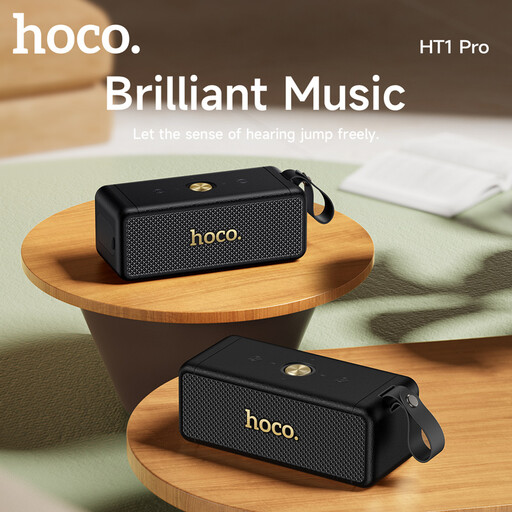
Why this choice suits this profile: With its 16 W and two 52 mm drivers, this model is ideal for everyday listening in a bedroom, office or small room. Its speakerphone function is also handy for taking calls.
The power and driver configuration are clearly stated. So you don't have to rely on a vague sonic promise.
16 W, two 52 mm transducers and speakerphone function for calls.
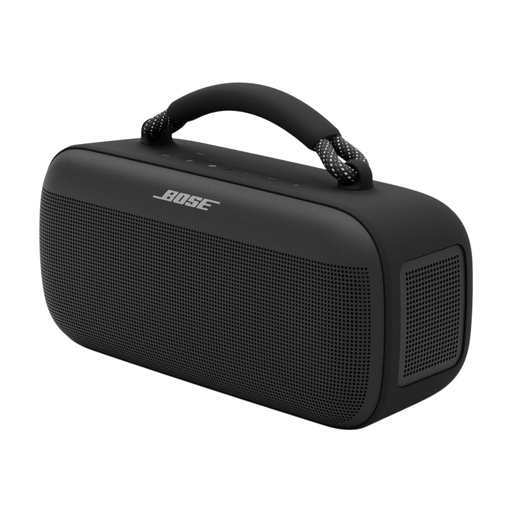
Why this choice suits this profile: Its portable format, detachable handle and advertised battery life of up to 20 hours make it equally suited to on-the-go use, home listening or outdoor activities.
The IP67 rating comes with clear guidance: it protects against water and dust, but does not allow prolonged underwater use.
IP67, advertised battery life up to 20 hours, 3.5mm auxiliary input and equaliser settings via the app.
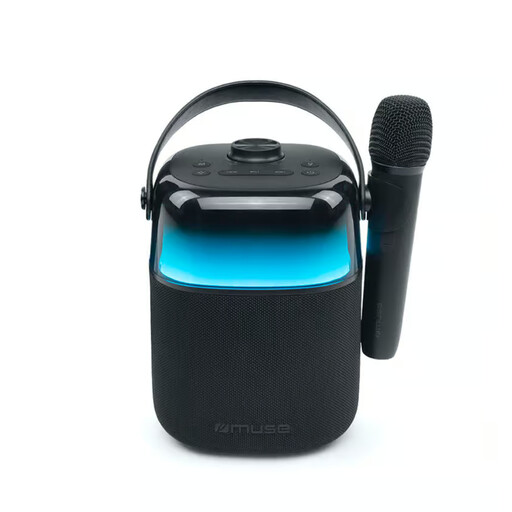
Why this choice suits this profile: This Bluetooth karaoke speaker combines 30 W, a wireless microphone, multiple inputs and an advertised battery life of up to 10 hours. It's built for family parties and outdoor entertainment.
The IPX5 protection is presented for what it is: resistance to splashes, not protection against immersion.
30 W, wireless microphone included, USB, auxiliary input, equalisation modes and six lighting effects.
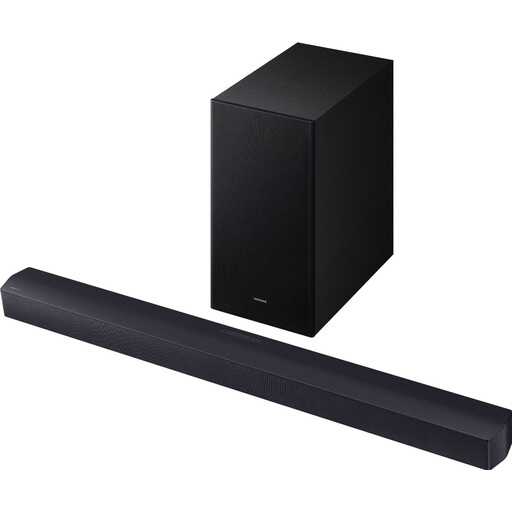
Why this choice suits this profile: This TV soundbar uses a 2.1 configuration with a wireless subwoofer and a total advertised power of 300 W. A setup suited to films, music and video games alike.
The HDMI, optical and Bluetooth connections are clearly specified. So you can quickly check compatibility with your TV.
2.1 configuration, wireless subwoofer, Bluetooth, HDMI, optical input and sound optimisation modes.
We've put together a comprehensive, real-time updated selection of products that meet these demanding criteria, while complying with European safety regulations.
For a computer, a PC gaming speaker like the Edifier G2000 or G1000 II can combine Bluetooth, USB and auxiliary input. Check the Bluetooth latency, the desk space available and the orientation of the speakers. RGB lighting is primarily decorative: it shouldn't overshadow the quality of the sound adjustments and the richness of the connectivity.
For more precise music listening, a Hi-Fi speaker or a desktop stereo pair like the Edifier M60 offers a more convincing left-right separation than a single compact speaker. USB-C and auxiliary inputs also let you bypass Bluetooth compression when the source allows it.
Turn on the speaker and activate pairing mode, then open your phone's Bluetooth settings. Select the model name from the list of available devices. On the first connection, some models may ask for confirmation or a code provided in the manual.
It depends on the battery, how often you use it, storage conditions and whether you follow the charging instructions. Avoid heat, prolonged dampness and repeated full discharges. For a waterproof model, rinse it only according to the manufacturer's instructions and dry the ports thoroughly before recharging.
A portable speaker mainly uses the energy needed to recharge its battery. A soundbar or Hi-Fi setup left plugged in permanently consumes more, both on standby and in use. Unplug devices you're not using for long periods, and check the power consumption stated on the spec sheet if this factor matters in your choice.