
Livraison le jour même ou le lendemain

Qualité garantie

Débloquez vos offres de bienvenue: Livraison GRATUITE | Jusqu'à -80 % | 30 jours d'essai gratuits à JoyPlus
Téléchargez l'application
Tired of the flat, lifeless sound from your TV or computer speakers? You're not alone. The Bluetooth speaker and soundbar market is flooded with marketing promises that often end in disappointment. To avoid buyer's remorse and truly transform your listening experience, you first need to learn how to sidestep the most common traps.
As a product expert at Joybuy, my mission is to help you cut through the noise. Let's forget the technical jargon and focus on what really matters for your home entertainment.
Audio marketing loves buzzwords that often hide a disappointing technical reality. Here are three things to watch out for to make the right choice.
A high wattage number is often the number one marketing claim, but it's highly misleading. Many spec sheets display Peak Music Power Output (PMPO), a theoretical peak reached for a fraction of a second that has no practical value. The only reliable metric is RMS (Root Mean Square) power: it indicates the power the speaker can actually deliver continuously without distortion. A 30W RMS multimedia speaker will often perform better and sound more balanced than a flashy model advertising 200W PMPO.
A Bluetooth speaker is convenient, but this single connection is often not enough for versatile use. For a TV audio system, an HDMI ARC port is almost essential: it allows you to transmit sound and control the soundbar's volume with your TV remote, all through a single cable. For a PC speaker, a USB-C port or a 3.5mm auxiliary input ensures maximum compatibility. Always check that the available ports match your current... and future devices.
Mentions of "3D sound" or "surround" on the box are no guarantee of a truly immersive experience. For a genuinely enveloping cinema-like experience, your equipment must be compatible with recognised formats like Dolby Atmos or DTS:X. These technologies place sound in a three-dimensional space but require dual compatibility: from the source (your movie or game) and your output device (the soundbar). Without this, the effect is just a software simulation, which is often disappointing.
Now that we've navigated the pitfalls, let's look at the features that really make a difference.
Rather than an endless list, here are three audio solutions that meet specific needs, all while avoiding the pitfalls we've just discussed.
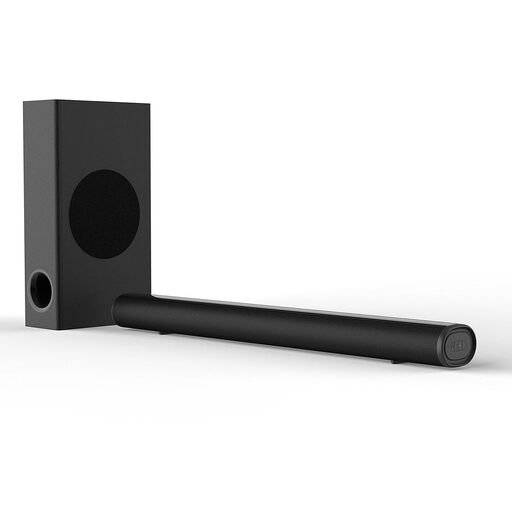
Why we chose it: This 2.1 setup is designed for those who want to feel the action. The wireless subwoofer delivers the depth that TV speakers so desperately lack, without the clutter of cables. A simple and effective solution to turn your living room into a mini home cinema.
It doesn't just promise bass; it delivers a dedicated subwoofer. Its HDMI ARC connectivity ensures seamless and straightforward integration with your TV, avoiding any setup headaches.
A complete and powerful 2.1 system (200W) with a wireless subwoofer for impactful bass and highly flexible placement.
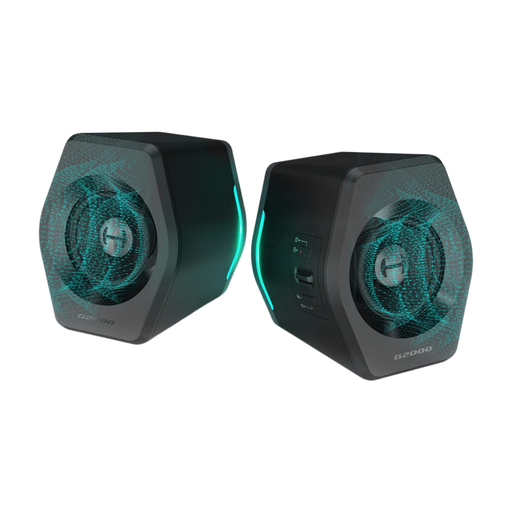
Why we chose it: For gaming, sound precision and low latency are non-negotiable. This PC speaker kit is compact, powerful (32W RMS), and packed with gaming-centric features, like a simulated 7.1 surround effect and RGB lighting for atmosphere.
It offers ultra-comprehensive connectivity (USB, Bluetooth, 3.5mm AUX) that adapts to any PC setup. The surround effect isn't a vague marketing promise but a real feature, activated via Edifier software and driven by a dedicated DSP chip.
An all-in-one gaming speaker solution with dedicated sound modes, effective software-based surround, and versatile connectivity for instant immersion.
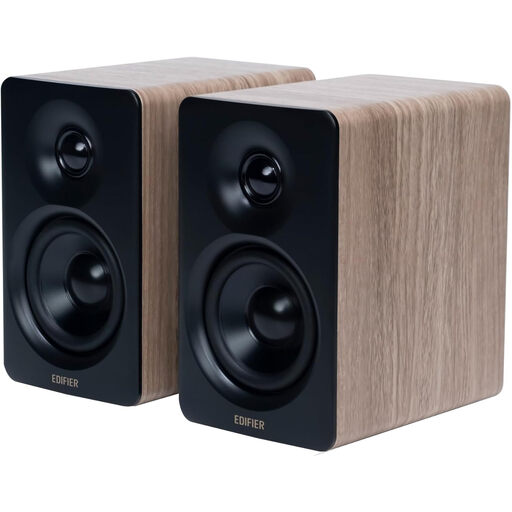
Why we chose it: For those who prioritise music sound quality above all else on their computer. This system stands out with its Hi-Res Audio certification and support for the LDAC codec, ensuring faithful and detailed sound reproduction, even wirelessly.
Instead of marketing-driven wattage figures, this system highlights objective certifications (Hi-Res Audio) and concrete technologies (LDAC). The standout feature: the included aluminium stands, which improve acoustics by perfectly angling the sound towards the listener.
High-fidelity audio quality thanks to Hi-Res certification and the LDAC codec, all delivered with modern connectivity (USB-C) and a meticulously engineered acoustic design.
We have put together a complete and up-to-date selection of products that meet our selection criteria and current standards.
Yes, unequivocally. Modern TVs, which are getting ever thinner, simply don't have the physical space to integrate decent speakers. A soundbar, even an entry-level one, contains larger drivers that are better aimed at you and a more generous amplifier. The improvement in dialogue clarity and overall soundstage is immediate.
It all depends on your use case. For blockbuster movies, action series, and video games, a subwoofer is essential for reproducing low-frequency effects (explosions, synth pads, etc.) and creating true immersion. However, if you mainly watch the news, documentaries, or listen to acoustic music, a soundbar without a subwoofer can be perfectly adequate.
For a TV audio system, HDMI ARC is without a doubt the connection to choose. It radically simplifies setup (one cable for audio) and allows you to use your TV remote to control the soundbar's volume. The optical input is an excellent alternative if your TV doesn't have an HDMI ARC port. As for Bluetooth, it's perfect for streaming music from a smartphone but not recommended for movies due to the risk of latency (sound/image delay) and higher audio compression.