
Livraison le jour même ou le lendemain

Qualité garantie

Débloquez vos offres de bienvenue: Livraison GRATUITE | Jusqu'à -80 % | 30 jours d'essai gratuits à JoyPlus
Téléchargez l'application
The Bluetooth speaker market is a jungle where it's easy to get lost. Between promises of outrageous power and opaque marketing jargon, choosing the right model can be a real challenge. Our mission: to help you see things clearly. This guide is designed to give you concrete, objective benchmarks to find the wireless speaker that will truly meet your needs, far from the siren song of advertising.
Before you check out, beware of common pitfalls. Here are the three most frequent traps that can turn your purchase into a disappointment:
To make an informed choice, forget the marketing spiel and focus on these few decisive technical characteristics.
Rather than being mesmerised by watts, look at the RMS power: this is what indicates the power the speaker can actually deliver continuously. A powerful speaker isn't just one that's loud. It's primarily about clear, balanced sound (bass, mids, highs) without distortion at full volume, often thanks to a DSP (Digital Signal Processing) chip. For high-fidelity listening, check for compatibility with advanced audio codecs like LDAC, provided your smartphone or player is also compatible.
The IP rating is an international standard that measures resistance to dust (first digit) and water (second digit). For a waterproof speaker, it's the second digit that interests us:
A good wireless speaker must offer a stable connection. Aim for at least Bluetooth 5.0 (or a more recent version) to benefit from better range and optimised power consumption. For a more immersive experience at home, a multiroom speaker connected via Wi-Fi will allow you to stream the same music in several rooms. Also, consider the little extras that make a big difference: an auxiliary input (jack), a USB port to play from a flash drive, stereo pairing (TWS) to link two speakers, or even a speaker with a microphone for hands-free calls and karaoke nights.
To help you see how these criteria apply in practice, here are a few recommended options, each suited to a distinct user profile.
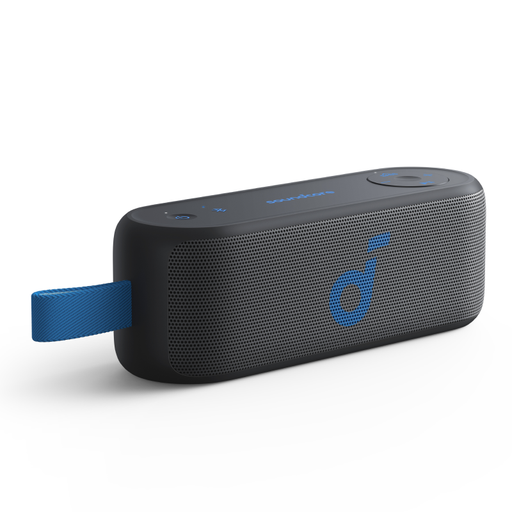
Editor's Pick: The perfect companion for those who want to take their music everywhere. Its feather-light weight (575 g) and excellent battery life make it the ideal partner for hikes, picnics, or days at the beach.
No more ambiguity about waterproofing: its IPX7 certification guarantees true protection against immersion, far more than simple splash resistance. Its advertised 20-hour battery life provides peace of mind for long days out.
Its standout feature is its excellent balance of portability, durability, and endurance. The BassUp technology even manages to deliver surprisingly present bass for such a small device.
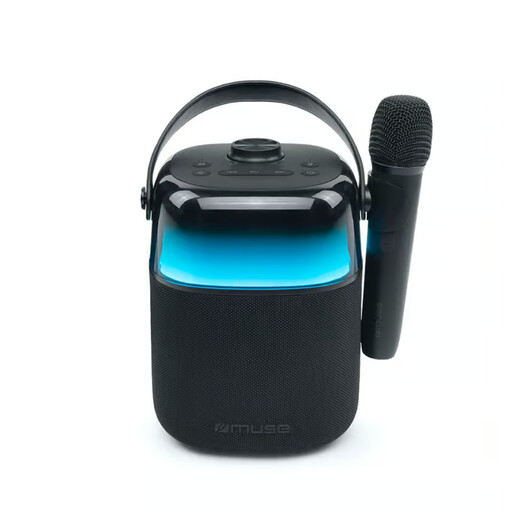
Editor's Pick: Built to get the party started, this party speaker combines 30W of power, light effects, and a wireless microphone. A true all-in-one solution to ignite your parties and karaoke sessions.
Here, power isn't just a number. The speaker offers EQ modes (Normal, Bass, Treble) to shape the sound, as well as a vocal reduction mode for a true karaoke speaker experience. Its IPX5 rating is clearly stated, allowing for outdoor use without fear of spilled drinks.
The all-in-one package (speaker, wireless mic, lights) and its rich connectivity options (Bluetooth, USB, Aux) make it an ultra-simple, portable party system to set up.
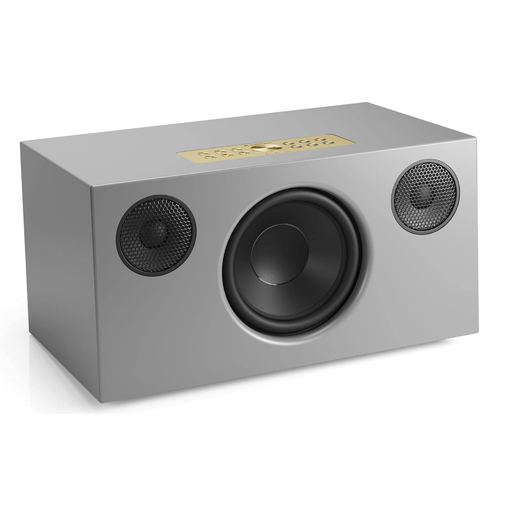
Editor's Pick: For those who prioritise Hi-Fi sound quality and home integration above all else. This stationary speaker bets on audio performance and comprehensive connectivity (Wi-Fi, AirPlay 2, Google Cast) rather than portability.
It's not limited to Bluetooth. By integrating Wi-Fi and major multiroom ecosystems, it breaks free from its constraints to deliver stable, high-fidelity sound. Its 80W power rating is not just for show: it's backed by a Class D amplifier and quality components (5.25-inch woofer).
Its versatility (Wi-Fi, Bluetooth, RCA) and multiroom compatibility make it the cornerstone of any home audio system. The bonus for purists: the ability to connect a turntable or a subwoofer.
Discover our full selection of speakers that meet our demanding selection criteria and current safety standards.
The lifespan of a Bluetooth speaker is directly tied to its lithium-ion battery. On average, it can handle between 300 and 500 full charge cycles before its capacity significantly degrades, which represents several years of use. To preserve it, avoid frequent full discharges and don't leave it plugged in permanently once it's 100% charged.
Yes, and it's an excellent trick to boost your TV's sound without breaking the bank. If your TV has built-in Bluetooth, pairing takes just a few seconds. If not, a Bluetooth soundbar like the Bose TV Speaker connects simply via an optical (often included) or HDMI cable. The improvement in clarity, especially for dialogue, is immediate.
Absolutely not. As we've seen, it's often a misleading indicator. The quality of the drivers, the speaker's architecture, the presence of a sound processing chip (DSP), and the supported audio codecs are infinitely more important for achieving rich, clear, and distortion-free sound, even at high volumes. A well-designed small Bluetooth speaker will often be more pleasant to listen to than a large model boasting more watts than you know what to do with.