
Livraison le jour même ou le lendemain

Qualité garantie

Débloquez vos offres de bienvenue: Livraison GRATUITE | Jusqu'à -80 % | 30 jours d'essai gratuits à JoyPlus
Téléchargez l'application
A Bluetooth speaker can follow you to the beach, to a party with friends, during a work session on your computer, or while watching a film at home. Yet product descriptions often highlight the advertised power, lighting effects or wireless compatibility, without always explaining what that actually means in everyday use.
Before you place an order, three common pitfalls keep cropping up:
Here are the criteria to run through when choosing a wireless speaker that suits your everyday life.
For on-the-go use, go for a portable Bluetooth speaker with a handle or one compact enough to carry easily. A small model will naturally find its place in a bedroom, on a balcony or during a picnic. On the other hand, a powerful Bluetooth speaker will be more at home filling a large room or a gathering.
Weight deserves your attention too. A speaker weighing several kilograms can produce more volume, but it quickly becomes cumbersome to transport. On a desk, a pair of separate stereo speakers can deliver a more convincing soundstage without taking up much space.
The IP rating gives a standardised indication of a device's resistance. The first digit relates to solid particles, particularly dust, while the second indicates its level of protection against water.
Even with a waterproof speaker, avoid salt water, chlorinated water splashes and charging when the port is damp. A certification never excuses you from following the manufacturer's safety instructions.
Compare battery life under similar conditions. A long-lasting Bluetooth speaker advertised for several hours at moderate volume can last significantly less time at high volume or when the lighting is switched on.
Bluetooth 5.3 or 5.4 generally makes pairing with newer devices simpler, but compatibility also depends on the phone, computer or tablet you're using. For a speaker intended for a PC, check for a USB or auxiliary input if you want to minimise audio lag.
For the television, a TV soundbar equipped with an HDMI ARC or eARC port will often be more practical than a portable speaker. Dolby Atmos and DTS:X formats, meanwhile, require a compatible source and setup to produce the advertised surround effect.
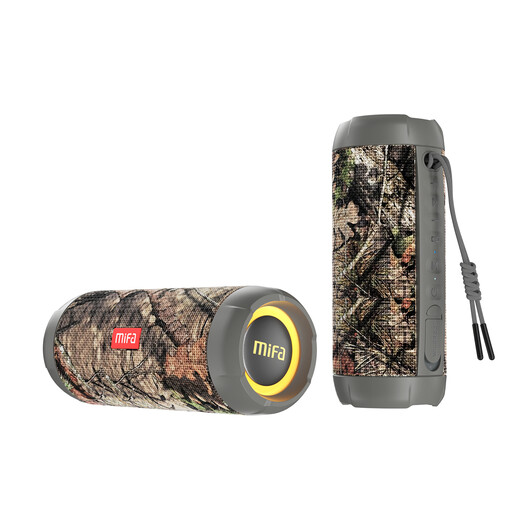
Why this choice suits this profile: this portable speaker lends itself to many uses, at home as well as in the park or near water, without any complicated setup.
The description states IP67 dust protection as well as IPX7 immersion resistance. Battery life can reach 12 hours, while the advertised power is 30 W.
Bluetooth 5.3, simultaneous connection to two devices, playback from a Micro SD card and customisable RGB lighting.
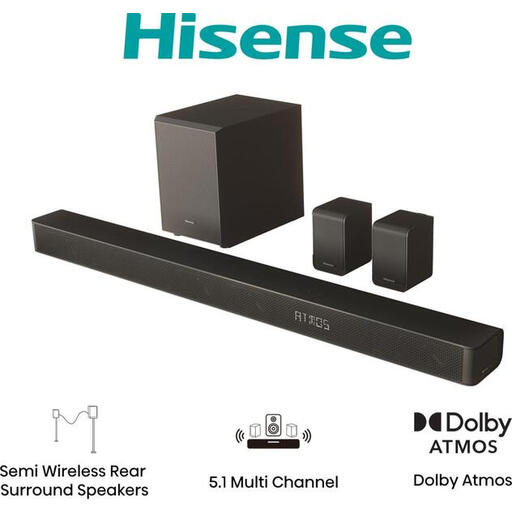
Why this choice suits this profile: this home cinema system is aimed at users who want a more immersive setup for films, video games and TV programmes.
The set includes a soundbar, a wireless subwoofer and two wireless rear speakers. Dolby Atmos and DTS:X formats are supported, provided you have a compatible source.
5.1 configuration, advertised maximum power of 340 W, HDMI eARC and cinema, music, game and night modes.
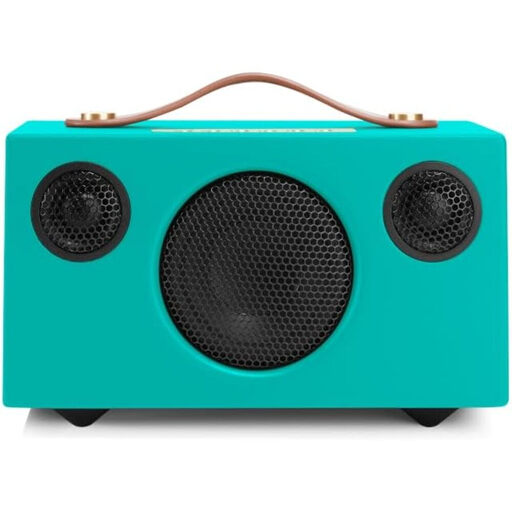
Why this choice suits this profile: its easy-to-carry size and advertised battery life suit long listening sessions, whether at home, on the move or somewhere without a nearby power socket.
The description distinguishes between battery life of up to 30 hours at medium volume, versus 12 hours at maximum volume. A useful detail for interpreting the stated figure correctly.
Advertised amplification of 25 W, 3.5 mm auxiliary input and USB-A port for charging a mobile device.
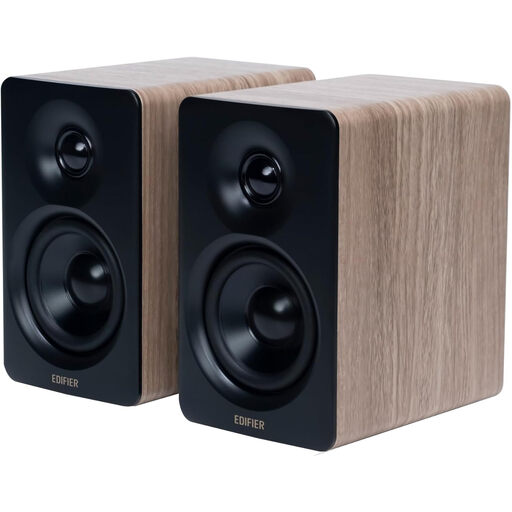
Why this choice suits this profile: this pair of desktop speakers works well for music, video games and videos from a computer or a compact setup.
Bluetooth 5.3, USB-C and auxiliary connections let you switch between wireless and wired as needed. The stands also angle the speakers towards the listening position.
Advertised power of 66 W RMS, Hi-Res Audio certification, LDAC support and two speakers mounted on aluminium stands.
We've put together a comprehensive, real-time updated selection of products that meet these demanding criteria as well as European safety regulations.
In a bedroom or office, a compact speaker is usually sufficient. A model with LED lighting can help create a party atmosphere, but bear in mind that the light effects eat into the battery life.
In a living room, a 2.1 soundbar with a wireless subwoofer, such as the Samsung HW-B450F/EN or the LG DS40T, keeps the setup simple while giving the bass more punch. For a more enveloping sound, a system with rear speakers and Dolby Atmos compatibility requires more space, more power sockets and more adjustments.
For a party, the M-1803DJ boasts an advertised power of 150 W, microphone inputs, battery life of up to 5 hours and dynamic lighting. Again, this figure needs to be weighed against the volume you choose and whether you're using it on battery or mains power.
Turn on Bluetooth on your phone, switch on the speaker, then select its name from the list of available devices. On the first pairing, a confirmation may be needed. If the connection doesn't establish, turn Bluetooth off and on again, and check that another device isn't already connected to the speaker.
It all depends on the battery, how often you use it, the number of charge cycles and storage conditions. Avoid high temperatures, prolonged humidity and repeated full discharges. For a waterproof model, rinse the device only if the manufacturer recommends it, then let it dry completely before recharging.
A portable speaker mainly uses power when recharging its battery. A soundbar or home cinema system is usually plugged in for longer and can consume more on standby. Check the power consumption stated in the technical specifications and switch off devices when you don't plan to use them for a long period.