
Livraison le jour même ou le lendemain

Qualité garantie

Débloquez vos offres de bienvenue: Livraison GRATUITE | Jusqu'à -80 % | 30 jours d'essai gratuits à JoyPlus
Téléchargez l'application
A Bluetooth speaker can soundtrack your day at home, a bike ride, a picnic or an evening with friends. However, product descriptions often focus on power, light effects or bass without explaining the conditions in which these features are actually achieved. The result could be a speaker that is too fragile for outdoor use, battery life that is impossible to reproduce at high volume, or a soundbar that is incompatible with your television.
Here are the key criteria to consider before buying, followed by a selection of models suited to different needs.
A high wattage alone does not guarantee balanced sound. To assess power, you should also consider the acoustic configuration: the number of speakers, whether there is a passive radiator, digital signal processing and the size of the enclosure.
A powerful portable speaker is ideal for bringing a party to life, but it will often be bulkier and use more energy. Conversely, a small Bluetooth speaker is easy to carry and generally provides enough volume for close-range listening.
IP ratings indicate resistance measured under specific conditions. A Bluetooth IP67 speaker is protected against dust and can generally withstand temporary immersion, within the limits set by the manufacturer. An IPX6 speaker can resist powerful water jets, but that does not mean it can be submerged in a swimming pool.
For use at the beach, near a sink or in the rain, always check the exact rating and the limits detailed in the manual.
The battery life of a speaker with a rechargeable battery depends on the sound volume, lighting, temperature and Bluetooth usage. The phrase ‘up to’ generally refers to measurements taken under favourable conditions. For a weekend away or a long journey, also check the type of charging, whether a USB-C cable is included and whether you can use the speaker to recharge a phone.
In a medium-sized room, clearly stated RMS power is a much more useful guide than a vague music power rating. A speaker equipped with two drivers can provide a wider soundstage, while a model that supports stereo pairing allows you to connect two units and separate the left and right channels.
For a television, a TV soundbar should primarily be chosen according to the connections available: HDMI ARC or eARC, optical input, Bluetooth and, sometimes, USB. A wireless subwoofer will add more impact to low frequencies, but you will need to provide a mains socket and enough floor space for it.
Bluetooth 5.0, 5.3 or 5.4 refers to a connection generation, but the actual range also depends on the layout of the space, walls and any interference. When available, multipoint connectivity allows you to keep two devices paired with the speaker. An auxiliary input, USB port or Micro SD card reader can also be useful when your phone is not accessible.
For an outdoor speaker, check in particular:
Even if it is waterproof, a speaker should never be charged while it is wet. Dry the connectors thoroughly and follow the manufacturer’s recommendations.
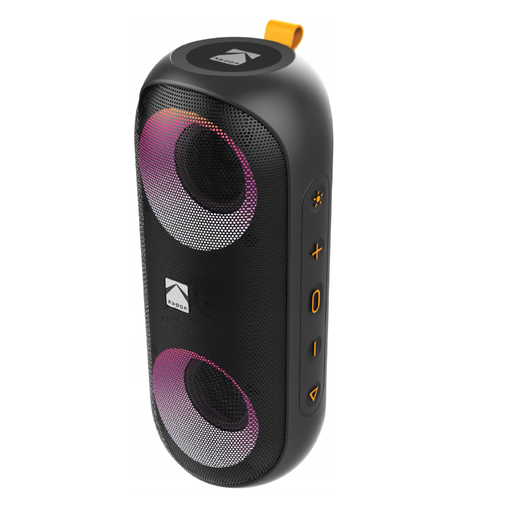
Why it suits this profile : its two 10 W RMS speakers and rechargeable battery make it a versatile first speaker, equally at home indoors or outdoors.
The power is expressed in RMS and the product description states IPX6 protection: two more useful details than a simple promise of powerful bass.
20 W RMS, built-in microphone, dedicated passive bass radiator and stereo pairing between two compatible speakers.
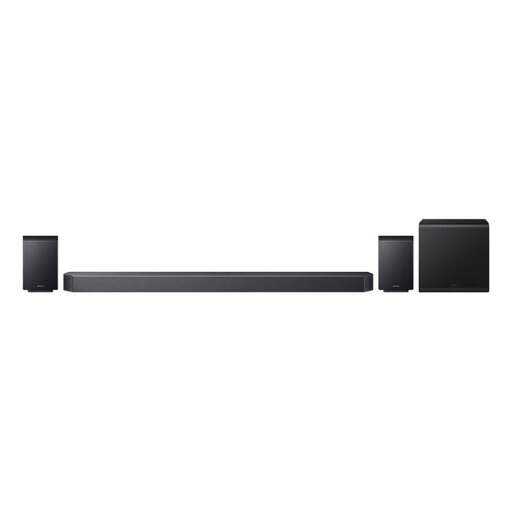
Why it suits this profile : this system is designed for home cinema enthusiasts who want a complete setup with rear speakers, a subwoofer and extensive connectivity.
The detailed configuration distinguishes a genuine multi-channel setup from a simple simulation of surround sound.
Dolby Atmos, Wi-Fi, AirPlay 2, Spotify Connect, wireless subwoofer and rear speakers included.
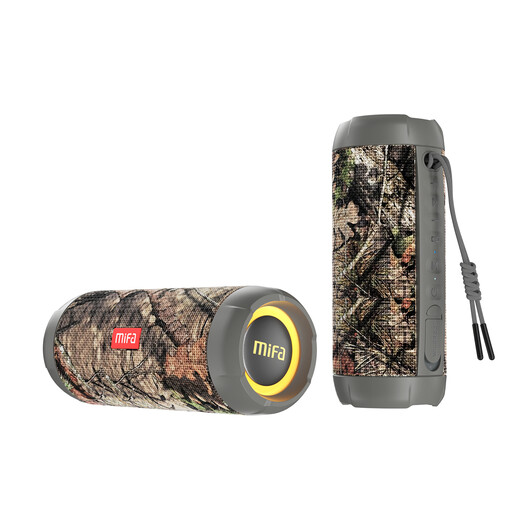
Why it suits this profile : its robust design is made for hiking, trips near the water and anyone looking for a durable portable Bluetooth speaker.
The product description distinguishes IP67 dust protection from IPX7 water resistance: however, use must still follow the rinsing and immersion instructions.
Bluetooth 5.3, advertised power of 30 W, 5 000 mAh battery, Micro SD card playback and advertised battery life of up to 12 hours.
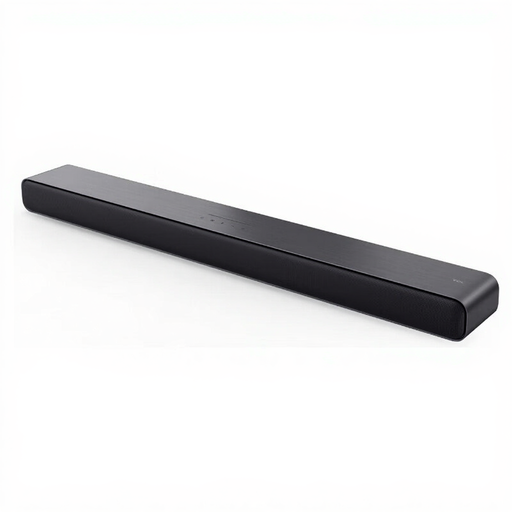
Why it suits this profile : it improves your television’s sound without filling the room with multiple speakers, with an installation compatible with HDMI ARC, optical or Bluetooth.
The product description specifies that this is a 2.0 soundbar without a separate subwoofer, keeping expectations in line with this all-in-one format.
Dolby Atmos, DTS Virtual:X, room calibration, 81 cm format and remote control included.
We have selected a complete range, updated in real time, of products that meet these strict criteria while complying with European safety regulations.
Choose a portable Bluetooth speaker with a handle or strap, a rechargeable battery and an IP rating suited to the expected exposure. IP67 and IPX7 do not cover exactly the same uses as IPX6: always check the immersion limits and cleaning instructions.
Turn on your television’s Bluetooth, put the speaker into pairing mode, then select its name from the list of available devices. To minimise the delay between picture and sound, a soundbar connected via HDMI ARC or eARC may be more suitable.
Consumption depends on the battery capacity, listening volume and how often you recharge it. To keep costs down and preserve the battery, use a compatible adapter, avoid extreme temperatures and do not leave the device plugged in continuously without good reason.