
Livraison le jour même ou le lendemain

Qualité garantie

Débloquez vos offres de bienvenue: Livraison GRATUITE | Jusqu'à -80 % | 30 jours d'essai gratuits à JoyPlus
Téléchargez l'application
The Bluetooth speaker market is a real jungle, saturated with models all promising an "unparalleled sound experience." The result? Navigating spec sheets and marketing slogans quickly becomes a headache. Too many buyers end up disappointed with a product that fails to deliver, with anemic power or a battery that dies mid-party. As the head of the audio section, my mission is to help you avoid the common pitfalls so that your next purchase is a successful and lasting investment.
Before diving into our selection, let's break down the 3 most common traps that can turn a good deal into a nasty surprise:
To avoid falling for the marketing hype, focus on the technical specifications that don't lie. These are the true arbiters for evaluating the quality of a wireless speaker and its suitability for your needs.
Forget the marketing numbers. The only value that truly matters is the power in Watts RMS (Root Mean Square). It measures the continuous power the speaker can deliver without distorting or damaging its drivers.
The IP (Ingress Protection) rating consists of two numbers: the first for resistance to solids (dust), the second for liquids (water). For a portable speaker, the second digit is obviously the one that commands our full attention.
Take a look at the battery capacity, measured in milliampere-hours (mAh). Above 3000 mAh, you can expect a comfortable battery life that will last the day. On the connectivity side, opt for Bluetooth 5.0 (or a newer version): it ensures a more stable connection, better range, and optimized power consumption. For audiophiles, support for high-definition codecs like LDAC is a real plus, especially on a PC gaming speaker or a desktop model.
Rather than an endless list, we've selected models that excel in their category, matching them with clear user profiles. Each choice is justified by the objective criteria defined above.
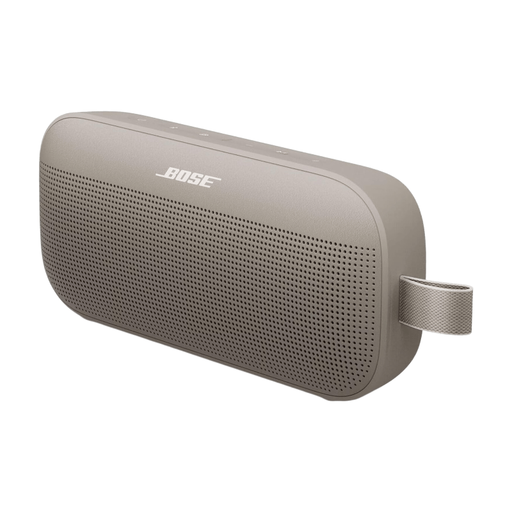
Why it's the right choice: Built for adventure, this speaker combines a compact size, an ultra-rugged design (shockproof and rustproof), and a handy utility loop. Perfect for hikes, beach days, or simply clipped to a backpack.
Its IP67 rating is a rock-solid guarantee: it's completely dust-tight and can be submerged. No more stress over vague marketing promises. Its 12-hour battery life is designed for a full day's getaway.
PositionIQ technology automatically adjusts the sound equalization based on the speaker's orientation (upright, lying flat, or hanging). The audio performance is therefore always optimal, no matter the situation.
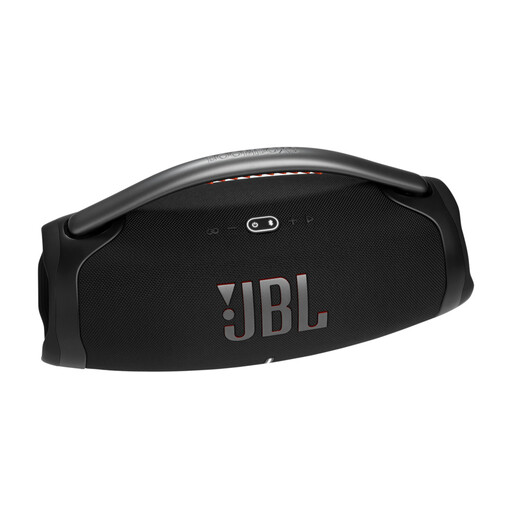
Why it's the right choice: This is the archetype of the **powerful speaker** built to party. With its colossal power, deep bass, and 24-hour battery life, it can fill a large space, indoors or out, without ever faltering.
JBL plays it straight by specifying the power in Watts RMS (1x80W + 2x40W + 2x10W on AC power). No inflated marketing numbers, just raw, verifiable performance.
The PartyBoost function allows you to connect multiple compatible JBL speakers to create a true wall of sound. Its IP67 rating and power bank feature make it the perfect ally for long nights.
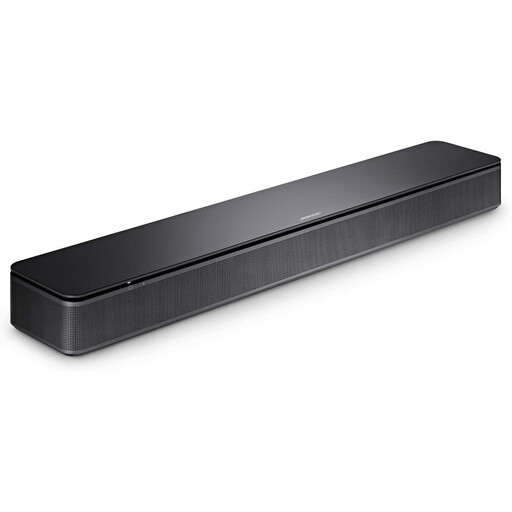
Why it's the right choice: This **Bluetooth soundbar** has one clear mission: to radically improve the often flat and lifeless sound of your television. Its compact form factor and dead-simple setup make it the ideal solution for those who want better sound without the hassle.
It doesn't promise the moon or outrageous power. Its goal is focused: dialogue clarity. It thus avoids the "jack-of-all-trades" trap that sacrifices performance on what matters most.
The dedicated "Dialogue" mode specifically enhances voices so you'll never miss a line of your favorite movies and shows again. Connection is via a single cable (optical included, or HDMI), for setup in just a few minutes flat.
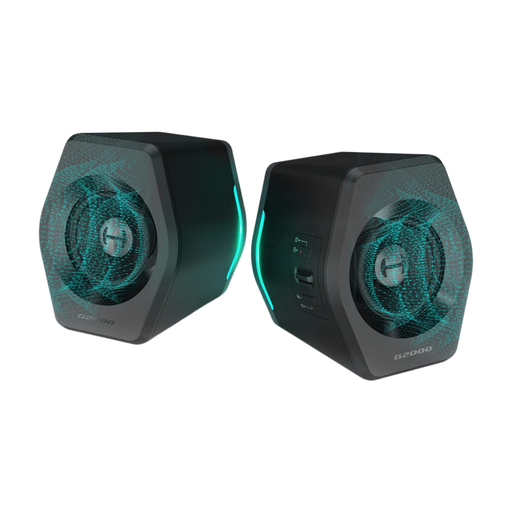
Why it's the right choice: This **PC gaming speaker** set is specifically designed for immersion. With simulated 7.1 surround sound, RGB lighting effects, and comprehensive connectivity (USB, AUX, Bluetooth), it transforms a simple desk into a true battle station.
It doesn't pretend to be a portable speaker. Its features are optimized for stationary use, avoiding the compromises of a "do-it-all" speaker that would inevitably be mediocre for gaming.
The integrated DSP sound card creates a 7.1 surround sound effect, essential for locating enemies by sound in games. The 32W RMS power is perfectly calibrated for a near-field gaming experience that is both powerful and precise.
Our complete selection brings together the best models of the moment, all tested and approved by our editors according to these strict criteria.
Imagine RMS (Root Mean Square) Watts as your car's cruising speed: it's the real, continuous power the speaker can deliver without distortion or damage. It's the only reliable figure. Peak Watts (or PMPO) are a marketing ploy: a theoretical power spike achievable for a fraction of a second. In practice, this value is meaningless. Only trust RMS Watts.
No, and this is a classic trap. An IPX5 rating means the speaker can resist water jets (rain, shower, splashes by the pool), which is already very good. However, it will not survive a fall into water. For absolute peace of mind, you need an IPX7 or IP67 certification, which guarantees resistance to temporary immersion.
A few simple habits can make a big difference. First, avoid always pushing the volume to the max: listening at 70-80% is often sufficient and much less power-hungry. Second, turn off the light shows (RGB) when you don't need them, as they are real power hogs. Finally, to preserve the battery's health, avoid letting it fully discharge too often. Regular, partial recharges are better than full 0-to-100% cycles.