
Livraison le jour même ou le lendemain

Qualité garantie

Débloquez vos offres de bienvenue: Livraison GRATUITE | Jusqu'à -80 % | 30 jours d'essai gratuits à JoyPlus
Téléchargez l'application
A Bluetooth headset with active noise cancellation can make a tube journey more pleasant, help you work in a shared space or improve comfort during a long flight. But a tempting product description doesn't always guarantee an experience that suits your needs.
Active noise cancellation, often called ANC, uses microphones and electronic processing to reduce certain ambient sounds. It doesn't eliminate all noise, and its effectiveness depends on fit, the shape of the ear cushions and the sound frequencies involved. Here are the criteria to consider before choosing a pair of wireless headphones.
A figure expressed in decibels, such as "up to -35 dB" or "up to 49 dB", corresponds to a measurement taken under specific conditions. It isn't enough to predict the result in an open-plan office, on a train or in a plane.
Fit matters just as much. A Bluetooth over-ear headset should enclose your ears without applying excessive pressure. Wireless earbuds, on the other hand, should come with multiple ear tips or have a shape that's stable enough to minimise sound leakage.
Battery life varies depending on listening volume, whether ANC is on, phone calls and the codec used. You need to distinguish between the duration with active noise cancellation, the duration without ANC and, for earbuds, the total battery life including the charging case.
Long battery life is handy when you're travelling, but USB-C charging, fast charging or a 3.5 mm audio jack can prove more useful than an impressive number on the box.
A model that's comfortable for listening to music for an hour won't necessarily be comfortable after a full day's work. The weight, the width of the headband, the material of the ear cushions and the clamping force on the sides of your head all play a real part.
For video calls, also check for a built-in microphone, compatibility with your phone and the quality of voice transmission. Good music reproduction doesn't automatically mean clear calls.
Look for at least an ANC mode, a transparency or ambient mode and, if possible, a fully off mode. Transparency mode lets you hear announcements or follow a conversation without taking off the headset. However, it's still essential to be extra careful near traffic, when cycling or when using machinery.
Terms like "hybrid", "adaptive" or "intelligent" cover different features depending on the manufacturer. To compare models, focus on the available modes, the compatible app and whether you can adjust the level of noise reduction.
For daily use, compare:
Bluetooth 5.2, 5.3 or 5.4 indicates a connection generation, but stability also depends on the paired device and the radio environment. The advertised range is therefore not a guarantee in every room.
An over-ear headset is often better suited to travel and work, while compact earbuds slip more easily into a pocket. For outdoor use, check the ingress protection rating. For example, IP54 or IP57 doesn't mean the product can be submerged or used in the rain without care: always check the limits stated by the manufacturer.
Finally, avoid listening at high volume for long periods. Noise cancellation can stop you from turning up the volume in a noisy environment, but it doesn't replace taking listening breaks.
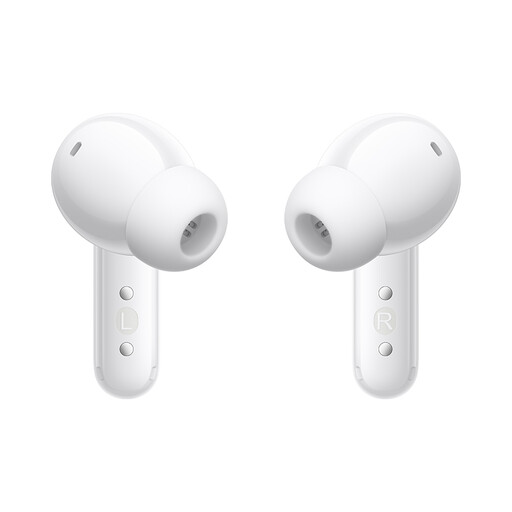
Why this choice suits this profile: This in-ear format is aimed at those looking for a compact device for commuting, calls and everyday listening.
The listing states ANC can reach 49 dB and distinguishes the battery life of a single earbud from that with the case, making for a more useful comparison.
Bluetooth 5.3, 12.4 mm dynamic driver, up to 9 hours of listening and up to 42 hours with the case, IP54 rating.
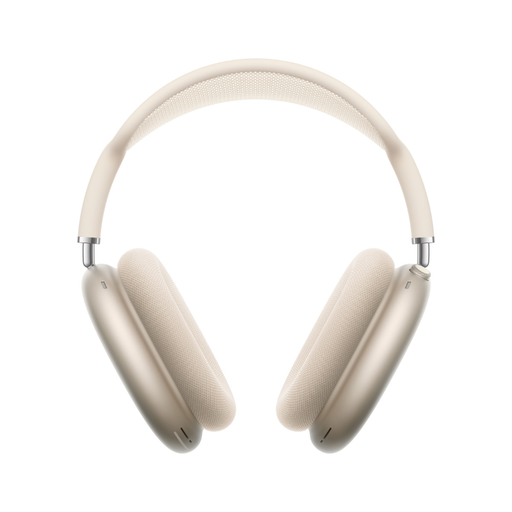
Why this choice suits this profile: This headset is aimed at users who value the Apple ecosystem and an over-ear experience with built-in controls.
The listing specifies the advertised battery life with noise control features on, as well as the weight of 386.2 g – something to consider before buying.
Apple H2 chip, Bluetooth 5.3, USB-C, personalised spatial audio and advertised battery life of up to 20 hours.
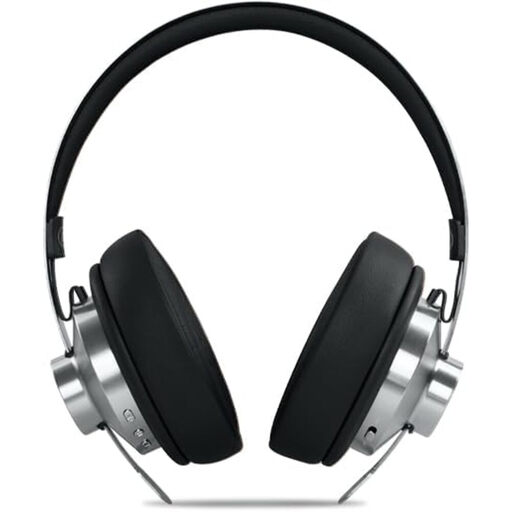
Why this choice suits this profile: Its advertised battery life and dual connectivity suit travel, long working days and users who want the option of a wired connection.
The 3.5 mm auxiliary input provides a solution when the battery is low, while the adjustable headband lets you fine-tune the fit.
Bluetooth 5.4, ANC advertised up to -35 dB, up to 66 hours of listening, USB-C, microphone and carry case.
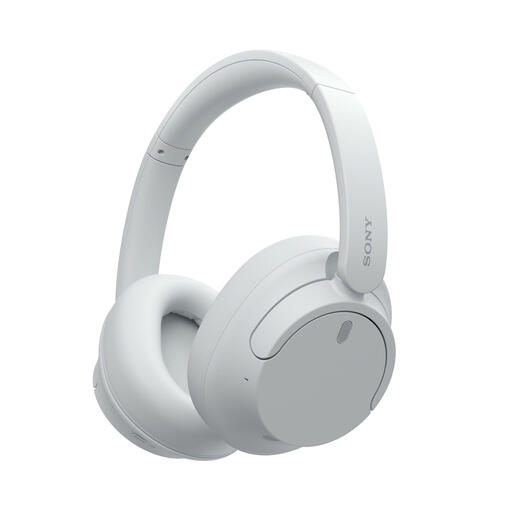
Why this choice suits this profile: It combines an over-ear format, a built-in microphone and battery life that varies depending on ANC usage.
The data states up to 50 hours of battery life without ANC and 35 hours with ANC, which avoids confusing the two scenarios.
Advertised weight of 192 g, Bluetooth 5.2, 3.5 mm jack, USB-C port, hands-free calls and fast charging.
We've put together a comprehensive, real-time updated list of products that fully meet these strict selection criteria and European safety regulations.
Yes, as long as the computer has Bluetooth. For video calls, select the headset as the audio output and microphone in the software settings. A wired connection may be preferable if latency or battery life becomes an issue.
It all depends on the battery, the ear cushions, the hinges and how often you use them. To extend their lifespan, avoid heat, moisture and knocks, clean the surfaces with a suitable cloth and don't attempt to replace a built-in battery yourself.
Yes. ANC uses the microphones and electronic processing, which generally reduces battery life compared to listening without noise cancellation. Always compare the two stated values before choosing a headset for travel or work.