
Livraison le jour même ou le lendemain

Qualité garantie

Débloquez vos offres de bienvenue: Livraison GRATUITE | Jusqu'à -80 % | 30 jours d'essai gratuits à JoyPlus
Téléchargez l'application
A Bluetooth headset can accompany your daily commute, remote meetings, workout sessions or evening music listening. Yet product specs often highlight numbers that are difficult to compare. A long battery life doesn't necessarily guarantee a comfortable fit, and active noise cancellation isn't suitable for every environment.
Before you buy, three pitfalls deserve your attention.
An over-ear headphone surrounds the ear and generally blocks out external noise thanks to its ear cushions. However, do check its weight, the pressure exerted by the headband and whether it can be folded. If you plan to wear it for several hours at the office or on the train, these factors matter just as much as the driver diameter.
On-ear models are often more compact, but their earpieces rest directly on the ear. Wireless earbuds and Bluetooth earphones designed for sport focus on discretion and freedom of movement. Their grip depends on the shape of your ears, so the inclusion of multiple ear tips is a real bonus.
Always compare the test conditions. A spec sheet may claim up to 45 or 60 hours without noise cancellation, yet battery life drops as soon as ANC is activated. For True Wireless earbuds, be sure to distinguish the battery life of the buds themselves from the extra charge provided by the case.
Fast charging is particularly handy before a journey or a meeting. A USB-C port also means you can reuse a cable you already have for other devices. For heavy use, go for a long-lasting Bluetooth headset, but don't forget to check the charging time and the gradual degradation of the battery.
Bluetooth 5.3 or 5.4 can provide a stable connection while keeping power consumption in check, but the range also depends on obstacles and the source device. Multipoint connection lets you link two devices – for example, a computer and a smartphone – without having to manually re-pair each time you switch.
A Bluetooth headset with noise cancellation uses microphones and electronic processing to reduce certain ambient sounds. This feature is especially useful on a plane, train or in a shared space, but it doesn't mean you can stop paying attention in the street. For calls, look at the number of microphones, the effectiveness of ambient noise reduction and the presence of physical controls.
Codecs like LDAC and Hi-Res Audio labels may appeal to music lovers who have compatible files and source devices. A wired USB-C or 3.5mm connection is also handy when the battery is nearly flat or with a device that doesn't have Bluetooth.
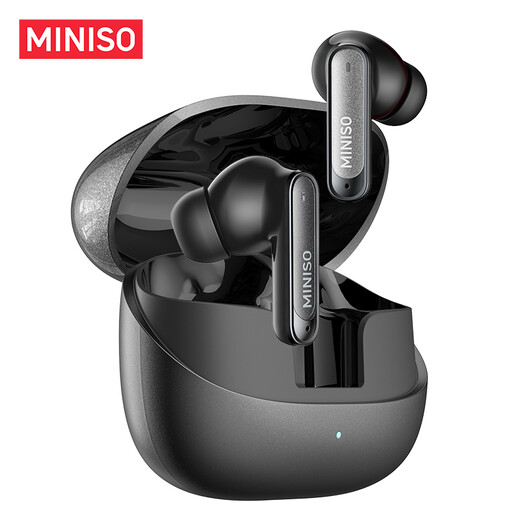
Why this choice suits this profile: a compact solution for calls, studying, the office and daily travel, compatible with both iOS and Android.
The spec sheet states around 4 hours of battery life per earbud and an IPX5 rating: concrete figures you can compare against your journeys and activities.
Bluetooth 6.0, built-in microphone, USB-C charging case and support for translation apps via your smartphone.

Why this choice suits this profile: a discreet format for users seeking effective ANC, high-resolution sound and deep integration with the Galaxy ecosystem.
Battery life is clearly differentiated by ANC: up to 7 hours without ANC and 6 hours with ANC, for a total claimed 30 hours with the case, without ANC.
Dual-driver system, claimed 24-bit/96kHz audio, six microphones, USB-C or wireless charging and an IP57 splash-proof rating.
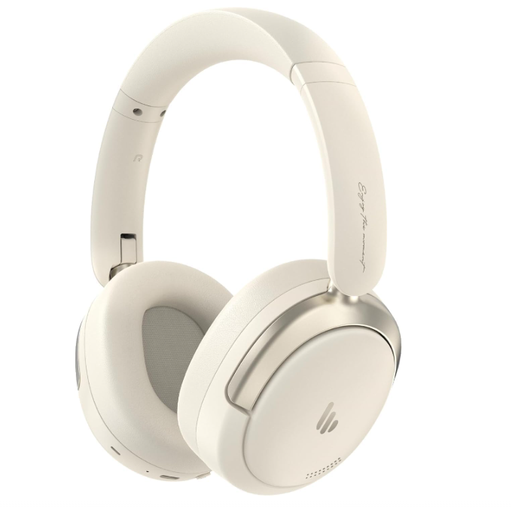
Why this choice suits this profile: its over-ear design, active noise cancellation and dual-device connection meet the needs of remote working, travel and long listening sessions.
The spec sheet claims noise reduction of up to -44 dB, up to 45 hours of battery life and fast charging: three criteria to compare separately.
40mm dynamic driver, Bluetooth 5.4, built-in microphone, app-based customisation and Hi-Res Audio via wired USB-C.
We've put together a comprehensive, real-time updated selection of products that meet these strict criteria and European safety requirements.
Turn on Bluetooth on your phone, put the headphones into pairing mode, then select their name from the list of available devices. If the connection fails, turn Bluetooth off and on again, and check that another device isn't using the multipoint connection.
The duration depends on listening volume, ANC, the codec used and the temperature. The figures quoted by manufacturers serve as a guide, but it's common to get a few hours from compact earbuds and several tens of hours from a wireless headset. Avoid repeated full discharges and use a suitable charger.
Yes, provided you check the microphone quality, ambient noise reduction and compatibility with your computer. For remote working, multipoint connection and physical controls can also reduce the hassle of switching between a video conference and a music listening session.