
Livraison le jour même ou le lendemain

Qualité garantie

Débloquez vos offres de bienvenue: Livraison GRATUITE | Jusqu'à -80 % | 30 jours d'essai gratuits à JoyPlus
Téléchargez l'application
On public transport, in the office or at home, Bluetooth headphones and earphones with active noise cancellation don't all meet the same needs. Yet product listings often boast impressive numbers without really explaining what they mean. A noise reduction figure in decibels alone tells you nothing about real-world comfort. Similarly, battery life can vary dramatically depending on listening volume, the codec used, or whether ANC is switched on.
To avoid buying something that doesn't suit your lifestyle, it's worth running through a few concrete criteria before choosing between wireless earphones, Bluetooth headphones, ANC earbuds and over-ear headphones.
Active noise cancellation uses microphones and electronic processing to reduce certain ambient sounds, particularly the constant hum of a train, plane or fan. It's generally less effective against nearby voices, sudden noises and irregular sounds.
The ear tips and headphone design therefore play a crucial role. Poorly fitted true wireless earbuds will let in more noise, even if the spec sheet claims highly effective ANC. Check that several sizes of ear tips are included and, if possible, look for a Transparency mode so you can stay aware of your surroundings.
The battery life quoted often corresponds to a very specific scenario. It may have been measured with ANC switched off, at moderate volume and using a particular codec. As soon as active noise cancellation, calls or a sound-quality-focused codec come into play, the actual listening time can drop significantly.
Compare separately:
Bluetooth lets you connect these devices to most smartphones, but some features depend on the operating system you're using. Multipoint connection, the equaliser, spatial audio and advanced settings may require an app, as well as a specific version of Android, iOS or the manufacturer's interface.
If you regularly switch between your computer and phone, look specifically for dual-device connection. For working from home, the number of microphones and the quality of ambient noise filtering matter far more than a simple "high definition" claim on the product page.
A decent spec sheet should distinguish between active noise cancellation, Transparency mode and microphone noise reduction. These features serve different purposes. ANC mainly affects what you hear, while microphone processing improves the voice transmitted to the person you're speaking with.
For making calls on a busy street or in a train station, choose a model with multiple microphones, a noise-filtering system and a clearly described call mode. Real-world performance can vary depending on how the earphones sit, wind strength and the phone you're using.
The IP rating has two digits. The first indicates the level of protection against particles, while the second relates to water resistance. An IP57 certification offers better protection than IP54 in certain conditions, but it doesn't mean the product is suitable for swimming or showering.
This resistance can also decrease with wear and tear. After a workout, wipe your earphones dry before putting them back in the case. Also bear in mind that the charging case may have a different rating to the earphones themselves, as is the case with some models.
IP57-rated sports earphones are practical for travel and exercise, but how well they stay in place depends a lot on the shape of your ear. An over-ear headphone distributes pressure more evenly around the ears, at the cost of being bulkier.
For listening to music, look at the type of drivers, the frequency range and the compatible codecs. The term high-resolution audio is only meaningful if the connection and the audio source are also compatible. For gaming, a low-latency mode can reduce the delay between picture and sound, without eliminating all the limitations of Bluetooth.
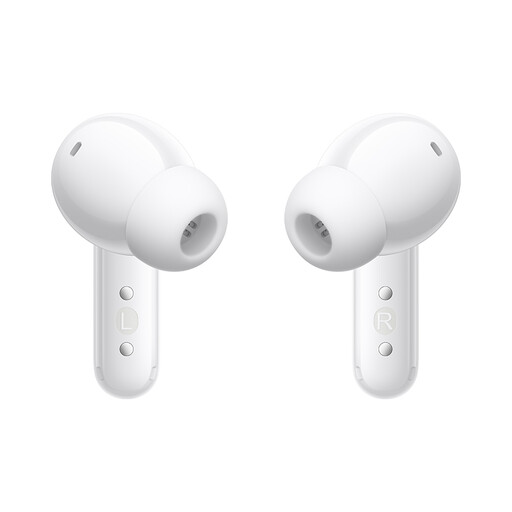
Why this choice suits this profile: These ANC earphones claim active noise reduction of up to 49 dB, Bluetooth 5.3 connectivity and up to 42 hours of battery life with the case, depending on usage conditions.
The spec sheet clearly separates ANC from battery life and states the IP54 rating, so there's no mistaking it for a model designed for immersion.
12.4 mm dynamic driver, up to 9 hours claimed battery life per earbud and a 500 mAh charging case.
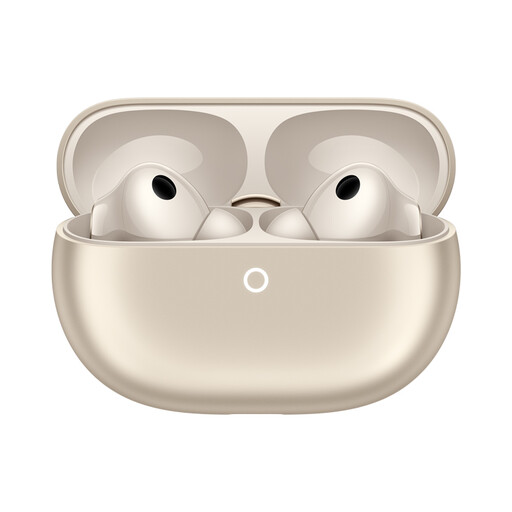
Why this choice suits this profile: This model is aimed at those who want detailed sound reproduction, good call quality and the ability to use it with two devices.
Battery times are broken down by codec and ANC: up to 5 hours with ANC in L2HC or LDAC, and up to 6 hours in AAC.
Dual-device connection, Bluetooth 6, IP57 certification for the earphones and USB-C or wireless charging.

Why this choice suits this profile: These true wireless earphones combine ANC, claimed 24-bit/96 kHz audio and deep integration with the Galaxy ecosystem.
Battery life is stated separately with and without ANC: up to 6 and 7 hours, then 26 and 30 hours with the case.
Dual-driver system, six microphones, Bluetooth 6.1, IP57 certification and wireless charging.
We've put together a comprehensive, real-time updated selection of products that meet these demanding criteria as well as European safety standards.
Yes, ANC can reduce certain noises even when no audio is playing. However, its effectiveness depends on the frequency of the noise, how well the earphones fit and your environment. Transparency mode is preferable when you need to hear announcements or follow a conversation.
Avoid extreme temperatures, clean the ear tips with a suitable cloth and never put damp earphones back in their case. Also respect the stated IP rating: IP57 does not mean the product can be used underwater. Finally, avoid long listening sessions at high volume to protect your hearing.
Yes, activating ANC draws power for the microphones and audio processing. The difference varies depending on the model, codec and listening volume. When comparing long battery life earphones, always use figures measured under the same conditions, with or without active noise cancellation.