
Livraison le jour même ou le lendemain

Qualité garantie

Débloquez vos offres de bienvenue: Livraison GRATUITE | Jusqu'à -80 % | 30 jours d'essai gratuits à JoyPlus
Téléchargez l'application
Travelling, taking part in an international meeting or following a course in another language can be much easier with Bluetooth earbuds with real-time translation. But first, it helps to understand what the product specifications actually mean. They often combine app-based translation, audio quality and calling features. Some buyers only discover after their order arrives that translation requires a phone, an internet connection or a dedicated app.
Here are the things to check before you order, along with a selection of models suited to different needs in the UK.
The phrase “AI translation” doesn’t necessarily mean the earbuds work on their own. Many models simply act as a microphone and audio output, while a mobile app does the processing. Before you buy, check:
The HTC NE20 and MINISO MS106, for example, state that you can use a translation app once connected via Bluetooth. That’s an important detail when travelling, especially if mobile data is limited or expensive.
“135 languages” or “150 languages” usually refers to a capability claimed by the manufacturer. Translation quality can still vary depending on the language, accent, background noise and connection quality.
For a work conversation, check whether translation works both ways, whether the delay is acceptable and whether the app also displays the translated text.
A lightweight model may feel comfortable for a short conversation, but become uncomfortable over a long journey. A foldable pair of headphones, on the other hand, often offers longer battery life and more consistent noise isolation, but takes up more space.
An IPX5 rating indicates resistance to splashes and water jets in certain conditions. It doesn’t mean the earbuds can be submerged or worn in the shower. For sports, understanding the difference can help prevent premature wear.
For clear calls, look for earbuds with a built-in microphone and, if possible, multiple microphones or software-based noise processing. These features can help pick up your voice in a station or café, although they can’t guarantee a perfect conversation in a very noisy environment.
Bluetooth 6.0 models highlight their newer connection and low latency. Bluetooth 5.3 is still perfectly suitable for music, calls and everyday travel. The Bluetooth version isn’t everything: stability also depends on your phone, the app and the distance between devices.
Active noise cancelling can reduce continuous sounds from an aeroplane, train or open-plan office. It won’t eliminate every noise and may change how voices sound. A transparency or ambient mode is therefore useful when you need to hear an announcement, a colleague or traffic.
For studying, choose a comfortable model with well-balanced sound. For sports, fit, weight and resistance to moisture are often more important than audio power.
Always compare the battery life of the earbuds on their own with the figure quoted when the charging case is included. According to its specifications, the HTC NE20 offers around four hours per charge and up to twelve hours with its case. The MINISO MS106, meanwhile, claims around four hours per charge. In both cases, results may vary depending on volume, translation use, calls and noise cancelling.
For long journeys, headphones such as the Soundcore Space One Pro claim up to 40 hours with noise cancelling switched on, and up to 60 hours with it switched off, according to the product information.

Why it suits this kind of user : These TWS earbuds offer an affordable way to try translation with an iOS or Android phone. They’re also suitable for calls and everyday journeys.
The product information specifies that you need a translation app after pairing. So there’s no risk of mistaking them for a standalone model.
Bluetooth 6.0, built-in microphone, IPX5 rating, quoted range of 10 metres and around four hours of battery life.
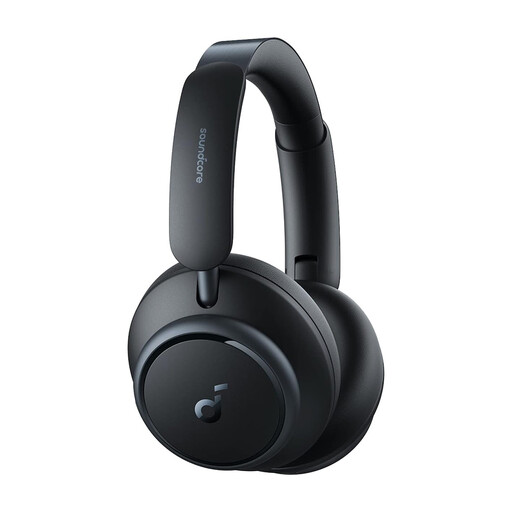
Why it suits this kind of user : These headphones are designed for travellers and professionals who prioritise noise isolation, battery life and comfort for long listening sessions.
The product information clearly distinguishes battery life with and without noise cancelling. That makes it easier to set realistic expectations.
Adaptive noise cancelling, foldable design, claimed multipoint connection, LDAC high-resolution wireless audio and fast charging.

Why it suits this kind of user : Its touchscreen, range of noise cancelling modes and compatibility with a translation app make it a good choice for travellers, students and people who are often on the move.
The product information clearly states that an app is needed to enable translation, keeping this feature separate from the audio specifications.
Bluetooth 6.0, IPX5 rating, six claimed microphones, adaptive hybrid noise cancelling and a lightweight semi-in-ear design.
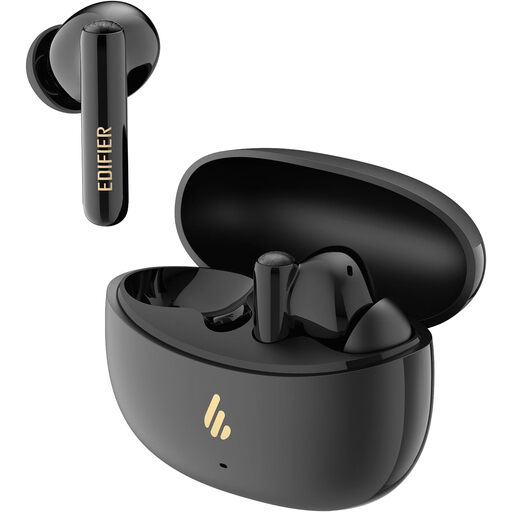
Why it suits this kind of user : These earbuds are best suited to anyone looking for clear calls, versatile music playback and effective noise cancelling on public transport.
The product information doesn’t present translation as a built-in feature. That makes its focus on calls and everyday listening clearer.
Bluetooth 5.3, hybrid noise cancelling, microphone with processing algorithm, claimed battery life of up to 31 hours with the case and IP55 rating.
We’ve brought together a comprehensive, regularly updated selection of products that meet these exacting criteria, while complying with European safety regulations.
Not necessarily. Many earbuds with multilingual translation rely on a smartphone to run the app, process speech and display the translated text. Always check what’s required before you buy.
Translation, calls and noise cancelling use more battery than listening to music. For a long journey, choose a model with a charging case and check the battery life per charge rather than relying on the total figure quoted.
An IPX5 rating may be sufficient for sweat and moderate splashes, depending on how you use the earbuds. It doesn’t protect them from being submerged. Wipe them dry after exercise and follow the manufacturer’s care instructions.