
Livraison le jour même ou le lendemain

Qualité garantie

Débloquez vos offres de bienvenue: Livraison GRATUITE | Jusqu'à -80 % | 30 jours d'essai gratuits à JoyPlus
Téléchargez l'application
Running in the rain, cycling through town, lifting weights or swimming: these activities do not all require the same Bluetooth earbuds for sport. Yet many models are marketed as versatile when they are primarily designed for everyday use. To make the right choice, start by identifying your activity, your exposure to water and how much awareness of your surroundings you want to maintain.
The term “waterproof” does not automatically mean that earbuds can be submerged. An IP54 rating mainly protects against dust and limited splashes. An IP55 or IP57 rating offers better protection against sweat and splashes, but does not necessarily make the product suitable for use in a swimming pool.
For swimming, always check for a rating suitable for immersion, such as IPX8 or IP68, as well as the ability to play music without a phone. Bluetooth performs very poorly underwater: a model designed for swimmers will generally need to include storage for saving and playing audio files.
Battery life may be stated for a single charge, with or without the case, and may sometimes be measured under very specific conditions. Active noise cancellation, high volume or phone calls can significantly reduce actual usage time.
So compare the battery life of the earbuds separately from the total battery life available with the case. For daily training, fast charging or a total battery life of several dozen hours may prove more practical than an impressive figure that is difficult to replicate in real-world conditions.
In-ear earbuds often provide good isolation, but how securely they fit depends on the shape of your ear and the ear tips supplied. By contrast, open-ear earbuds and bone-conduction models let more external sound through. This is particularly useful when cycling, running on roads or travelling around town.
The choice is therefore not just about audio quality. It is also about comfort, stability and your ability to stay aware of vehicles, other athletes and announcements around you.
An IP rating consists of two numbers: the first refers to protection against solid particles, while the second indicates water resistance. In practice:
After a wet workout, dry the earbuds thoroughly before putting them away. If the case uses a magnetic charging port, the connectors must be completely dry before charging.
Wireless in-ear earbuds fit inside the ear canal. They are suitable for users looking for a more isolated listening experience and features such as active noise cancellation. An ear hook or suitable ear tips can improve their stability during exercise.
Bone-conduction earbuds sit near the temples and do not block the ears. They are often popular for running, cycling and activities where it remains essential to hear what is happening around you. However, open-ear models do not eliminate all external noise: excessive volume can still affect your awareness.
For making calls, look for earbuds with a microphone and check the number of microphones, along with whether they feature voice-noise reduction. These details provide insight into the product’s design, but call quality also depends on the wind, the position of the earbuds and the phone being used.
If you swim or want to run without your smartphone, prioritise Bluetooth earbuds with long battery life and built-in storage. For gym sessions, fast charging, touch controls and a low-latency mode may prove more useful than an immersion rating.
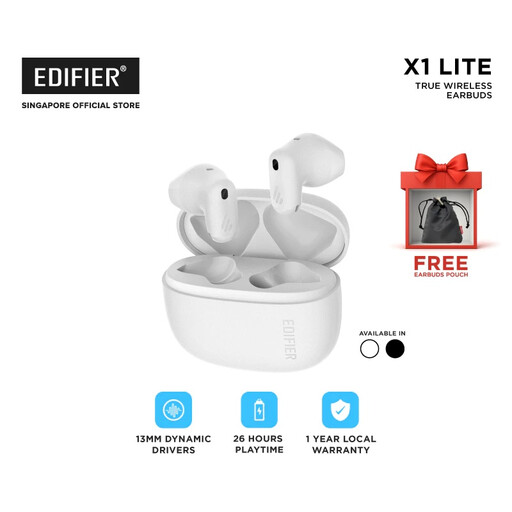
Why this choice suits this profile : Its in-ear design and Bluetooth 5.4 compatibility make it suitable for daily commutes, walking and gym sessions. The advertised total battery life reaches 26 hours with the case, while a 15-minute charge provides around 1 h 30 of playback.
The IP54 rating clearly defines its intended use: sweating and everyday activity, but neither swimming nor immersion.
Bluetooth 5.4, personalisation app, microphone and an advertised latency of 60 ms.
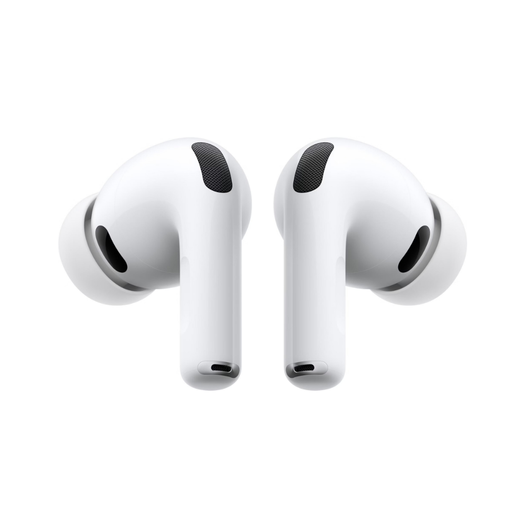
Why this choice suits this profile : Active noise cancellation, touch controls, a MagSafe-compatible case and a motion sensor: a package designed for those who switch between sport, commuting and calls.
The IP57 rating is clearly presented as suitable for sweat and light splashes, but not for swimming or submersion.
Active noise cancellation, built-in microphone, advertised heart-rate sensor and wireless charging.
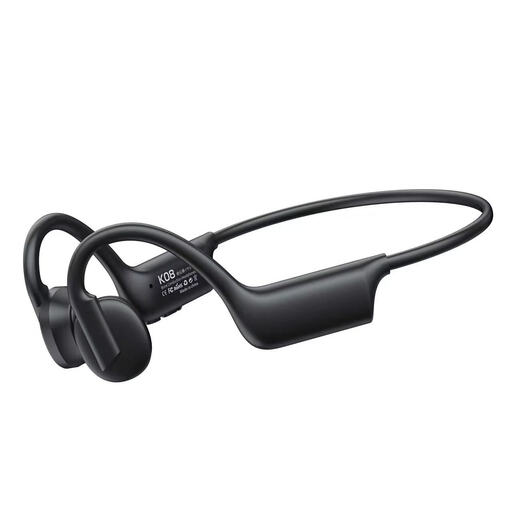
Why this choice suits this profile : With bone-conduction technology and an open-ear design, this model is aimed at swimmers, runners, cyclists and anyone who wants to listen to MP3 files without carrying their phone.
Its 32 GB of internal storage and IPX8 rating overcome Bluetooth’s limitations and suit workouts involving water, provided you follow the usage instructions.
32 GB of storage, advertised battery life of around 8 to 10 hours, built-in microphone and open-ear design.
We have put together a complete, real-time updated selection of products that meet these demanding criteria as well as European safety standards.
No, not necessarily. An IP57 rating alone is not enough to guarantee that a model is suitable for swimming. Underwater, the Bluetooth connection to the phone becomes unstable or even unusable. For swimming pools, choose a model specifically designed for immersion and equipped with internal storage or an MP3 mode.
For an occasional workout, 4 to 8 hours of battery life per charge may be sufficient. If you use the earbuds for several days without recharging the case, focus instead on the total advertised battery life with the case. Fast charging can also save you from having to interrupt your routine before a workout.
Active noise cancellation can reduce surrounding sounds. When running near traffic, an open-ear or bone-conduction model will generally make it easier to remain aware of your surroundings. Whatever format you choose, keep the volume at a reasonable level and follow the safety rules that apply when cycling or walking.