
Livraison le jour même ou le lendemain

Qualité garantie

Débloquez vos offres de bienvenue: Livraison GRATUITE | Jusqu'à -80 % | 30 jours d'essai gratuits à JoyPlus
Téléchargez l'application
Bluetooth earbuds with active noise cancellation are popular with commuters, people working from home and travellers who want to listen to music or take calls in noisy surroundings. But a spec sheet as long as your arm doesn’t guarantee that a model will suit your day-to-day life.
The first pitfall is confusing active noise cancellation, or ANC, with simple passive noise isolation. The second is relying on a figure expressed in decibels: performance varies depending on the frequencies, how well the eartips fit and the type of noise. Finally, the stated battery life often depends on the mode you use, the volume and how many charges the case provides.
Here are the features to consider before choosing wireless ANC earbuds or Bluetooth noise-cancelling headphones.
Active noise cancellation uses microphones to analyse ambient sounds and then produce an opposing signal. It’s particularly effective against continuous noise, such as the hum of a train, plane or ventilation system. It can be less consistent with nearby conversations, sudden sounds or gusts of wind.
Passive isolation depends on the product’s design. In-ear earbuds should come with several sizes of eartips to ensure a good seal. Over-ear headphones, which completely surround your ears, offer a different kind of isolation and may be more comfortable during long listening sessions.
Also check for a transparency mode, sometimes called ambient mode. It lets you hear announcements and conversations without taking your earbuds out. For safety, don’t use ANC in traffic, while cycling or in any situation where you need to stay alert to the sounds around you.
Battery-life figures need to be considered carefully. “Up to” refers to a maximum measured under specific conditions. Turning on ANC, making calls, listening at high volume and using certain audio codecs can all reduce listening time.
For everyday use, compare these figures separately:
Fast-charging earbuds are particularly handy when you’re heading out unexpectedly. For travel, headphones may be a better choice than Bluetooth earbuds if you want dozens of hours of listening time and would rather avoid frequent recharging.
Comfort depends on weight, pressure, eartips and how securely the earbuds stay in place when you move. For headphones, check the width of the headband and the material used for the ear cushions. For True Wireless earbuds, look for a choice of eartip sizes and a secure fit.
Call quality depends on the number and position of the microphones, as well as the software processing. Models described as earbuds with clear call quality may reduce some background noise, but results vary depending on the wind, the distance from your phone and your surroundings.
Finally, a rating such as IP55 or IPX4 indicates a specific level of protection, not general waterproofing. Always check the instructions before using your device in the rain or during exercise.
The features below are based on the information provided in the product listings. Sound quality and comfort may vary depending on the connected device, settings and each user’s ear shape.
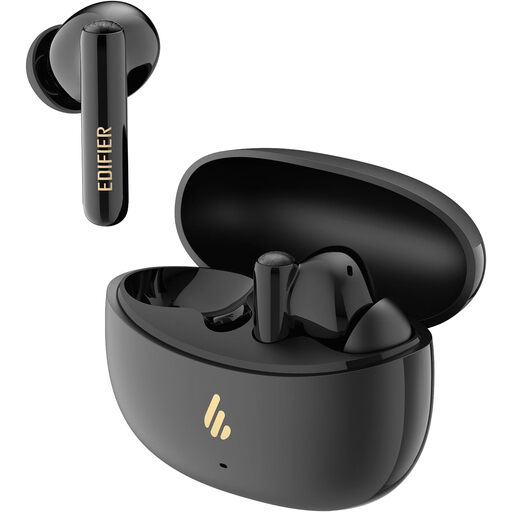
Why it suits this type of user : These True Wireless earbuds combine hybrid ANC, Bluetooth 5.3 and a customisation app in a compact design that’s well suited to daily commutes.
The listing states up to 7 hours of battery life per charge and 31 hours with the case, plus 1 hour of listening time from a 15-minute charge.
Microphones with a noise-reduction algorithm for calls, a gaming mode and a stated IP55 rating.
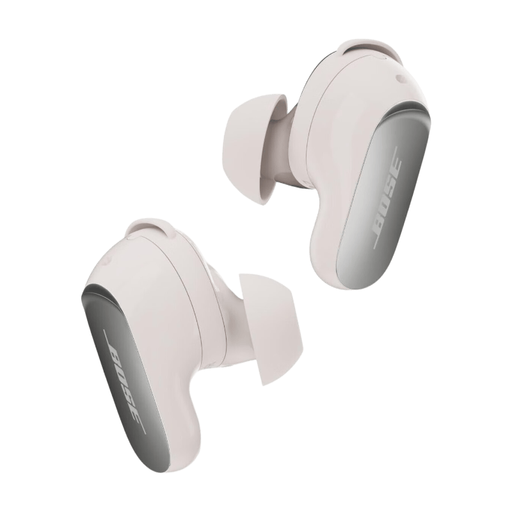
Why it suits this type of user : They’re designed for listeners who want advanced settings, a fit tailored to their ears and an immersive spatial audio experience.
The box includes several eartips and stability bands to help you find a secure fit, rather than relying on a single shape.
Up to 6 hours of stated battery life in Quiet or Aware mode, wireless charging for the case and IPX4 resistance.
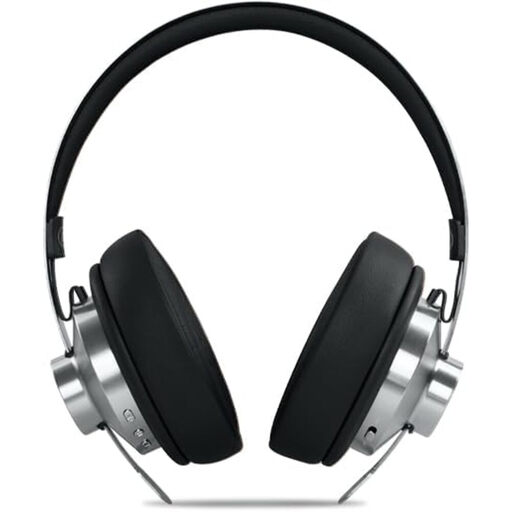
Why it suits this type of user : Its over-ear design, auxiliary input and stated 66-hour battery life make it suitable for long journeys and extended listening sessions.
The 3.5 mm wired connection lets you keep listening to music when the battery is low or when using a device without Bluetooth.
Bluetooth 5.4, ANC stated to reach up to -35 dB, a built-in microphone and over-ear cushions.
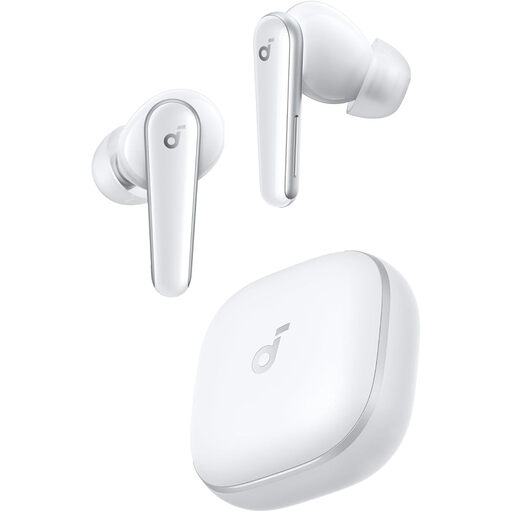
Why it suits this type of user : Its six stated microphones and customisable audio modes are aimed at calls, podcasts and music, whether you’re at your desk or on the move.
The listing gives separate battery-life figures with and without ANC: up to 8 hours per charge with ANC, compared with 12 hours in normal mode.
Stated support for LDAC and Hi-Res Audio, plus a 10-minute charge that provides up to 5 hours of listening time according to the supplied information.
We’ve put together a comprehensive, regularly updated list of products that meet these strict selection criteria and European safety regulations.
Yes. ANC uses microphones and additional electronic processing, so battery life may be shorter when noise cancellation is on. Always compare the figures for “ANC on” and “ANC off”.
It depends on the built-in battery, how often you recharge it, exposure to moisture and how well you look after the earbuds. Clean the eartips with a dry cloth, avoid high temperatures and store the earbuds in their case. Like any rechargeable battery, it will gradually lose capacity over time as it goes through charge cycles.
Over-ear headphones often have enveloping ear cushions and long battery life, while True Wireless earbuds take up less space. To choose between them, compare comfort, weight, the option to listen with a cable and how easy they are to pack in your luggage.