
Livraison le jour même ou le lendemain

Qualité garantie

Débloquez vos offres de bienvenue: Livraison GRATUITE | Jusqu'à -80 % | 30 jours d'essai gratuits à JoyPlus
Téléchargez l'application
Bluetooth wireless earbuds with active noise cancellation promise silence, long battery life and immersive sound. But a glossy spec sheet doesn't guarantee an experience that suits your daily life. Commuting on the Tube, taking calls in a shared space, working from home, exercising or gaming all demand different priorities.
Before you buy True Wireless Bluetooth earbuds, three common pitfalls deserve your attention.
A figure expressed in decibels, such as "up to 49 dB", corresponds to a measurement announced by the manufacturer under specific conditions. It doesn't predict the comfort you'll get in every environment. Active noise cancellation is most effective against continuous, low-frequency sounds like the hum of a train or plane. Nearby conversations and sudden noises, on the other hand, can remain perfectly audible.
The shape of the earbuds also matters a great deal. Well-fitted in-ear earbuds generally isolate you better from outside noise than open-back models, but they won't suit every ear shape.
The advertised battery life varies depending on listening volume, call duration and whether ANC is switched on. When a model claims several dozen hours, that figure often includes the top-ups provided by the charging case. So you need to distinguish the earbuds' standalone battery life from the total battery life you get with the case.
For travel or long days, compare these two figures. A high total battery life is handy, provided the case remains easy to carry and recharge.
Advanced features aren't necessarily available on every phone. iPhone users benefit from specific integration with Apple AirPods, while Samsung Galaxy Buds are designed to work with Galaxy devices and the associated app. Android smartphones are generally compatible via Bluetooth, but some options may depend on your system version.
An IP54, IP57 or IPX8 rating doesn't cover the same level of protection. It corresponds to specific test conditions and doesn't automatically turn earbuds into swimming accessories. Always check the manufacturer's guidelines before using them in the rain, during a workout or in water.
For transport and work, choose a model that offers several modes: ANC, off and transparency. The latter lets more ambient sound through without you having to remove the earbuds. It's particularly handy on the street, at the station or in the office.
The number of microphones isn't enough to judge call quality. Instead, check for an ambient noise reduction feature and, if possible, test the sound during a call. The Samsung Galaxy Buds4 Pro, for example, claim six microphones and neural processing dedicated to calls – these are specs communicated by Samsung, not a guarantee of identical results in every situation.
Compare the figures quoted with ANC on and off. For reference, the HONOR Earbuds A Pro claim up to 9 hours of listening on a single earbud charge and up to 42 hours with the case. The AirPods 4 with active noise cancellation claim up to 4 hours on a single charge and up to 30 hours with the case.
USB-C charging makes daily use simpler in the UK. Wireless charging can be useful if you already have a compatible Qi charger, but it's not essential for everyone.
Weight, shape and ear tips often have more influence on comfort than the number of features. For running or cycling, an ear-hook model, bone-conduction design or open-back structure can offer a very different fit from a standard in-ear earbud. In any case, follow safety guidelines and avoid listening at high volume for long periods.
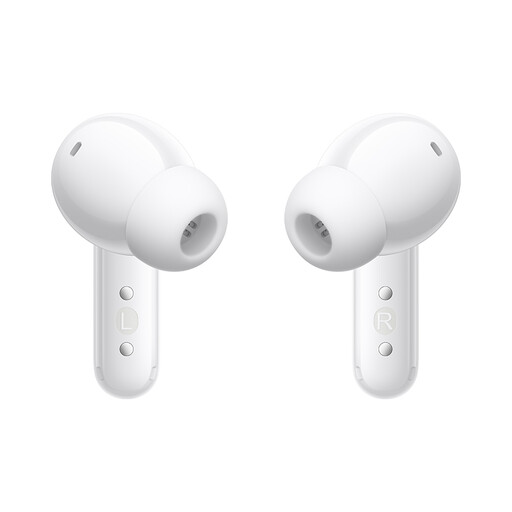
Why this pick suits this profile: This model combines ANC, Bluetooth 5.3 and a charging case in a format designed for everyday listening. Check the displayed price and delivery terms before ordering.
The battery figures distinguish listening on the earbuds alone, up to a claimed 9 hours, from the total battery life with the case, up to 42 hours. The IP54 rating is clearly defined and should not be confused with protection against immersion.
12.4 mm dynamic driver, ANC claimed up to 49 dB and Bluetooth 5.3.

Why this pick suits this profile: It's aimed at users who want advanced audio adjustments and tight integration with the Galaxy ecosystem.
The spec sheet distinguishes battery life with ANC, up to 6 hours, from that without ANC, up to 7 hours. The IP57 rating is intended for splashes as per the guidelines provided, not for swimming.
Dual-driver system, claimed 24-bit/96 kHz audio, 9-band equaliser and USB-C or wireless charging.

Why this pick suits this profile: Its open-back design and built-in memory target swimmers and athletes who want to listen to files without keeping their phone nearby.
The claimed 32 GB memory and IPX8 rating are stated separately. The charging port must be completely dry before any connection.
Open-back bone-conduction design, Bluetooth 5.3 depending on the variant, MP3 memory and claimed battery life of around 8 to 10 hours.
We've put together a comprehensive, real-time updated selection of products that meet these strict selection criteria and European safety requirements.
Basic audio connection generally works with Bluetooth-compatible devices. However, the equaliser, updates, spatial audio or automatic switching may require a dedicated app and a specific system version. Check Android or iOS compatibility before you buy.
Lifespan depends on the battery, the number of charge cycles, exposure to heat and how well you look after them. Avoid extreme temperatures, moisture not covered by the certification, and prolonged listening at high volume. The built-in battery is not user-replaceable – contact the manufacturer or an authorised repairer.
They can offer useful passive isolation, especially with ANC, but their comfort varies depending on your ear shape. For a long journey, compare the fit, weight, battery life with noise cancellation on and the presence of a transparency mode. For walking in the city or exercising, an open-back design can help you stay more aware of surrounding sounds.