
Livraison le jour même ou le lendemain

Qualité garantie

Débloquez vos offres de bienvenue: Livraison GRATUITE | Jusqu'à -80 % | 30 jours d'essai gratuits à JoyPlus
Téléchargez l'application
A warning light flashes on your dashboard, and panic sets in. Should you rush to the garage? Is it serious? A simple visit to the dealership for a diagnostic check can quickly drive up the bill. This is why more and more drivers, whether they're mechanics enthusiasts or simply budget-conscious, are equipping themselves with a Bluetooth car diagnostic tool.
The problem is, the market is flooded with models, and it's easy to get ripped off. Before you pull out your credit card, it's crucial to know how to separate marketing hype from genuinely useful features to avoid an investment you'll quickly regret.
The 2 classic pitfalls to avoid:
To invest in a tool that will truly meet your needs, you need to analyze a few key technical points. Don't be swayed by an endless list of features; focus on what really matters.
This is where the main difference lies. A simple fault code reader is limited to reading and clearing engine-related errors (OBD2/EOBD standard). It's handy, but often not enough.
In contrast, a more powerful tool offers all-system diagnostics. In practical terms, it can communicate with all of the vehicle's electronic control units (ECUs):
This capability is essential for precisely identifying the source of a fault that isn't limited to the engine.
A good diagnostic tool does more than just read errors. Service (or reset) functions allow you to perform common maintenance tasks yourself and clear a car's error code after a repair. Among the most useful are:
Double-check which functions are included and whether their access is time-limited.
For more advanced users, a bidirectional car scanner is a game-changer. This feature allows the tool to send commands to a vehicle component to test its operation. For example, you can command the tool to activate the radiator fan, open and close an EGR valve, or test the injectors.
This shifts you from passive diagnosis (reading errors) to active diagnosis (triggering an action to confirm a hypothesis). The result: a significant time-saver and less risk of replacing a part for no reason.
Rather than an exhaustive list, here are models that cater to distinct user profiles, prioritizing performance and transparency.
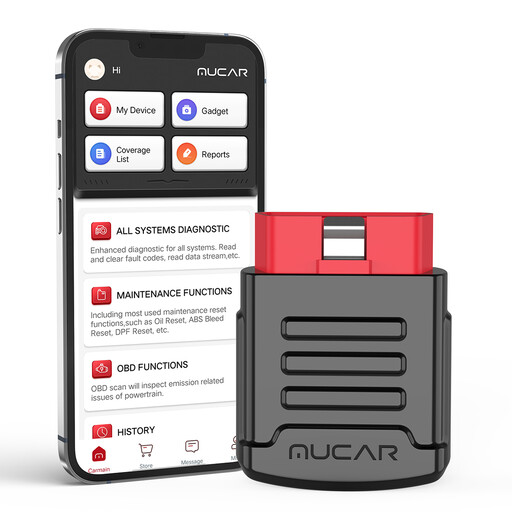
Why we chose it: Perfect for beginners, this dongle turns your smartphone into a real diagnostic tool. It offers an excellent balance of price and features for personal maintenance and occasional breakdowns on family cars.
The business model is transparent: full all-system diagnostics are free for life. The 15 service functions are included for free for one year, which is clearly stated. No nasty surprises.
Lifetime access to full system diagnostics for over 128 brands. The Bluetooth connection via a smartphone car diagnostic app (iOS/Android) makes it ultra-convenient and portable.
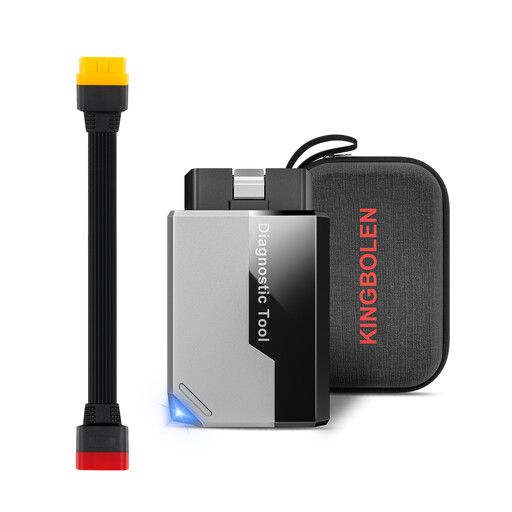
Why we chose it: For those who want to go far beyond simple code reading. It's a long-term investment for the savvy DIY mechanic who needs pro-level functions without the cost of garage equipment.
It sidesteps the subscription trap by offering lifetime updates not only for diagnostics but also for all 15 service functions and bidirectional control. A true one-time purchase.
The bidirectional control allows for active component testing. Compatibility with recent protocols (CAN-FD) and FCA group vehicles (via AutoAuth) ensures very broad coverage.
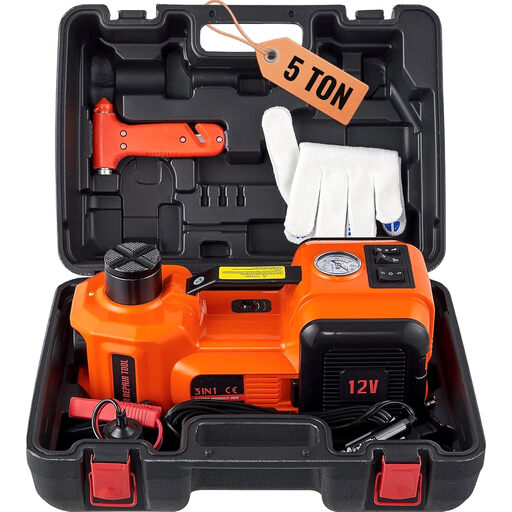
Why we chose it: Diagnostics is only the first step. To work on brakes, suspension, or even for a simple oil change, a safe lift is non-negotiable. This electric jack radically simplifies the task, especially on SUVs and heavy vehicles.
After identifying a brake or suspension issue with your OBD2 scanner, this tool lets you take action safely, without the back-breaking effort of a manual jack.
5-ton lifting capacity suitable for cars and SUVs. Fast electric lift (155-450 mm) that saves precious time. Comes in a convenient carrying case.
We have selected a full range of products that meet our quality and safety criteria.
1. Is a Bluetooth diagnostic tool compatible with my car? As a general rule, all petrol vehicles since 2001 and diesel vehicles since 2004 are equipped with a standard 16-pin OBD2 port. They are therefore compatible for basic engine diagnostics. For full system diagnostics (ABS, airbags, etc.) and service functions, compatibility depends on the specific tool. Always check the manufacturer's compatibility list before purchasing, specifying your vehicle's make, model, and year.
2. Do I need a subscription to use a Bluetooth OBD2 scanner? It all depends on the model. Entry-level tools often offer free lifetime engine code reading. More advanced models, like the KINGBOLEN Ediag Elite, may include lifetime updates for all functions. Others, like the MUCAR BT200 Pro, operate on a mixed model: free lifetime system diagnostics, but service functions become paid after one year. Read the product description carefully to understand the business model and avoid unpleasant surprises.
3. Can I really clear all error codes with a smartphone tool? Yes, but be careful: clearing a code does not fix the problem. If the underlying issue is not resolved, the warning light will inevitably come back on. A diagnostic tool is used to identify a problem, not to make it magically disappear. Clearing a code without fixing the cause is not only pointless but can also be dangerous, especially if it relates to safety components like brakes (ABS) or airbags (SRS).