
Livraison le jour même ou le lendemain

Qualité garantie

Débloquez vos offres de bienvenue: Livraison GRATUITE | Jusqu'à -80 % | 30 jours d'essai gratuits à JoyPlus
Téléchargez l'application
Between the yellow tones that creep in after a few washes, roots that reappear before your next salon appointment, and colour results that don't always match the picture, choosing blonde hair products requires a bit of know-how. The right solution depends above all on your base colour, your hair type and the result you're after.
A purple shampoo or a toning treatment for blonde hair can help visually tone down certain yellow or orange undertones. However, it does not replace a permanent colour and won't provide lasting coverage for grey hair. Conversely, a blonde colour actually changes the shade and requires you to check your starting colour carefully.
"Light blonde", "golden blonde", "dark blonde" or "ash blonde" won't necessarily give the same result on natural, highlighted or previously bleached hair. Porosity, previous colour treatments and the presence of grey hair can all affect the final outcome. It's far better to consult the shade chart and the instructions on the box than to rely solely on the picture.
Oxidation hair colours may contain substances that can cause an allergic reaction. Several of the products featured here recommend carrying out an allergy alert test 48 hours before each use. Wear the gloves provided, follow the development time and never apply the product to irritated or damaged skin.
This distinction stops you from buying a blonde hair mask hoping for permanent coverage, or using a full colour kit when you only need a quick fix for a few days.
A dark blonde colour doesn't react the same way as a very light shade. Check the accepted starting colour levels and whether warm pigments are present. Very porous hair can also absorb pigments more quickly, especially with toning treatments.
For a root touch-up, choose a shade close to your roots rather than a colour that only matches the lengths. Too big a difference risks creating a noticeable line.
A 75 ml bottle is suitable for targeted applications, whereas a 300 ml or 1,000 ml shampoo fits better into a regular routine. Also check the development time: some products work in just a few minutes, whereas a colour requires you to mix it with the developer and follow a precise application time.
Aerosols should be used in a well-ventilated area, away from your face and any sources of heat. Touch-up powders are applied to dry hair so you can target regrowth more accurately.
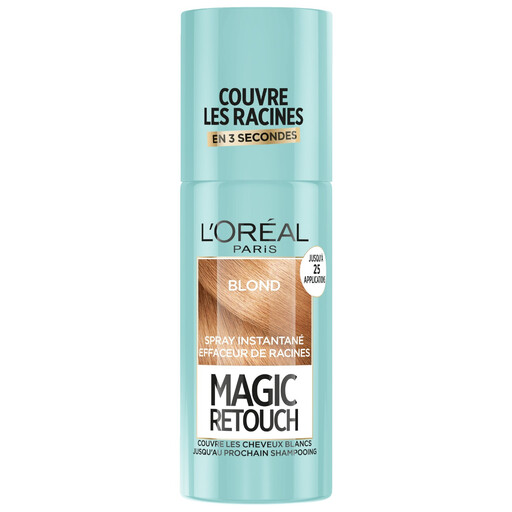
Why this choice suits this profile: This spray is for anyone who wants to quickly conceal blonde regrowth or grey hair between colour appointments, without having to treat the whole head. Easy to store, this format is said to dry in around one minute.
This is a temporary solution, clearly different from a permanent colour. The product is sprayed onto dry hair from about 15 cm away, then washed out with shampoo.
Targeted application, 75 ml format and a pack of two bottles as stated on the product page. As with any aerosol, keep it away from heat and flames.
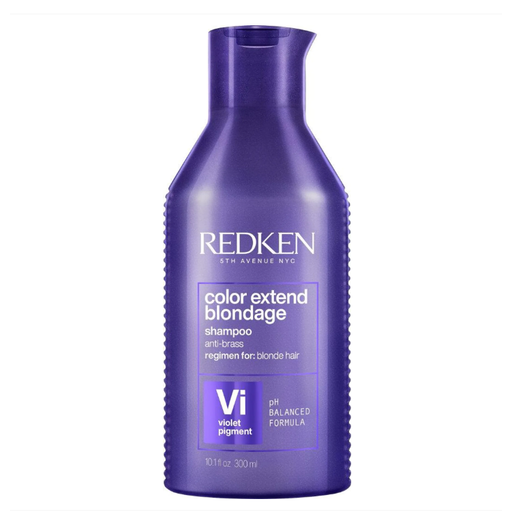
Why this choice suits this profile: This shampoo is ideal for those who want to regularly incorporate a purple shampoo into the maintenance of natural, coloured or highlighted blonde hair.
The development time is specified: 3 to 5 minutes on the second application. This lets you gradually adjust the intensity, rather than leaving the pigments to work without control.
Violet pigments, 300 ml format and can be used on natural, coloured or highlighted blonde hair, according to the product page.
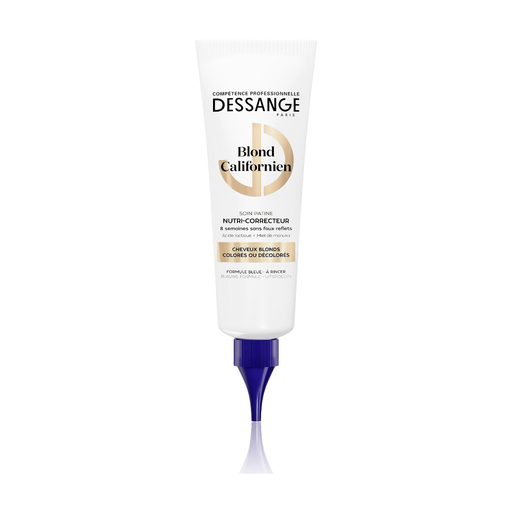
Why this choice suits this profile: This toning treatment targets coloured, highlighted or bleached blonde hair that has developed warm tones and needs a targeted weekly routine.
The product page recommends weekly use and a development time of 5 to 10 minutes. So don't mistake it for a permanent colour or leave it on longer than instructed.
Blue pigments, 140 ml tube and a formula featuring lactic acid and Manuka honey.
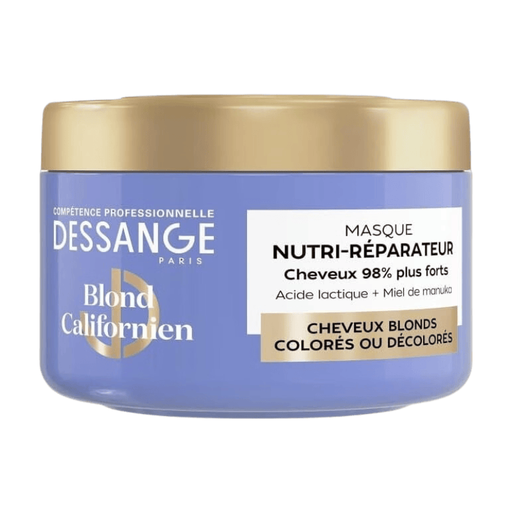
Why this choice suits this profile: This mask is for anyone looking to nourish their lengths after highlights or bleaching, with application once or twice a week.
This is a treatment mask, not a product designed to cover roots or permanently change colour. Applying it to washed, towel-dried hair also helps you avoid using too much.
280 ml format, 3 to 5 minute development time and contains lactic acid and honey extract according to the listed ingredients.
We've put together a comprehensive, real-time updated selection of products that meet these exacting criteria as well as European safety standards.
To maintain certain blondes, you can use a purple shampoo or a toning treatment containing violet pigments. Orange tones may need a formula with blue pigments. Start with a short development time, then adjust it according to the manufacturer's recommendations.
Root concealer spray is suitable for a quick, temporary fix, while root touch-up powder allows for more precise application, especially on a parting or at the temples. These products are usually removed with shampoo and do not replace a permanent colour.
How long it lasts depends on the type of product, how often you wash your hair, your hair's porosity and the shade you choose. A permanent colour alters the hair fibre more durably, but regrowth will still eventually appear. A toning treatment or purple shampoo is primarily for maintaining the colour and should be reapplied when the tones start to change.