
Livraison le jour même ou le lendemain

Qualité garantie

Débloquez vos offres de bienvenue: Livraison GRATUITE | Jusqu'à -80 % | 30 jours d'essai gratuits à JoyPlus
Téléchargez l'application
Changing lanes on the motorway, entering a roundabout, or simply parallel parking: these everyday manoeuvres all share one thing in common—the dreaded blind spot. Even with perfectly adjusted mirrors, a blind zone persists, capable of hiding a motorcycle or another car. Installing a small, add-on mirror is a simple and cost-effective solution to eliminate this danger.
However, the market is flooded with models making tempting promises, and it's easy to fall for the classic traps that make this purchase useless, or even counter-productive. Before you buy, here are the essential points to check to make the right choice.
To ensure your purchase is a genuine driving safety accessory and not a useless gadget, check these simple but crucial technical points.
The principle of a blind spot mirror lies in its convex shape. Unlike a flat mirror, its curved surface captures a much wider field of view. The challenge is to find the right balance: enough convexity to cover the blind spot, but subtle enough not to overly distort distance perception. Opt for models with so-called "HD" (high-definition) glass, which provide better clarity and reduce unwanted glare. A frameless round mirror is often an excellent choice, as it maximises the usable viewing area without visually cluttering your mirror.
The longevity of your installation depends entirely on the quality of the adhesive. Look for products that explicitly mention the use of adhesives from brands renowned for their strength, such as 3M tapes. These are designed to withstand the elements (rain, frost, high heat) and vibrations, ensuring a reliable, long-lasting bond. For a perfect stick, remember to thoroughly degrease and dry the surface of your original mirror before installation.
A 360° adjustable add-on mirror offers crucial flexibility. Every driver has a unique height and driving position. The ability to pivot and tilt the small mirror after it's attached allows you to adjust it with pinpoint accuracy to cover your blind spot, not someone else's. It's this precision tuning that transforms a simple piece of mirror into a truly personalised driving assistant.
Rather than an endless list, we've selected models that meet specific needs, based on the quality and practicality criteria we've just discussed.
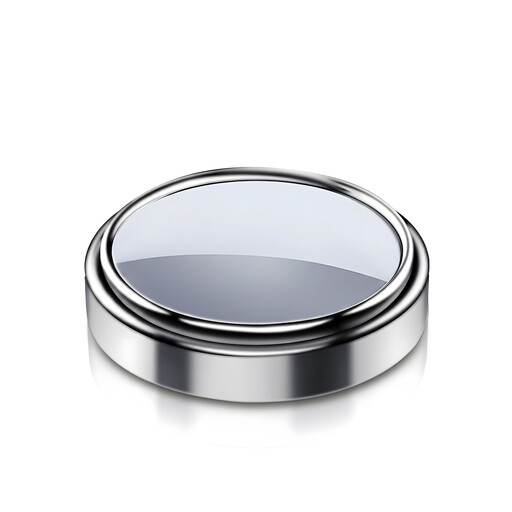
Why this choice? For those who weave through dense traffic and underground car parks, perfect side and low-angle visibility is vital. This mirror helps you see lane markings, curbs, and cars in adjacent lanes. The result: parallel parking and lane changes in the city become a breeze.
It features a heavy-duty 3M adhesive, its HD glass provides a clear image with controlled distortion, and its frameless design maximises vision without ever obstructing the main mirror.
Its 360° rotation and 30° tilt allow for a custom adjustment to keep an eye on the rear wheel—a decisive advantage for nailing parallel parking on the first try.
Why this choice? For a new driver, the blind spot is a significant source of stress. This simple accessory provides reassurance by offering a panoramic view, which boosts confidence when merging onto a motorway or changing lanes. It's an excellent way to develop good visual check habits from the start.
Its ultra-simple installation and reliability (thanks to the 3M adhesive!) make it an ideal, hassle-free first accessory. The HD glass prevents any visual confusion, which is crucial when you're learning to drive.
Its universal and discreet design integrates seamlessly onto most first cars (city cars, compacts) without spoiling their look.
We have compiled a complete selection of products that meet our strictest quality and safety criteria.
1. How do you properly install a blind spot mirror? Installation is a breeze. First, carefully degrease the area of the original mirror (usually the outer corner) with a little alcohol to remove any dirt. Peel off the protective film from the adhesive, position the mirror without applying pressure to confirm the placement, then press firmly for about ten seconds. Ideally, wait a few hours before driving to allow the adhesive to cure completely.
2. Does a blind spot mirror distort distance perception? Yes, a slight distortion is unavoidable; it's the very principle of the convex mirror that allows it to offer such a wide field of view. It's essential to understand that this mirror is a supplementary visual aid. It is used to confirm the presence of a vehicle in your blind spot, but not to accurately judge its speed or distance. For that, nothing replaces a glance in the main mirror and a direct head check.
3. Is adding this type of mirror legal? Absolutely. In most regions, the use of add-on blind spot mirrors is 100% legal. They are considered an additional safety feature. However, they do not replace the mandatory exterior and interior mirrors, which must, of course, remain in perfect working order.