
Livraison le jour même ou le lendemain

Qualité garantie

Débloquez vos offres de bienvenue: Livraison GRATUITE | Jusqu'à -80 % | 30 jours d'essai gratuits à JoyPlus
Téléchargez l'application
Craving a vitamin-packed smoothie, a creamy soup, or a homemade sauce? You're on the hunt for the perfect blender. But with an overwhelming number of options, it's easy to get lost. Between the marketing jargon and endless spec sheets, finding the right one can feel like an uphill battle. Our editorial team's mission: to guide you, help you identify the appliance that will truly meet your needs, and show you how to sidestep the most common traps.
Before you even start comparing models, it's crucial to know the missteps that lead straight to disappointment. After all, an appliance gathering dust in a cupboard is a poor investment, no matter the price.
To avoid these disappointments, focus on a few key technical points that make all the difference.
Blender Type: Your intended use dictates the right format.
Materials and Design: Durability and food safety are a non-negotiable pair.
Power and Speeds: Now that we've covered design, let's talk power.
Rather than an endless list, here are a few models that cater to specific user profiles, taking performance and practicality into account.
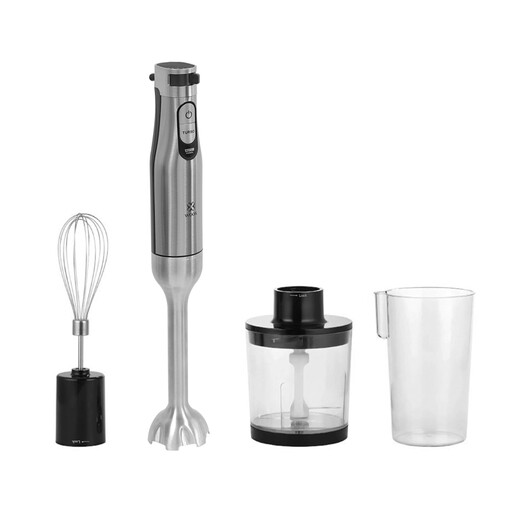
Why it's a great choice: Ideal for those looking to replace several appliances with a single device. It lets you prepare soups directly in the pot, chop herbs or meat for a sauce, and whip up mayonnaise or whipped cream.
Unlike entry-level multifunction gadgets, its 1200W motor has enough power to make every accessory genuinely effective, without ever sacrificing blending performance.
All-inclusive package (blending wand, 500 ml chopper, whisk, 600 ml beaker). The removable parts are dishwasher-safe, which makes cleanup a non-issue.
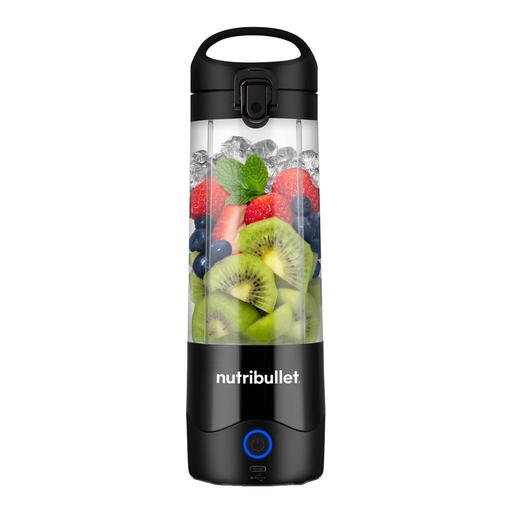
Why it's a great choice: Perfect for making a smoothie or protein shake on the go: at the office, while travelling, or right after a gym session. Its USB-C rechargeable battery means total freedom.
It doesn't try to do everything, and that's its strength. It's a personal blender, pure and simple, optimised for portable use: you blend directly in the 475 ml BPA-free cup, drink, and go. Simple and effective.
A full charge in 90 minutes provides over 15 blending cycles. Ultra-compact and lightweight, it slips into any bag. The cup is dishwasher-safe for minimal maintenance.
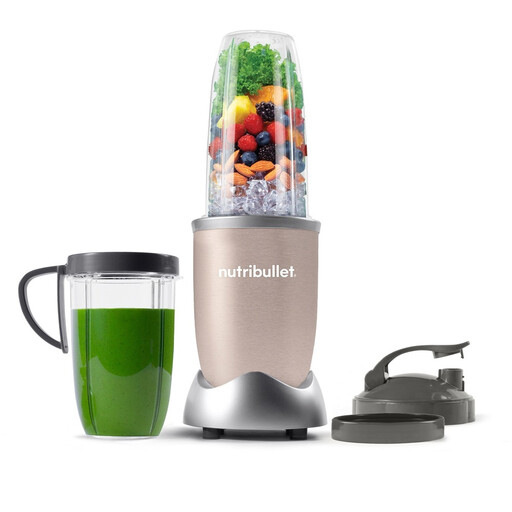
Why it's a great choice: For those who can't stand any chunks and want a perfectly smooth texture, even with notoriously tough ingredients like kale, seeds, or frozen fruit. It's the ideal compromise between the compactness of a personal model and the power of a countertop blender.
It combines a 900W motor with extractor blades and a specially designed cup shape to generate a powerful cyclonic action. This is proof that power and engineering, hand in hand, work wonders.
Its cyclonic action is incredibly effective at extracting maximum nutrients. As for cleaning, it's a breeze: a quick rinse for the blades, and the cups go right in the dishwasher. All in a compact size that won't take over your countertop.
Explore our full selection of blenders, all tested and approved by our experts for performance, durability, and safety compliance.
How many watts does a blender really need? For everyday use (smoothies, soups), 500 to 700 watts is more than enough if the appliance is well-designed. However, if you plan to crush ice often or blend very hard ingredients (nuts, seeds), a 900-watt model or higher is necessary.
Can you put ice cubes or frozen foods in any blender? Absolutely not! This is the number one cause of cracked jars and worn-out motors on entry-level models. Make sure the manufacturer explicitly states an "ice crushing" feature. Blenders with a thick glass or Tritan jar and over 600W of power are much better equipped for this task.
What's the best way to clean a blender to prevent odours? The easiest method is the quick self-clean trick. Immediately after use, fill the jar halfway with warm water and a drop of dish soap. Run the blender on high speed for 30 seconds, then rinse. That's it! For a deep clean, nothing beats a model where the blade assembly easily unscrews from the base.