
Livraison le jour même ou le lendemain

Qualité garantie

Débloquez vos offres de bienvenue: Livraison GRATUITE | Jusqu'à -80 % | 30 jours d'essai gratuits à JoyPlus
Téléchargez l'application
Choosing the right Blédina baby food jars can make mealtimes much easier. You still need to navigate recommended ages, textures, allergens and claims such as “no added sugar”. These details can make all the difference when placing an order.
To help you avoid common mistakes, the Joybuy Product Recommendations Manager reviews formats and uses, looking beyond the marketing claims displayed on the packaging.
A jar labelled suitable from 6 months may not meet the needs of a 4-month-old baby or a 12-month-old child. The recommended age takes into account texture, composition and the child’s stage of weaning.
Always check for wording such as “from 4 months”, “from 6 months”, “from 8 months”, “from 12 months” or “from 15 months”. It should correspond to the child’s actual age and the development of their diet. If in doubt, seek advice from a healthcare professional.
Baby fruit purées with no added sugar still contain the sugars naturally present in fruit. The distinction matters: a recipe based on apple, pear or banana can be naturally sweet without containing added sugar.
Take the time to read the ingredients list. A simple fruit purée will mainly list fruit, possibly with vitamin C or lemon juice. The addition of cereals, concentrated juice or flavourings may change both the recipe and how it should be used.
Family-size formats and multipacks can lower the price per serving, but they require careful attention to storage instructions. Depending on the product, an opened portion may need to be consumed immediately, within 12 hours, within 24 hours or within 48 hours.
Do not keep leftovers that have come into contact with the child’s spoon. Also follow the stated storage temperature, and never freeze a product if the label advises against it.
For first spoonfuls, smooth baby vegetable purées and homogeneous fruit purées are generally the easiest to introduce. From 8 months, some recipes have a thicker texture. From 12 months, meals may contain soft pieces or foods that require chewing, such as pasta, bulgur or vegetables.
The texture should remain suitable for the child’s abilities. Check it before serving and use an appropriate spoon, always under adult supervision.
For baby meals with meat or fish, carefully examine the protein source and declared allergens. Chicken, beef, cod or salmon may be served with vegetables, rice, potatoes, pasta or semolina.
Allergen information should specifically indicate the presence of milk, fish, gluten, egg, celery, soya or mustard. The recipe may also mention possible traces. Always compare the product page with the packaging received, as the formulation may change.
The 55 g jars are suitable for small dessert or snack portions. Formats from 100 to 130 g are practical for fruit purée or vegetable purée, while 200 to 230 g bowls are better suited to a complete meal for an older child.
Some products can be served at room temperature, while others can be warmed in a bain-marie or microwave. Never heat a jar directly if the instructions prohibit it, and always stir before checking the temperature.
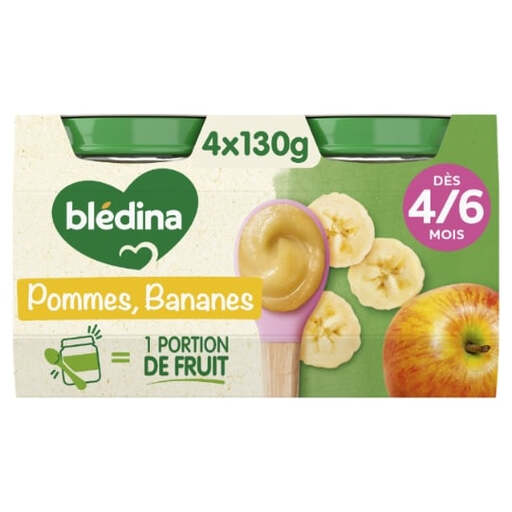
Why this is a good fit: This multipack features a short ingredient list, made up of 80% apple purée and 20% banana purée, in a 130 g format suited to first fruity discoveries.
The recommended age is clearly stated, while the smooth texture avoids introducing a recipe with pieces too early.
Pack of 4 × 130 g jars, gluten-free recipe according to the supplied product information, with storage for up to 48 hours after opening.
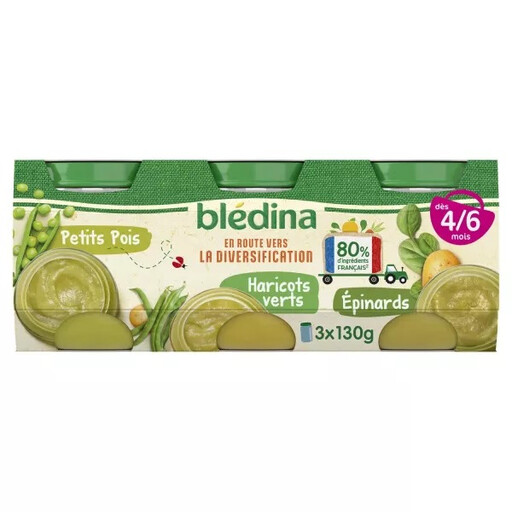
Why this is a good fit: This assortment brings together green bean and potato, garden pea, and spinach and potato recipes to add variety to a child’s first vegetable purées.
The detailed ingredients clearly distinguish the three recipes instead of presenting an assortment without specifying the proportion of each vegetable.
3 × 130 g jars, vegetarian and vegan recipes according to the product information, with no palm oil.
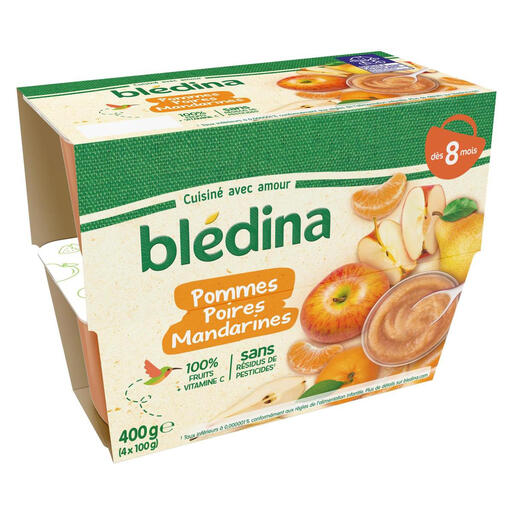
Why this is a good fit: This individual format slips easily into a changing bag and can be served as a dessert or snack. The recipe contains 66.9% apple, 25% pear and 8% mandarin juice.
The “no added sugar” claim does not mean that the product contains none of the sugars naturally present in fruit.
4 × 100 g pouches, with added vitamin C, served at room temperature or slightly chilled.
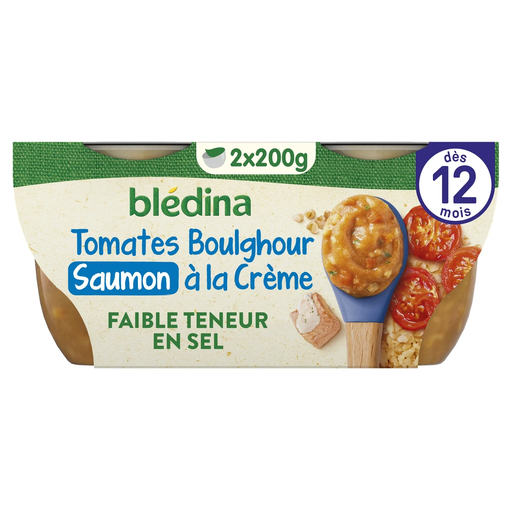
Why this is a good fit: This meal combines tomato, bulgur, vegetables and salmon in a soft-piece texture designed to support the development of chewing skills.
Before buying, check the recommended age, as well as the presence of gluten in the bulgur, fish and milk in the cream.
2 × 200 g bowls, with 8% salmon stated in the product information, suitable for reheating in a bain-marie or microwave.
For dinner from 8 months, Blédiner Carrot, Sweet Potato and Semolina, sold in a pack of 2 × 200 g, offers a purée texture. The product information states that it contains no added salt, while milk and gluten should be taken into account.
From 12 months, Blédichef recipes introduce thicker textures, including spaghetti bolognese, courgette macaroni, spinach and salmon, and couscous. Blédine baby cereals, such as the wheat and vanilla version from 6 months, are prepared with approximately 200 ml of lukewarm water and should be consumed immediately after preparation. The product information lists gluten and sugar among the ingredients.
Explore an updated selection of Blédina products to compare formats, recommended ages and uses based on your needs.
Some products are labelled suitable from 4 months, such as the apple and banana recipe in 130 g jars. Others, particularly more varied fruit blends, are recommended from 6 or 8 months. The age guidance on the product should take precedence over any general rule.
Storage time varies by product: 12 hours for some fruit purées, 24 hours for certain desserts or fruit products, and up to 48 hours for several savoury meals. Refrigerate any unserved portion in a sealed container when the label permits, then discard any leftovers that have already been offered to the child.
They are convenient when travelling, on busy days or whenever preparing a meal is not possible. For a varied diet, alternate recipes, vegetables, fruits and protein sources according to the child’s age. Also take into account the child’s appetite and the specific guidance on each package.