
Livraison le jour même ou le lendemain

Qualité garantie

Débloquez vos offres de bienvenue: Livraison GRATUITE | Jusqu'à -80 % | 30 jours d'essai gratuits à JoyPlus
Téléchargez l'application
Bleach cleaning products can be used for a wide range of household tasks: cleaning the loo, maintaining the bathroom, degreasing the kitchen, eliminating unpleasant odours or treating certain washable surfaces. But relying solely on the word "power" or the fragrance can lead to using the wrong product – or even wasting your money.
A product can clean and whiten without being intended for disinfection. This is particularly the case with certain multi-purpose formulas whose label states they are not suitable for that use. Conversely, a biocidal product must be used in strict accordance with its labelling, the contact time stated and the safety precautions given.
For laundry, standard bleach is not suitable for all fibres and can discolour fabrics. An oxygen-based stain remover or whitener will often be more suitable for white or coloured clothes, provided you follow the recommendations on the label.
A 1.5 l bottle might seem economical, but it isn't necessarily practical in a small bathroom or for occasional use. On the other hand, a disinfecting toilet gel with a curved nozzle lets you apply the product precisely under the rim, while a spray is more convenient for easily accessible surfaces.
The right format therefore depends on how often you use it, the area you need to treat and the storage space you have available.
Bleach must never be mixed with an acidic product, vinegar, a descaler or ammonia. Such a combination can release toxic gases. Also avoid any contact with certain metals, delicate fabrics and surfaces that are not expressly compatible with the product.
Products based on sodium hypochlorite come in different forms: liquid, gel, tablets or refills to dilute. A gel adheres better to vertical surfaces and reduces drips. A bleach refill to dilute can reduce packaging volume, but the dosage must be followed to the millilitre, in line with the instructions.
For precise application, also check for an anti-splash nozzle or a directional spout. This is particularly useful under the toilet rim and helps to limit splashes.
The pictograms indicating a corrosive or irritant product are not there to decorate the packaging. Wear suitable gloves, protect your eyes if the label recommends it and ventilate the room. Always store the product in its original packaging, tightly closed and out of reach of children.
When a biocidal efficacy is claimed, check the precise conditions of use stated on the label. The product NET, for example, indicates a bactericidal action in accordance with standard EN 1276 under the conditions defined on its data sheet. The presence of a standard does not, however, mean the product is suitable for all surfaces or all situations.
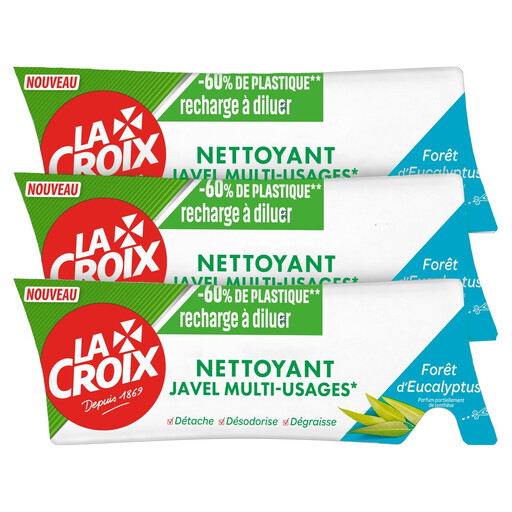
Why this choice suits this profile: The pack of three refills is ideal for regular cleaning of floors, tiles and worktops, with a dilution to prepare following the instructions on the packaging.
The refill avoids accumulating ready-to-use bottles, but it does require you to follow the dilution ratios precisely and rinse surfaces that come into contact with food.
Three refills, a eucalyptus fragrance and possible use on several household surfaces, according to the instructions.
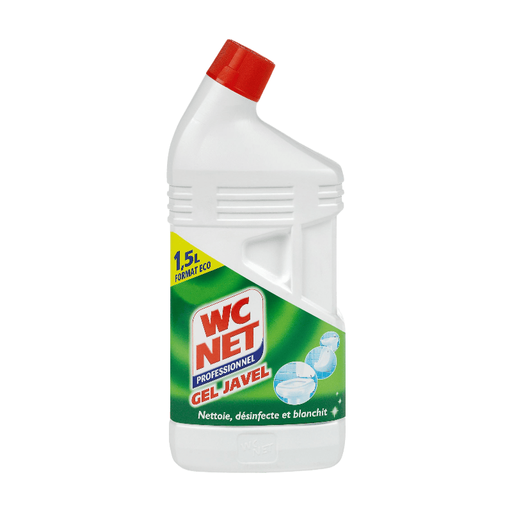
Why this choice suits this profile: Its 1.5 l format and directional nozzle are well suited to frequent cleaning of toilet bowls and urinals.
The data sheet recommends a contact time of 15 minutes and application under the rim. This helps you avoid treating the toilet bowl hastily or inaccurately.
Adherent gel, large 1.5 l professional bottle and claimed bactericidal action in accordance with standard EN 1276, under the conditions specified.
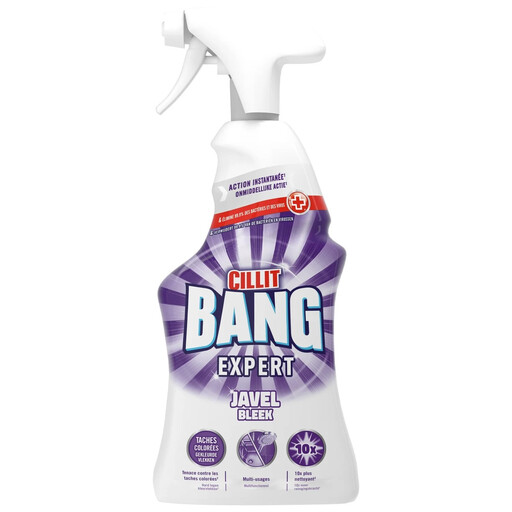
Why this choice suits this profile: The 750 ml spray is practical for regularly cleaning tiles, grout, basins and shower screens.
The data sheet clearly distinguishes its use in the bathroom and reminds you not to mix the product with acidic cleaners.
Spray format, targeted application and claimed efficacy according to the product data sheet and the conditions of standard EN 14476.
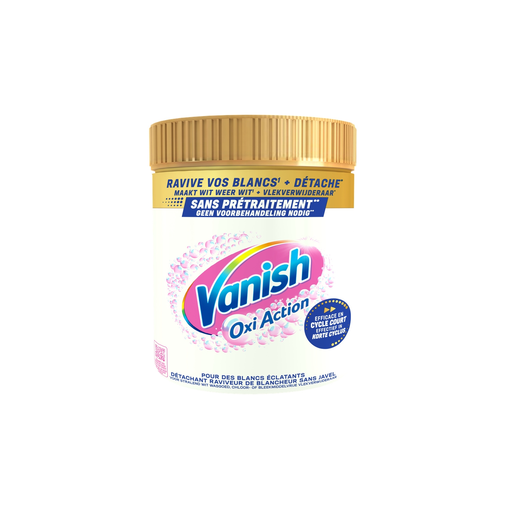
Why this choice suits this profile: Its chlorine-free formula is designed for white fabrics and everyday stains. It can be used in the machine or as a pre-treatment, according to the instructions on the label.
It avoids applying chlorinated bleach to fibres that could yellow or become weakened. However, check compatibility on an inconspicuous area first.
Powder in a 1.45 kg format, oxygen-based whitening agents and a formula stated to be chlorine-free.
We have compiled a complete selection, updated in real time, of products that meet these demanding criteria and European safety requirements.
Chlorinated bleach is not suitable for all fabrics. Check the care label and the composition of the garment. For white laundry, an oxygen-based stain-removing powder is often a more versatile solution. On some colours, a chlorine-free stain remover can be used, provided you follow its instructions.
Disinfecting toilet gel is formulated to adhere to the toilet bowl and reach the area under the rim. Multi-purpose bleach cleaner is aimed more at floors, tiles and washable surfaces. These two products are not interchangeable: always check the authorised uses on the label.
Compare the actual usable volume, the recommended dosage and the frequency of application, rather than just the price of the bottle. Refills help to reduce packaging. A concentrated or dilutable product can also be worthwhile for regular cleaning, provided you follow the stated proportion exactly.