
Livraison le jour même ou le lendemain

Qualité garantie

Débloquez vos offres de bienvenue: Livraison GRATUITE | Jusqu'à -80 % | 30 jours d'essai gratuits à JoyPlus
Téléchargez l'application
With promises of disinfection, instant whiteness and long-lasting fragrance, choosing a multi-purpose bleach cleaner can quickly become a headache. A product that works well on floors may not be suitable for laundry, food-contact surfaces or bathroom fixtures. Concentration, format and instructions all affect the results, as well as everyday safety.
Here are the points to check before you buy, along with a selection of products for different household uses.
A product may remove dirt without being intended to disinfect. This is the case with some bleach-based products whose labels clearly state that they are not for disinfection. For example, LA CROIX Multi-Purpose Bleach Cleaner Liquid 1.5L is described as a cleaner that cleans, whitens and removes stains, but its product information specifies that it is not intended for disinfection.
A household disinfectant, on the other hand, should clearly state what it is designed for. If it is a biocide, the label should also specify the standards or conditions under which its effectiveness has been assessed. So don’t rely on the word ‘bleach’ on the packaging alone.
A refill that needs diluting can reduce packaging and may be a good-value option for regular use. However, you must follow the recommended amount of water carefully. A solution that is too concentrated increases the risk of harm to your skin, eyes and certain materials, without necessarily cleaning any better.
LA CROIX refills are available in packs of 3, 6, 9 or 12, in fragrances such as Eucalyptus Forest or Freshness Boost. Once diluted, they are suitable for floors, tiles and worktops, provided you follow the product instructions.
Bleach can discolour fabrics, corrode some metals and aluminium, or damage painted surfaces and certain finishes. It’s always sensible to test it on a small, inconspicuous area first. Also make sure you distinguish a bleach stain remover for surfaces from a product designed for laundry.
Above all, never mix bleach with an acidic limescale remover, ammonia or any other cleaning product. These combinations can release dangerous gases. This also applies to bleach toilet gels and bathroom sprays.
Start by deciding what you actually want to use it for:
‘Bleach-free’ doesn’t mean ‘ineffective’. Formulas containing oxygen-based bleaching agents can sometimes be a better choice for coloured clothes or delicate fibres, provided you follow the manufacturer’s instructions.
Compare the price per litre, dose or wash rather than just the price of the bottle. A concentrated refill can be good value if the dosage is clearly stated and you have a suitable container. Tablets, meanwhile, offer a pre-measured dose and are easy to store.
Ready-to-use products are the most convenient for occasional cleaning jobs. Gels cling better to vertical surfaces and beneath the toilet rim. Sprays cover large areas quickly, but can cause splashes or release fumes, so make sure you ventilate the room.
Check the hazard pictograms, recommended protective equipment and compatible materials. For biocides, references to European standards such as EN 1276, EN 13697, EN 14476 or EN 16615 should always be considered in context, including concentration, contact time, temperature and type of soiling.
These standards do not guarantee the same results in every household situation. Follow the stated contact time, and don’t rinse or wipe the product away too soon if the label says to leave it to work.
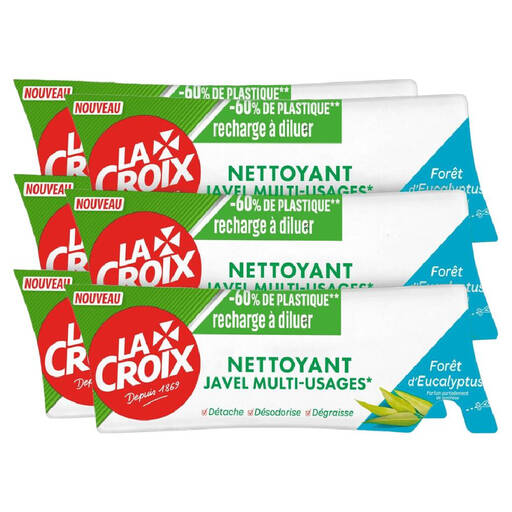
Why it suits this type of user : With six refills, this pack is well suited to regular cleaning of floors, tiles and worktops. Prepare the solution using the dosage stated on the packaging.
The packaging clearly reminds you that the product must be diluted before use, helping you avoid applying the concentrated solution directly to a surface.
Six refills, an Eucalyptus Forest fragrance and a formula designed to remove stains, deodorise and degrease.
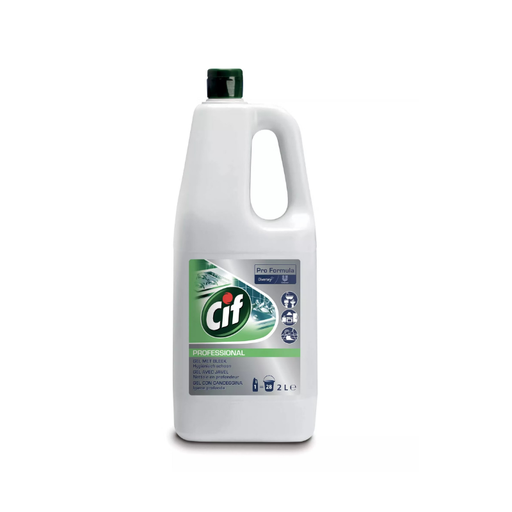
Why it suits this type of user : Its large format and gel texture make it a good choice for households that clean their bathroom, kitchen and washable surfaces frequently.
The product information distinguishes between using it neat on a sponge and diluting it for floors and water-resistant walls.
A 2-litre container and a gel that clings to vertical surfaces. For floors, the recommended dilution is 140 ml per 10 litres of water.
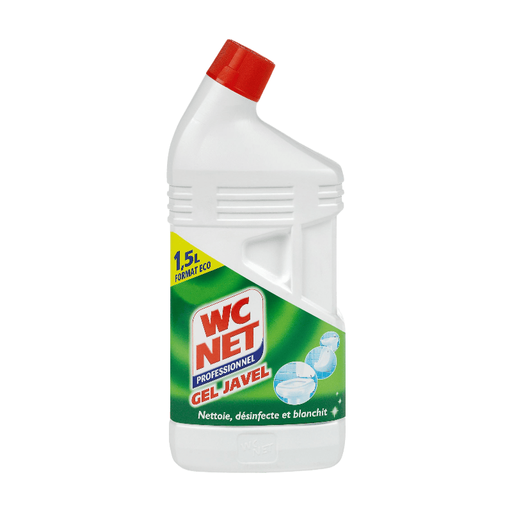
Why it suits this type of user : Its angled nozzle and clinging gel are ideal for targeted cleaning of toilet bowls and urinals, especially beneath the rim.
It is clearly designed for toilets, rather than as a universal cleaner for every surface in the home.
A 1.5-litre format, easy application beneath the rim and a bactericidal action claimed in accordance with EN 1276, under the conditions specified in the product information.
A bleach-free stain-removing powder can be a good alternative for coloured fabrics and some laundry loads. VANISH Oxi Action Stain Remover Powder Bleach-Free Anti-Fade 1.445 kg contains oxygen-based bleaching agents and can be used in the washing machine or as a pre-treatment, following the recommended dosage.
For wool and silk, VANISH Oxi Action Concentrated Stain Remover Gel Bleach-Free for Wool & Silk 1.5 L comes as a gel designed for these fibres, provided you follow the care instructions on the garment label. For surfaces and fabrics, SANYTOL bleach-free disinfectant wipes can be useful for occasional cleaning. You still need to rinse surfaces that come into contact with food, toys, or areas that are in constant contact with babies and pets.
No. Avoid using it on coloured fabrics, aluminium, certain metals, painted surfaces and delicate materials unless the manufacturer explicitly says it is suitable. Always test it on a small, inconspicuous area and follow the instructions.
It depends on the formula and the information on the packaging. Prepare only as much as you need, keep it in a clearly labelled container and never transfer it to a food or drink bottle. For a refill that needs diluting, follow the recommended dosage and storage instructions.
Not necessarily. Some bleach cleaners are designed to clean, whiten or remove stains without claiming to disinfect. For disinfection, check the label, contact time and any standards listed. Never mix different cleaning products.