
Livraison le jour même ou le lendemain

Qualité garantie

Débloquez vos offres de bienvenue: Livraison GRATUITE | Jusqu'à -80 % | 30 jours d'essai gratuits à JoyPlus
Téléchargez l'application
When the temperature soars, or simply to improve indoor comfort, a fan becomes an indispensable ally. The bladeless fan, with its futuristic look, has established itself as a modern and stylish alternative. But don't be fooled: a beautiful design guarantees neither quiet operation nor efficiency. Before you make a purchase, it's crucial to know how to sidestep marketing traps to avoid buyer's remorse.
This guide breaks down the technical features that truly make a difference and teaches you how to spot the flaws that can turn a promising purchase into a real disappointment.
Marketers often overuse enticing claims that mask real weaknesses. Here are two key red flags to watch for to make an informed purchase.
Many manufacturers tout their device's "silent" operation, but this term is entirely subjective. A fan might be discreet at its lowest speed, but it can turn into a jet engine as soon as you crank up the power.
The solution: The only reliable metric is the sound level expressed in decibels (dB). For a bedroom or office, aim for less than 30?dB in night mode or at low speed to avoid disrupting sleep or concentration. A good quiet tower fan will remain unobtrusive even at moderate settings.
A designer fan can elevate your decor, but its primary mission is to circulate air effectively. However, some models, despite a polished aesthetic, only produce a narrow stream of air, cooling a very limited area of the room.
The solution: Pay close attention to its oscillation capabilities. Basic horizontal oscillation is the bare minimum. The highest-performing models offer 3D oscillation (or multi-directional), which combines horizontal and vertical movement to distribute air truly evenly throughout the entire room.
Beyond looks, three technical criteria separate the wheat from the chaff and distinguish a high-performance fan from a mere gadget.
A fan's power isn't just about watts. What matters is its ability to move a large volume of air. Modern technologies, like the Coand? effect which amplifies the initial airflow, allow for coverage of larger areas. A smart fan goes even further by using sensors to automatically adjust the airflow to the ambient temperature, thus optimising both comfort and energy consumption.
As we've seen, oscillation is a crucial point.
A good fan should be practical for daily use. A remote control has become an almost essential standard. For smart home enthusiasts, a connected fan, controllable via a mobile app or voice commands, offers unparalleled convenience: scheduling, remote adjustments... everything becomes possible.
Some models take the concept a step further by integrating an air purifier function. But beware of marketing claims: a simple grille or foam filter is useless. For real effectiveness, demand a device equipped with a true HEPA filter, the only kind capable of efficiently capturing fine particles, pollen, and allergens.
There's a right fan for every need. Here are a few models that caught our attention for their performance and suitability for different user profiles.
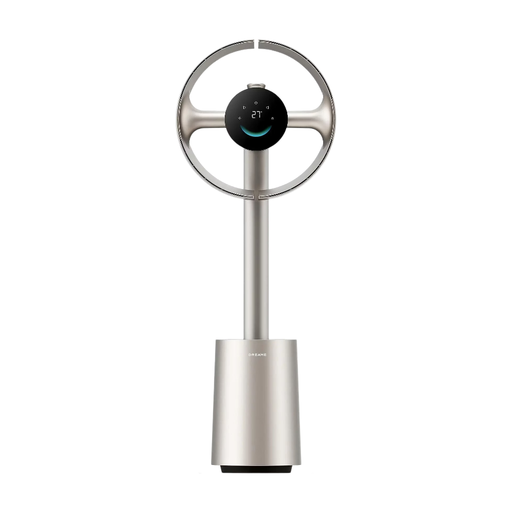
Why it's the right choice: Ideal for those who want top-tier technology. This smart fan combines a safe bladeless design, full connectivity (app and voice commands), and cutting-edge ventilation performance for tailored, year-round comfort.
It shatters the poor airflow pitfall with its GyroWing technology: its 3D oscillation (180° horizontal and 90° vertical) ensures perfect room coverage.
Its TempSync technology adjusts airflow in real-time based on the temperature. An added bonus: its washable primary filter captures dust and pet hair.
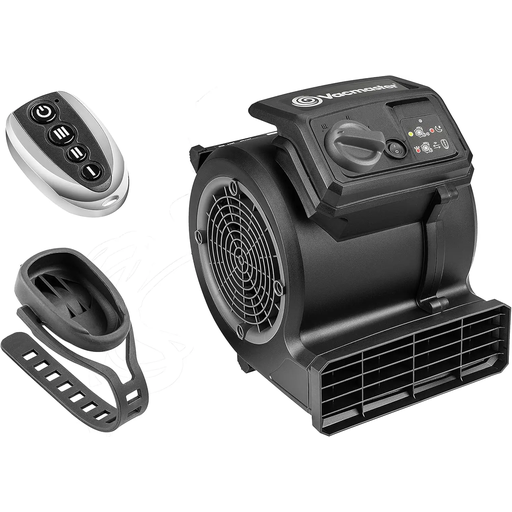
Why it's the right choice: Designed for those who demand powerful, directional airflow, whether for a home gym, garage, or workshop. Its "air mover" design ensures rapid and effective cooling during intense effort.
No anemic airflow here: its airstream exceeds 54 km/h. And at only 49 dB, it avoids the deafening noise trap, a feat for a device of this power.
Its clip-on remote lets you adjust the speed without interrupting your workout. Clever. Its three tilt positions (0°, 45°, 90°) allow you to target the airflow with precision.
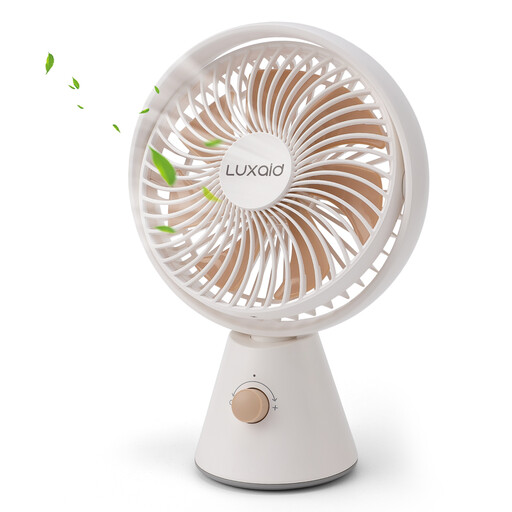
Why it's the right choice: The perfect ally for personal use, whether on a desk, a nightstand, or even on the go. Its extra-long battery life and compact size make it the ideal companion for creating your personal cool zone, far from any power outlet.
It stands out from gimmicky mini-fans with a rare feature for its size: automatic horizontal (90°) and manual vertical (180°) oscillation. The result: much better air distribution.
Its massive 4000 mAh battery provides up to 19 hours of runtime, a record for a portable model. Universal USB-C charging is the icing on the cake.
Discover our complete and up-to-date selection of fans that meet our demanding selection criteria and current safety standards.
Absolutely. It's one of their biggest advantages. The absence of accessible blades eliminates any risk of injury to the curious fingers of children or the tails of pets. It's a sensible choice for families.
A fan, even a bladeless one, simply circulates air to create a cooling sensation. Its mission ends there. An air purifier, on the other hand, is designed to clean the air: it traps pollutants (dust, pollen, VOCs, etc.) using an advanced filtration system, typically a HEPA filter. While some 2-in-1 models exist, a dedicated purification device will always be more effective in that specific area.
No, quite the opposite. The majority of modern fans, especially smart models, are equipped with DC (direct current) motors, which are much more energy-efficient than old AC (alternating current) motors. Their smart features, like automatic speed adjustment, also help optimise consumption by preventing the fan from running at full blast unnecessarily.