
Livraison le jour même ou le lendemain

Qualité garantie

Débloquez vos offres de bienvenue: Livraison GRATUITE | Jusqu'à -80 % | 30 jours d'essai gratuits à JoyPlus
Téléchargez l'application
Your new floor is down; the hard part is over. You step back to admire the result... and then you see it. That small gap under the door, that unsightly join between two floor coverings—in short, the one detail that ruins the entire look. A black wood-effect adhesive threshold strip presents itself as the simple, elegant miracle solution. Except, a poor choice can quickly turn this finishing touch into a daily frustration.
Too many DIYers, even experienced ones, end up with strips that warp after a few weeks, a wood-effect finish that flakes off with the first pass of the vacuum cleaner, or a colour that clashes with everything else. To avoid joining that club, let's review the pitfalls to sidestep and the criteria that truly matter before you confirm your cart.
Jumping on the lowest price or the most accessible model is rarely a good idea. Here are the classic disappointments that come with low-end threshold strips:
To ensure your black adhesive door threshold lives up to its promises over the long term, keep these three checkpoints in mind.
This is the crucial factor for durability. Aim for a high-quality PVC that is flexible enough for easy cutting and installation but dense enough to withstand daily impacts and scratches. A thickness of at least 3 mm is an excellent benchmark. This type of PVC floor trim ensures the strip won't deform and its colour will hold up, even in a high-traffic entryway or hallway.
A self-adhesive transition profile is nothing without good glue. The "peel and stick" installation is a breeze, provided the surface is impeccably clean, dry, and degreased. For a heavy-duty bond, especially on a laminate-to-tile transition where materials can be porous, check that the product description mentions a high-performance adhesive. Pro tip: if the strip arrives coiled, a quick blast with a hairdryer will reactivate the glue and soften the PVC for a flawless application.
The basics: accurately measure the gap you need to cover. A floor transition strip must be wide enough to cover the join and rest stably on both floor coverings. Most models range from 3 to 5 cm in width. Also, consider the length: rolls of 300 cm or more are economical and practical for covering multiple doorways or long transitions in a single, seamless piece.
Every renovation project is unique. Here are a few options selected to meet specific needs, keeping in mind the quality criteria we've just discussed.
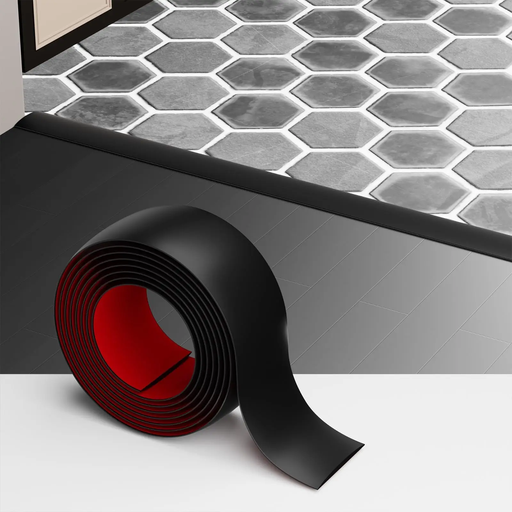
Why we chose it: For perfectionists who obsess over every detail. Its black wood-effect pattern is designed to blend seamlessly with dark flooring or, conversely, create a sharp, elegant contrast on a light-coloured floor. It's the finishing touch that makes all the difference.
Its high-quality PVC is built to resist scratches and wear. Say goodbye to the pattern fading after a few months—a classic trap of low-end products.
Its highly realistic wood-effect appearance provides a much more premium and integrated finish than a simple solid-colour strip.
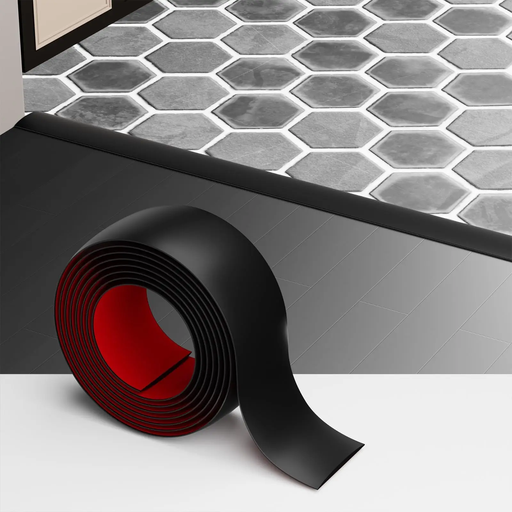
Why we chose it: The perfect solution for large projects or for tackling multiple thresholds at once. This choice prioritises efficiency, simplicity, and an excellent length-to-price ratio, without compromising on quality.
At 300 cm, it covers wide openings or multiple doors in one continuous piece. No seams means no weak points where the strip could start to peel.
One roll covers maximum surface area. Installation is simplified, and the finish is perfectly uniform, even over long distances. Its robust PVC is designed for daily foot traffic.
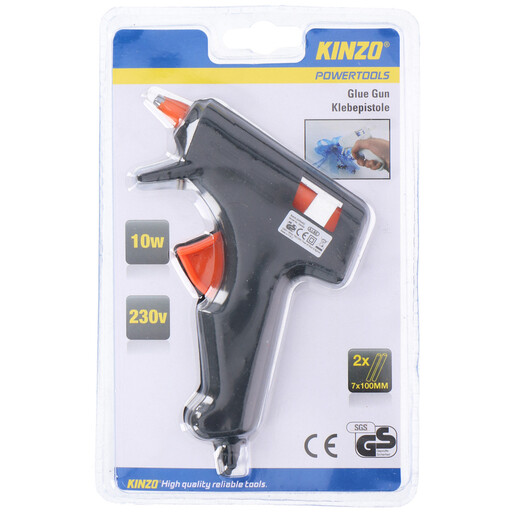
Why we chose it: This isn't a threshold strip, but it's the prepared DIYer's secret weapon. It's essential for reinforcing a bond on a tricky surface or for a thousand other small repairs around the house.
This is your anti-peeling insurance policy. If the original adhesive shows signs of weakness on a porous surface or in a humid room, a few dots of hot glue will solve the problem permanently.
Its versatility. Once the threshold strip is installed, you'll use it for countless other DIY, decorating, or repair projects. It's an investment that quickly pays for itself.
Explore our complete selection of fastening and finishing products, all chosen for their quality, value, and durability.
Its lifespan depends on the winning combination of product quality, installation care, and foot traffic. A good PVC model, properly installed on a clean surface in a bedroom, won't budge for years. In an entryway, wear and tear will naturally be faster, but a quality product will hold up for several years without issue.
Yes, but with a few precautions. The adhesive needs maximum contact to be effective, which is more challenging on a non-smooth surface. The key is a meticulous cleaning and degreasing of the tile. For complete peace of mind, don't hesitate to add a thin bead of silicone or adhesive caulk along the edges to secure the bond.
Heat is your best friend. Simply warm the old strip along its entire length with a hairdryer. The glue will soften, allowing you to gently peel it off starting from a corner. If any adhesive residue remains, an adhesive remover suitable for your flooring will do the trick. Always remember to test it on a small, hidden area before you begin.