Catering managers planning for 240 servings
For communal service, they want a quantity that matches the home’s consumption and ordering schedule, without unnecessarily stocking up on lots of small boxes.


For mealtimes in care homes, a box of 240 black tea bags is a good choice if this quantity matches expected consumption and the product delivered meets storage and serving requirements. Several smaller boxes make it easier to adjust orders or offer a choice of blends, but they require more careful stock management. Whichever option you choose, communal stock planning should never replace taking account of individual guidance on caffeine.
For communal service, they want a quantity that matches the home’s consumption and ordering schedule, without unnecessarily stocking up on lots of small boxes.
They need to distinguish between drinks bought for general service and guidance specific to each resident. France’s food safety agency, Anses, notes that tea naturally contains caffeine and that its effects vary from person to person.
They want to be able to check the ingredients list, allergen information and storage instructions for the exact product being served.
Worth considering: if 240 servings fit your stock rotation and one blend is right for the service planned.
Bear in mind: this option gives you less flexibility to adjust quantities or offer different blends.
Worth considering: if the care home already orders products in boxes of 100 tea bags or wants to adjust quantities gradually.
Bear in mind: several boxes mean tracking each product and its best-before date separately; two boxes of 100 do not make 240 servings.
| Criterion | What to check | Who it matters to |
|---|---|---|
| Quantity and stock rotation | Number of tea bags, servings per week and the best-before date of the batch delivered. | To keep service running without building up a stock of little-used boxes, order quantities should match actual consumption. Around 40% of consumers would put this need first. |
| Individual guidance | The naturally occurring caffeine in black tea and any serving guidance in place for residents. | When the communal drink is not suitable for every resident, the ability to follow individual guidance becomes essential; around 30% of consumers would make this their main concern. |
| Blend and taste | The ingredients list for the exact product and whether you want plain black tea or a flavoured blend. | If a blend that is easy to serve matters more than variety, its ingredients become the priority. This would be the main need for around 20% of consumers. |
| Product records | Label on the batch delivered, allergen information and storage instructions after opening. | Traceability matters when you need to check information about the drink served and store opened boxes correctly; around 10% of consumers would put this first. |
An Amazon France listing for PG Tips gives the weight as 247 g, while the PG tips 240-bag product listed on Joybuy weighs 696 g. The fact that they contain the same number of tea bags is not enough to show that they are the same product.
Before switching from one product to another, compare the full name, net weight, ingredients and packaging details shown on each listing.
The number of tea bags should match the servings planned and the best-before date of the batch you receive.
Estimate weekly consumption, then check the storage and resealing instructions for the packaging once it has been opened.
According to Anses, tea naturally contains caffeine, and its effects can vary from person to person.
Follow the individual guidance in place at the care home and offer another drink when the team asks you to.
Ingredients vary by blend: a METRO listing for Lipton Yellow Label gives black tea as the ingredient, while an Auchan listing for Lipton red berry tea also mentions flavouring and red berries.
Check the ingredients and allergen information for every product you order, even when the products are from the same brand.
An option for ordering plain black tea in boxes of 100 tea bags.
An option if you are choosing between English Breakfast and Ceylon black tea.
An option for occasionally adding a different blend to the menu.
Smaller pack sizes to consider when topping up an order.
A mid-sized pack to consider when adjusting quantities.
A smaller pack size to consider for Breakfast black tea.
This product is the one-box option, containing 240 black tea bags. Check that the pack size and stock rotation work for the service planned at your care home.
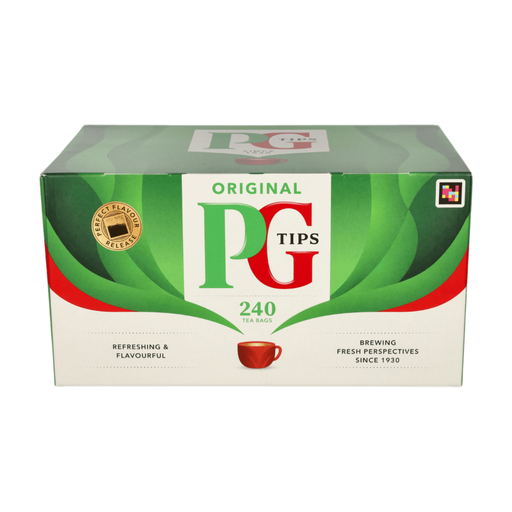 Image unavailable
This pack size is suitable if you expect to use all 240 tea bags before the best-before date of the batch delivered.
The Joybuy listing describes pyramid-shaped black tea bags. If your service requires each tea bag to be individually wrapped, check this detail for the product you order.
Black tea naturally contains caffeine, so individual guidance for residents should still be followed.
A box of 240 tea bags is a good choice if the quantity matches expected consumption and the care home’s storage capacity. Several boxes of 100, 50 or other pack sizes let you adjust your order; add up the servings and keep track of the best-before date on each box.
No. Black tea naturally contains caffeine, so serving it should take individual guidance into account. Anses notes that the effects of caffeine vary from person to person, so the care home team can offer another drink when needed.
Keep the label and product information for the item actually delivered, and check them separately for every blend you serve. An allergen declaration on a PG tips listing does not automatically apply to other teas, particularly flavoured blends.
Follow the instructions for the product you bought and reseal the packaging as directed. The PG tips listing on Joybuy says to keep the packaging tightly closed after opening; the METRO listing for Lipton Yellow Label gives a storage temperature range of 2 °C to 25 °C for that specific product.