Hotel breakfast managers
You need to prepare chai consistently for the buffet, dining room or room service, using a format that suits the pace of service.


To serve a bold black chai in a hotel café, first choose a recipe that clearly lists the black tea, spices and brewing instructions, then try it under your own serving conditions: the word ‘strong’ doesn’t tell you how intense it will taste in the cup. Tea bags make it easier to serve consistent portions, while loose-leaf tea lets you adjust the strength if your team follows a set method. A chai latte preparation is better suited to customers looking for a quick milky drink.
You need to prepare chai consistently for the buffet, dining room or room service, using a format that suits the pace of service.
You want to distinguish the black tea flavour from the spices and choose a recipe based on more precise information than the word ‘strong’ alone.
You’re looking for a milky chai preparation to serve using your café equipment, rather than brewed tea with milk added separately.
First decide whether your menu calls for black chai tea or a milky chai drink. For tea that needs brewing, compare the recipe with the format and preparation method your team can reproduce consistently.
| Criterion | What to check | Who is it for? |
|---|---|---|
| Consistent service | Portion format and preparation instructions; for loose-leaf tea, the team will need to follow a set quantity and brewing time. | For breakfast or room service, I want to minimise handling without the recipe varying from cup to cup. Around 42% of consumers put this consistency and speed at the top of their needs. |
| Black chai character | Whether black tea is included and its stated proportion, the named spices and brewing instructions; these details don’t provide a common measure of how intense the drink will taste. | If customers add milk or sugar, I want to be able to try a brew where the black tea and spices are still noticeable. Around 33% of consumers put finding a bold cup first. |
| Serving a chai latte | The type of preparation, ingredients — including whether it contains milk — and compatibility with the equipment you use. | To serve a milky chai drink quickly, I need a preparation that suits the way we work, rather than one that’s confused with tea that needs brewing. Around 25% of consumers prioritise this type of service. |
The proportion of black tea or spices tells you about the blend, but it doesn’t guarantee how the prepared drink will taste.
Compare each product’s ingredients and preparation instructions, then try brewing it with the water, cups and milk you plan to use in the café.
Without a shared measure and brewing time, your team could end up serving cups that taste different from one service to the next.
Set a recipe for service and confirm the pack size and ordering terms with the supplier.
Thés Direct states that its offer has a minimum order of 5 kg per product. Check this requirement for the product you’re considering before choosing this supplier.
A chai latte preparation may contain milk, leaving you less freedom to add the tea, milk and sugar separately.
Choose black tea that needs brewing if you need that flexibility; save latte preparations for milky drinks and the equipment they’re designed for.
The recipe and allergens that need to be highlighted may vary between products. For prepacked foods in France, the DGCCRF reminds businesses that mandatory information must be legible and provided at least in French, and that allergenic ingredients must be highlighted.
Check the label and supplier information for the exact product you’re serving whenever the product, pack size or recipe changes.
These ranges offer recipes and formats worth comparing; ingredient proportions alone aren’t enough to rank chai by how intense they taste in the cup.
Kusmi Tea offers Kashmir Tchaï, an organic black chai, in several formats, including tea bags and loose-leaf.
An organic Darjeeling black tea chai with spices, worth considering if you’re looking for tea bags.
An organic black chai in tea bags, with the spiced recipe detailed on Auchan’s product listing.
The brand offers chai drinks and milky preparations for different ways of serving, including vending machines.
LUPICIA offers teas for hotels and restaurants, including individually wrapped tea bags and loose-leaf tea.
This chai could be worth considering for a hotel café menu. Before settling on a serving recipe, check the portion format, ingredients and preparation instructions on the product you receive.
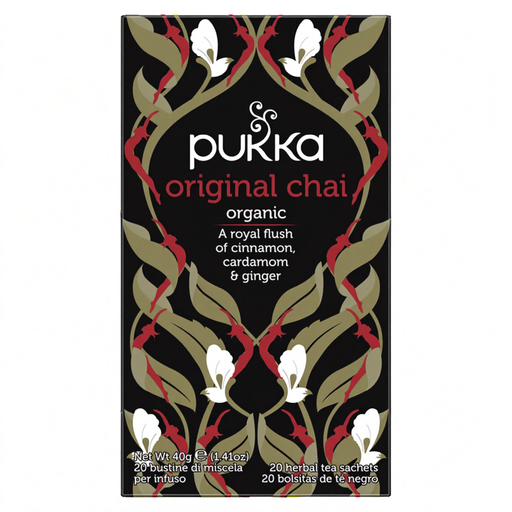 Image unavailable
If you’re considering serving this chai in a hotel café, check the portion size and preparation method before settling on a consistent recipe.
The product name states 20 pieces; check the packaging to see what each piece refers to, along with the ingredients list and allergen information for the exact product.
Check the proportion of black tea separately from the proportion of spices, then try the product according to its brewing instructions. Kusmi Tea states that Kashmir Tchaï contains 64% black tea and 35% spices; Carrefour and Auchan list 83.5% black tea for Éthiquable tchaï and 60% for Clipper chai, respectively. These proportions describe the blends, not a shared scale for how strong they taste in the cup.
Kusmi Tea recommends water at 90 °C and a brewing time of 3 to 5 minutes for Kashmir Tchaï. For another variety, follow the instructions on its own packaging before adopting a recipe for service.
Not if you want to measure the tea and add the milk separately: a chai latte preparation is designed for a different way of serving the drink. Laqtia offers chai drinks and milky teas for sachets, capsules and vending machines; check the ingredients and equipment required for the product you choose.
Check the ingredients and how allergens are presented on the label of the exact product. For prepacked foods, the DGCCRF states that mandatory information must be visible, legible and provided at least in French, and that allergenic ingredients must be highlighted in the ingredients list.