
Livraison le jour même ou le lendemain

Qualité garantie

Débloquez vos offres de bienvenue: Livraison GRATUITE | Jusqu'à -80 % | 30 jours d'essai gratuits à JoyPlus
Téléchargez l'application
A black belt for men works just as well with a suit as it does with chinos or jeans. The purchase might seem straightforward, but a few details can quickly spoil the experience: a width that doesn't fit your belt loops, a poorly understood size, or a material described too vaguely. To avoid nasty surprises after a few wears, it's better to look at the concrete features of the model rather than relying solely on the photo or the brand's reputation.
The size stated for a belt doesn't always correspond to its total length, measured from one end to the other. Some manufacturers measure the distance between the buckle and the central hole, while others indicate the full length. Depending on the method used, you could end up with a belt that's too short or, on the contrary, far too long.
Measure your waist at the point where you usually wear your belt, then refer to the product's specific size chart. For a large-size men's belt, especially check the range of sizes offered rather than automatically choosing the larger size.
A men's leather belt can be made from full-grain leather, standard cowhide, or reconstituted leather fibres. These materials don't necessarily have the same appearance, the same flexibility, or the same care requirements.
The mention 100% polyurethane, for example, refers to a synthetic material like faux leather. It can be perfectly suitable for everyday use and is easy to clean, but it is not genuine leather. The full composition is therefore essential to properly compare a black leather belt and a unisex faux leather belt.
A 25 mm belt generally passes more easily through the narrow belt loops of formal trousers. Widths of 35 to 38 mm are better suited to jeans and casual trousers, provided the belt loops are wide enough.
The belt with a prong buckle allows for simple adjustment thanks to its different holes. However, you need to check the sturdiness of the prong, the quality of the buckle's finish, and whether the belt loop is fixed or movable. A buckle that is too large can quickly unbalance a professional outfit.
For a leather belt, opt for a clearly detailed composition, such as 100% cowhide leather or 100% full-grain cowhide leather. Full-grain leather retains more of the natural surface of the hide and develops a patina over time. However, it requires regular care and must be protected from prolonged exposure to moisture.
Reconstituted leather fibre, sometimes called "bonded leather fibre", is a different category. It can offer a soft feel and moisture resistance as stated by the manufacturer, but its composition is not comparable to that of full-grain leather.
Polyurethane can be a relevant choice if you are looking for a unisex faux leather belt that is easy to clean. A damp cloth is usually sufficient. On the other hand, it's best to avoid machine washing and direct exposure to a heat source.
Black pairs easily with black, grey, navy or dark brown shoes. For a formal outfit, a simple, low-shine buckle remains the easiest to match.
Size charts don't all follow the same logic. Some models associate a measurement in centimetres with a jean size, while others directly indicate a waist size range. Take your measurements with a soft tape measure, without pulling tight, then choose the range that places the central hole close to your actual waist.
For the Urban Classics model, the stated ranges are notably 75 to 85 cm for size S, 85 to 95 cm for M, 95 to 105 cm for L and 105 to 115 cm for XL. The manufacturer recommends choosing the larger size if you are hesitating between two options.
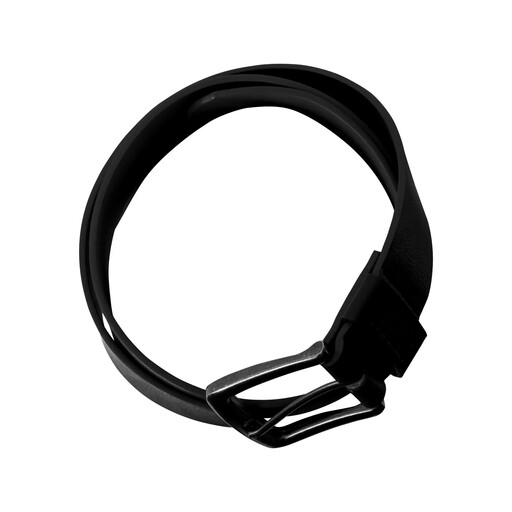
Why this choice suits this profile: This unisex faux leather belt is perfect as a first versatile purchase. It is available in several sizes and has five adjustment holes.
The composition is stated without ambiguity: 100% polyurethane. So you know it is a leather alternative and not a genuine leather belt.
Matt rectangular buckle, five adjustment holes and quick cleaning with a damp cloth.
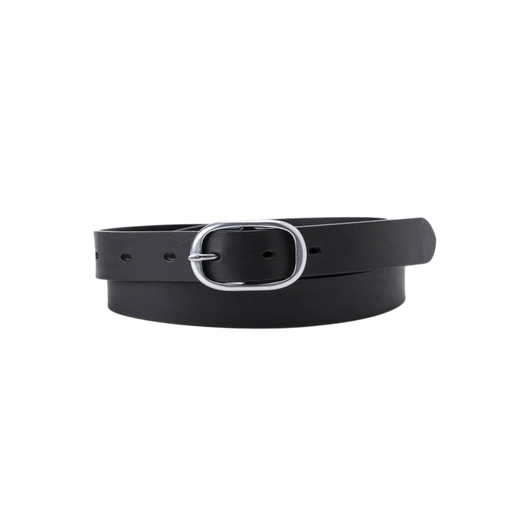
Why this choice suits this profile: Its full-grain cowhide leather and 25 mm width fit naturally into a formal wardrobe and trousers with narrow belt loops.
The material and width are clearly stated. This helps you avoid confusing a formal belt with a model designed for jeans.
100% full-grain cowhide leather, 25 mm width and sizes available from 60 to 110.
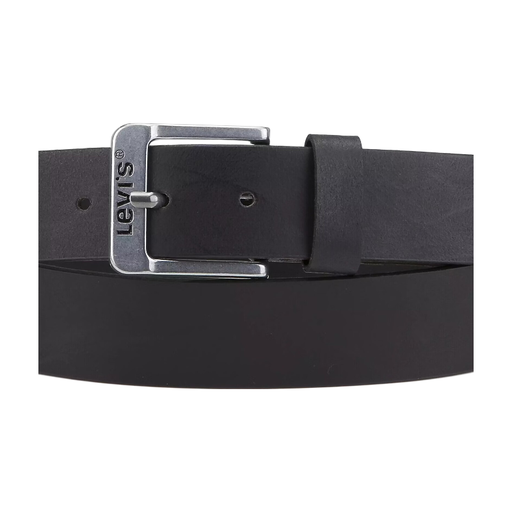
Why this choice suits this profile: With its 35 mm width and sizes up to 140, it is suitable for jeans, casual trousers and larger waist sizes.
The size chart matches lengths to jean sizes, which simplifies the choice for regular wear.
Genuine leather, 35 mm width and sizes available up to 140.
We have selected a complete, real-time updated list of models that meet these demanding criteria, while also complying with European safety regulations.
A leather belt should be cleaned with a soft, dry cloth. Avoid submerging it in water, exposing it to sunlight for long periods, or placing it near a heat source. For the Levi's Free model, the manufacturer also recommends occasional application of a balm to preserve the leather's suppleness.
For faux leather, a slightly damp cloth is usually sufficient. Never iron the belt and do not put it in a tumble dryer. Regardless of the model, let it dry naturally, then store it flat or hang it without folding it sharply at the buckle.
For a suit or formal trousers, a width of 25 mm will generally be more discreet. With jeans or casual trousers, a model of 35 to 38 mm will match wider belt loops better. Always remember to check the dimensions of the trousers in question.
Measure your waist at the point where you will wear the belt, then compare the result with the size chart provided by the manufacturer. Don't rely solely on your jean size: the correspondences vary between brands and measurement methods.
Yes, if you are looking for a material that is easy to clean and generally more affordable. Still check the composition, care instructions and the quality of the buckle. If you prefer an animal-based material, choose a leather belt whose composition is clearly stated.