
Livraison le jour même ou le lendemain

Qualité garantie

Débloquez vos offres de bienvenue: Livraison GRATUITE | Jusqu'à -80 % | 30 jours d'essai gratuits à JoyPlus
Téléchargez l'application
Choosing a black silicone sealant for the bathroom might seem like a minor detail, but it's one that can make or break the room's aesthetic. A modern, elegant black finish can turn into a nightmare if you choose the wrong product: a seal that turns grey, cracks, or worse, becomes covered in mould. As the Head of Product Recommendations at Joybuy, I'm here to provide some clarity and help you make the right choice by avoiding the most common pitfalls.
Marketing often highlights features that aren't always the most relevant for the longevity of your seals. Here are two common mistakes that can sabotage your renovation project.
To guarantee a finish that is as beautiful as it is durable, here are the three technical points to check before you buy.
Silicone sealants fall into two main categories: acetic and neutral. For damp areas, acetic silicone is the most suitable. You can recognise it by its slight vinegar-like smell during application. Its formulation ensures excellent adhesion to the smooth, non-porous surfaces typical of bathrooms (enamel, porcelain, glass, tiles, etc.). It's the secret to a long-lasting waterproof seal.
Heat and humidity: the perfect recipe for mould proliferation. A quality black sanitary silicone must therefore contain fungicidal agents. This protection, often indicated on the packaging, prevents the appearance of unsightly black spots and ensures the hygiene of your bathroom or kitchen. It's a small extra cost for significant peace of mind.
Your seal must form a 100% waterproof barrier between different materials (for example, between a resin shower tray and a tiled wall). Always check the product's compatibility with your surfaces. Its elasticity is just as crucial: it will allow it to absorb expansion and micro-vibrations without breaking, for a seal that stands the test of time.
Every project has its own requirements. Here are a few options that meet specific needs, taking into account the selection criteria we've just discussed.
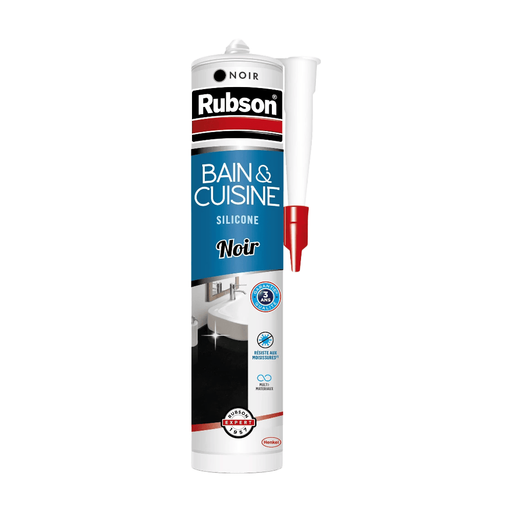
Why we chose it: For the most demanding users who refuse to compromise on quality and aesthetics. This product is specifically formulated for bathroom and kitchen seals, with an intense black colour designed to last.
Its sanitary formula, reinforced with fungicides, actively blocks mould growth, unlike a standard silicone. Its highly stable colour will not degrade.
It adheres perfectly to most sanitary materials (enamel, porcelain, etc.) and remains flexible, ensuring a rock-solid waterproof seal. The 'No Cutter' system simplifies opening the black silicone cartridge.
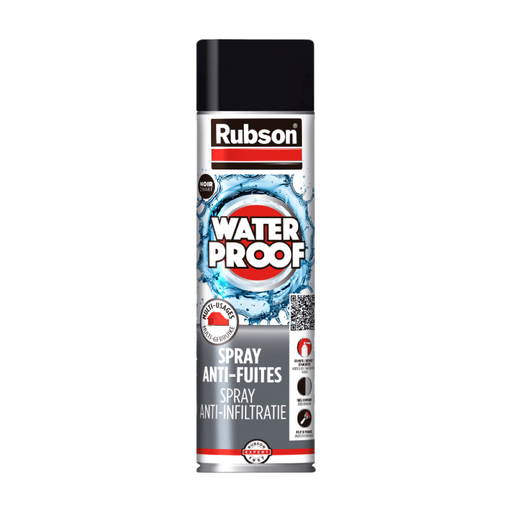
Why we chose it: For sealing a leak or crack urgently and without delay. Note: this is not a jointing sealant, but a waterproof spray coating.
It meets the need for an express repair where a cartridge sealant would be unsuitable. Its mission is to seal, not to create a smooth joint finish.
Its spray application is ultra-fast. It even adheres to damp surfaces and is touch-dry in 20-30 minutes, forming a flexible, waterproof barrier to stop leaks in their tracks.
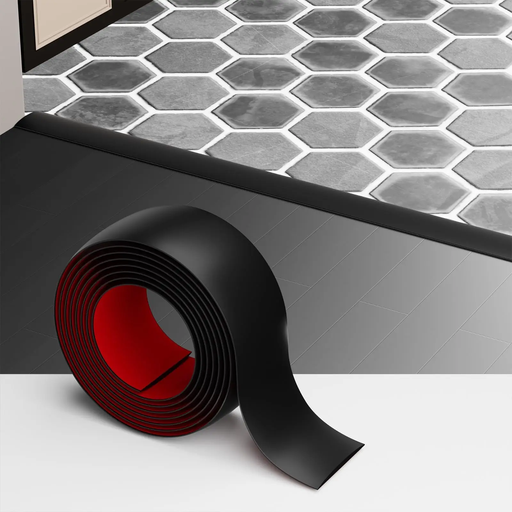
Why we chose it: For perfectionists who care about every last detail of their decor and seek perfect harmony. This product extends the black aesthetic beyond silicone joints.
It provides a black finishing solution where a sealant is not appropriate (like a floor junction), thus avoiding unsightly colour mismatches that would break the visual harmony.
Ultra-simple installation thanks to its self-adhesive backing. The black wood grain finish is very elegant and perfectly conceals the junction between two floor coverings.
We have selected a full range of products that meet our quality criteria and current standards.
The longevity of a black silicone shower seal depends on the quality of the product, the preparation of the surface, and the ventilation of the room. A quality sanitary sealant, applied correctly in a well-ventilated bathroom, can remain flawless and waterproof for 5 to 10 years.
Forget harsh products, scouring powders, and especially bleach, which can alter the black colour. Opt for regular cleaning with a soft sponge and a mixture of water and white vinegar or black soap. This is the best way to preserve the seal and its anti-mould treatment.
Almost all silicone sealants, especially acetic sanitary formulas, cannot be painted. The paint simply does not adhere to their flexible, non-porous surface. If painting is absolutely necessary, you must look for specific "paintable" sealants, but they are rare for sanitary use. For a coloured finish, the easiest and most reliable option is to choose a silicone cartridge in the correct colour from the start.