Travellers keeping an eye on sugar content
You want to tell the difference between ‘sugar-free’ and ‘no added sugar’. When choosing between two packs, you also check the ‘of which sugars’ line and the ingredients list.


For a meal on the train, choose a biscuit labelled ‘sugar-free’ if your priority is to strictly limit the sugars declared; ‘no added sugar’ meets a different need and does not rule out sugars already present in the product. Then compare the ‘of which sugars’ line, check the ingredients and choose a pack size that suits the portion you plan to take with you. Nutri-Score can be a useful guide when it appears on the pack, but it is optional in France, according to the Ministry of the Economy.
You want to tell the difference between ‘sugar-free’ and ‘no added sugar’. When choosing between two packs, you also check the ‘of which sugars’ line and the ingredients list.
For a meal or morning snack on the train, you’re looking for biscuits with no added sugar, without necessarily needing them to be free from sugars altogether.
You’d rather take a few biscuits than open a large pack during the journey. The number of sachets and biscuits in each sachet matters just as much as the claim on the front of the pack.
Start with the claim that matches your needs, then consider what you’ll actually eat during the journey: a specific portion, along with its ingredients and nutritional values.
| What to check | Look for | Who is it for? |
|---|---|---|
| Sugar claim | The exact claim, then the ‘of which sugars’ line per 100 g and, if provided, per portion. | If my main aim is to limit declared sugars, I can’t treat ‘no added sugar’ as the same as ‘sugar-free’. Around 42% of consumers put this distinction at the top of their list of needs. |
| Format for the journey | The number of sachets and biscuits in each sachet, as well as the weight of the portion. | To eat on the train without opening a whole pack, I’d choose a portion that’s easy to take with me. This need for convenient transport and portioning comes first for around 33% of consumers. |
| Ingredients | The ingredients list, allergens and any polyols in the product you’re considering. | If certain ingredients affect my choice, I want to check them before setting off rather than when I open the pack. Around 25% of consumers prioritise this check. |
European regulations on nutrition claims govern the ‘no added sugar’ claim. It doesn’t mean that the biscuit contains no sugars at all.
Choose the claim that matches your needs, then compare the ‘of which sugars’ line per 100 g and per stated portion, if provided.
According to the Ministry of the Economy, Nutri-Score is optional in France. It doesn’t replace the nutrition declaration or the ingredients list.
If it’s displayed, use it as an additional guide when comparing similar products, and check the nutritional information on the pack too.
A biscuit described as ‘sugar-free’ may contain polyols or ingredients you need to avoid. This depends on the specific product.
Check the ingredients list, allergen information and any warnings on the packaging before taking it with you.
A large pack can be less convenient to open and store on a train. The total pack weight won’t necessarily match the portion used for the nutritional values.
Check how many biscuits are in each sachet or prepare your portion before setting off, then compare it with the nutritional information provided.
These brands offer products found in French supermarket ranges. Check the claim, recipe and packaging for each biscuit individually rather than assuming they apply to the whole brand.
Gerblé products listed by Auchan France include plain shortbread biscuits with no added sugar, sold in three sachets of four biscuits.
Carrefour France lists Karéléa biscuits in its ‘sugar-free’ and ‘no added sugar’ categories, in a range of formats.
Dukan oat bran and chia biscuits are described as ‘no added sugar’ in French supermarket ranges.
Auchan France lists a range of Gullón biscuit formats in its ‘sugar-free’ and ‘no added sugar’ categories.
These two biscuits let you compare a product described as having no added sugar with another whose product details state its sugar content. If you’re taking them on the train, also check that the exact claim and portion size on the packaging suit your needs.
 Image unavailable
Worth considering if your main priority is avoiding added sugars rather than looking for a ‘sugar-free’ claim. Joybuy’s product details state 1,1 g of sugars and 8,3 g of fibre per 100 g, as well as a Nutri-Score of A; check these details on the pack you receive. For the train, check the packaging if you’d like to take a portion that’s already separated.
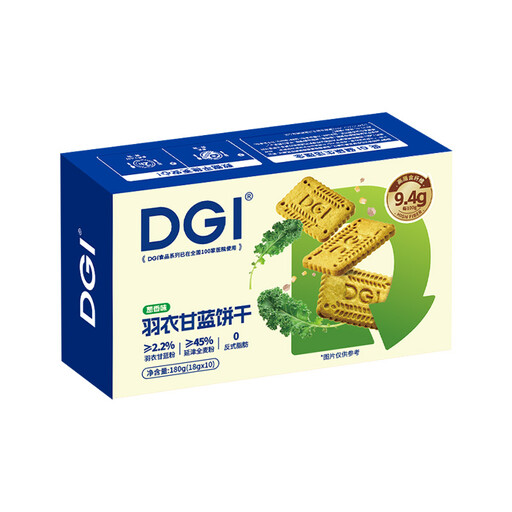 Image unavailable
Worth considering if you’re comparing the stated sugar content rather than choosing based on a claim on the front of the pack. Joybuy’s product details state 1,7 g of sugars per 100 g, and list maltitol and wheat; they also include a warning about excessive consumption. Check the exact claim on the packaging and the pack format before planning a portion for your journey.
No. European regulations on nutrition claims define ‘no added sugar’ as a claim about adding sugars and other ingredients used for their sweetening properties; it doesn’t mean the biscuit contains no sugars. If sugar content is your deciding factor, check the ‘of which sugars’ line too.
No. According to the Ministry of the Economy, Nutri-Score is optional in France. A nutrition declaration is generally required for prepacked foods, subject to regulatory exemptions, so you can compare the nutritional values shown without ruling out products that don’t display the logo.
Check the sugar claim, ingredients and allergens, then consider how many biscuits you’ll actually take with you. If the pack contains separate sachets, compare their contents with the portion used for the nutritional information.
Some biscuits contain polyols, including maltitol. European regulations require the warning ‘Excessive consumption may produce laxative effects’ when authorised polyols make up more than 10% of the product; check the packaging of the product you choose, particularly if you’re planning to have several portions.