
Livraison le jour même ou le lendemain

Qualité garantie

Débloquez vos offres de bienvenue: Livraison GRATUITE | Jusqu'à -80 % | 30 jours d'essai gratuits à JoyPlus
Téléchargez l'application
Biscuits and crackers are a staple in our cupboards. Whether for an on-the-go breakfast, a kids' afternoon snack, a pre-dinner aperitif with friends, or a tasty treat at the office, the selection is overwhelming. But faced with shelves overflowing with crackers, dry biscuits, and other snacks, it's easy to feel lost and end up with the wrong box. As a Product Recommendation Manager at Joybuy, my role is to guide you beyond the tempting packaging and help you choose the products you'll truly enjoy.
Before you fill your basket, let's review the most common pitfalls to avoid any unpleasant surprises.
To avoid these disappointments, here are a few objective criteria that never fail.
European regulations require a Quantitative Ingredient Declaration (QUID). In practice, this means if a package highlights an ingredient (for example, "almond biscuits"), its percentage must be listed in the ingredients. This is an excellent indicator of the manufacturer's quality and transparency. A "walnut" biscuit with only 0.2% walnuts won't offer the same flavour as one containing 8%.
Butter, palm oil, sunflower oil, rapeseed oil... The type of fat directly influences the texture and taste of your dry biscuits.
For aperitif biscuits, too much salt overwhelms the palate and masks other flavours. For sweet biscuits, an excess of sugar can make your snack break sickly. Get into the habit of glancing at the "of which sugars" and "salt" lines in the nutritional information (per 100g). It's the best way to objectively compare products and choose the one that suits your taste.
To help you decide, here are some of our recommendations, each chosen for a specific occasion.
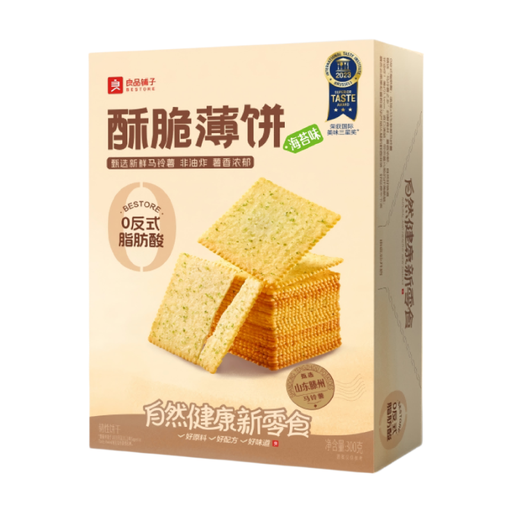
Why we love it: A great alternative to crisps and breadsticks. The distinct umami flavour of the seaweed pairs perfectly with cream cheese dips or homemade guacamole. The 300g pack is ideal for large gatherings.
These crackers don't fall into the trap of artificial flavours. The seasoning (2.54%) contains real seaweed powder, delivering an authentic taste, not just a synthetic aroma.
Its extra-thin, ultra-crispy texture that doesn't go soft, even with a dip. The saltiness is perfectly balanced.
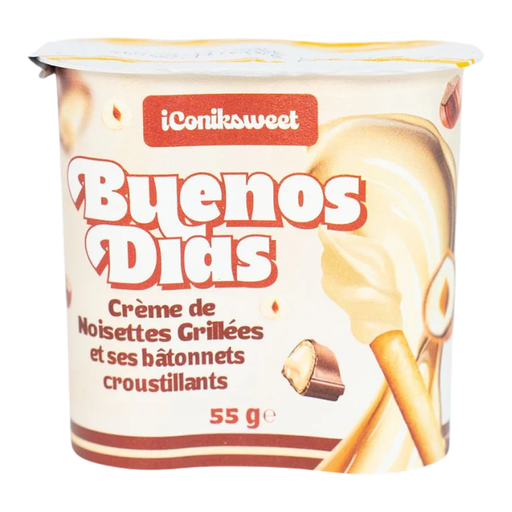
Why we love it: Perfect for a kids' snack or a nostalgic break at the office. The "dip and eat" format is as practical as it is fun, and the combination of a crispy breadstick and hazelnut cream is a guaranteed winner.
Its individual packaging solves the problem of biscuits going soft. Each portion stays fresh until opened, which reduces waste and guarantees crispness.
An all-in-one, ready-to-eat snack. The cream is smooth, and the sticks stay perfectly crunchy.
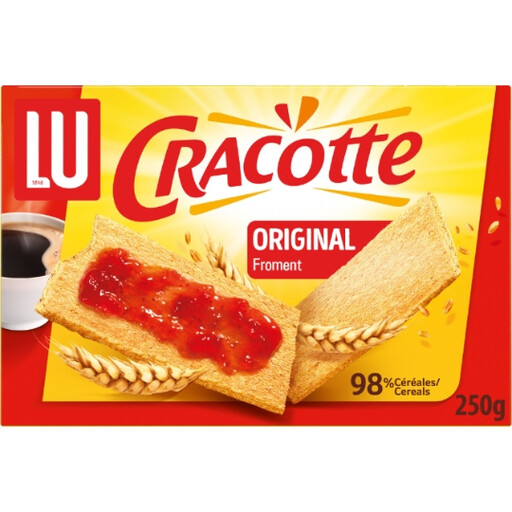
Why we love it: A timeless family classic that champions simplicity. Its light and airy texture makes it an ideal base for breakfast, ready to be topped with jam or honey, or with cheese and ham for a savoury option.
This product avoids the trap of overly long ingredient lists. With 97.7% wheat flour, its recipe is simple and transparent. No superfluous marketing, just a reliable and well-loved product.
Made in France with French wheat. Its unbeatable versatility makes it a cupboard essential, perfect for everything from breakfast to a light supper.
Discover our full selection of products that meet our quality criteria and current regulations.
How should I store dry biscuits and crackers to keep them crispy? The secret is to protect them from moisture and air. Once the pack is open, transfer them to an airtight metal or glass container. Keep the container in a cool, dry place away from direct light. Above all, avoid the refrigerator, as the condensation can make them go soft.
What's the difference between a cracker and an aperitif biscuit? Although the terms are often used interchangeably, there is a subtle difference. A cracker is typically thin, dry, and very crunchy, almost brittle. Its flavour is quite neutral, making it a perfect base for all kinds of toppings. An aperitif biscuit, on the other hand, can be thicker and more crumbly (like a savoury shortbread) and is often pre-seasoned with herbs, spices, or cheese.
Can you eat dry biscuits after their best-before date? Yes, absolutely. The best-before date (indicated by "Best before...") is not a use-by date. After this date, the product might lose some of its flavour or texture (it may be less crispy), but it is still perfectly safe to eat. Trust your senses: if the biscuit looks, smells, or tastes off, it's best not to eat it.