Anyone making several batches of biscuits
If you’re mixing spread into a dough, filling biscuits or making several batches, a jar lets you measure out the amount specified in your recipe.


To mix chocolate and hazelnut spread into biscuits or use it as a filling, a jar lets you measure out the amount specified in your recipe. A single portion is better suited to when you need an individual serving: check that it contains spread on its own, rather than a snack with biscuits. Whichever format you choose, compare the ingredients, allergens and nutritional information for the product in question.
If you’re mixing spread into a dough, filling biscuits or making several batches, a jar lets you measure out the amount specified in your recipe.
If you avoid certain ingredients or are baking for someone with allergies, check the ingredients list and allergy advice for each product. A ‘plant-based’ or ‘dairy-free’ label is no substitute for checking these details.
A small portion may suit occasional use. For baking, make sure you distinguish a portion of spread on its own from a snack that already includes biscuits or other items.
Work out how much you need for your recipe, then check the product’s ingredients and nutritional information.
| What to check | Look for | Who is this for? |
|---|---|---|
| Format and quantity | Compare the net quantity with the amount your recipe calls for. If you’re choosing a portion, check that it contains spread on its own. | If I’m making several batches, I want to measure out what I need without using lots of individual portions; around 44% of consumers would put portion control first. |
| Ingredients and allergens | Check the ingredients list, any allergens highlighted and any ‘may contain’ warnings for the specific product. | If I’m making biscuits for someone who avoids certain ingredients, I need to choose a recipe that suits their needs; this would be the top priority for around 33% of consumers. |
| Nutritional information | Compare sugars per 100 g in particular, as well as per portion if that information is provided. Check the Nutri-Score only if it appears on the packaging. | If I want to compare the ingredients and nutritional profile of several recipes, I need values measured on the same basis; around 23% of consumers would prioritise this comparison. |
Nutri-Score may not appear on a jar. The Ministry of Health explains that EU regulations do not allow this label to be made compulsory; the nutrition declaration and ingredients list provide other information you can compare.
If there’s no score, don’t try to work it out yourself. Compare the values per 100 g and the ingredients of products in the same category.
These labels refer to different criteria: none of them, on its own, tells you about the sugar content or all the allergens. Nutella notes, for example, that its Plant-Based version may contain milk and is not suitable for people with a milk protein allergy.
Check the nutritional information, ingredients and allergy advice separately for the exact product.
A portion sold with biscuits or in bar form may not provide the amount of spread needed for a recipe.
Before adding it to your recipe, check what each component is and the net quantity of spread it contains.
The legislation cited by Légifrance covers sugar-sweetened or artificially sweetened drinks, as well as certain liquid preparations for drinks—not solid spreads.
To compare spreads, check their ingredients and format, and look at the ‘of which sugars’ line in the nutritional information.
The brand sells its classic hazelnut and cocoa spread in jars and publishes biscuit recipes that use it.
Rigoni di Asiago offers several organic cocoa and hazelnut spreads under the Nocciolata name, including L’Originale, L’Intense, La Bianca and La Crunchy.
The brand sells organic chocolate and hazelnut spreads in jars, with different recipes depending on the product.
This selection includes jars in different sizes for measuring out spread for biscuit recipes, as well as a 25 g portion for occasional use. Choose the amount to suit your recipe and check the label on the product you select.
 Image unavailable
The 3 kg jar may be worth considering if your recipe or several batches call for a large amount; check how much you actually need.
Joybuy France lists this product as suitable for use as a filling or baking ingredient. Check the ingredients and allergens on the label before baking.
 Image unavailable
This 250 g jar lets you measure out the amount you need for a batch of biscuits, according to your recipe.
This product is labelled organic. If avoiding palm oil or a particular allergen matters to you, check the details on this specific jar before buying.
 Image unavailable
This 1 kg jar is suitable for recipes where you need to measure out the amount of spread you want; compare its size with the quantity needed for your biscuits.
If you’re baking for people with dietary requirements, check the ingredients list and allergen information on the jar.
 Image unavailable
The 400 g jar is a size worth comparing with the amount your biscuit dough or filling requires.
The organic label alone doesn’t tell you about the sugar content or allergens: check the ingredients and nutritional information for this product.
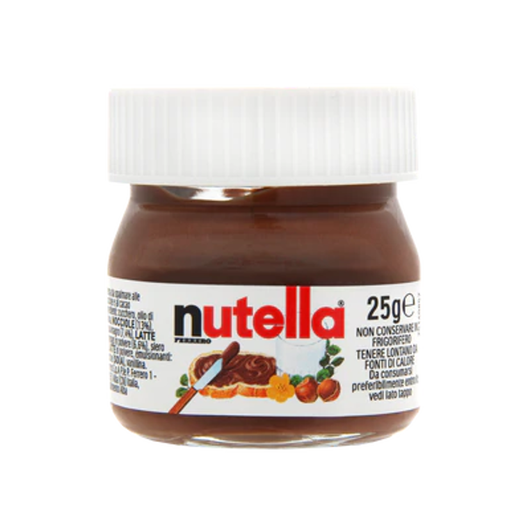 Image unavailable
This 25 g portion gives you an individual serving; check how many portions you’d need for your biscuit recipe.
If you’re using it for guests with dietary requirements, check the label on this portion for its ingredients and allergen information.
Yes, as long as it contains spread on its own and provides the amount your recipe calls for. A bar or snack served with biscuits can’t automatically be used as the same amount of spread.
No. The Ministry of Health explains that EU regulations do not allow this graphic label to be made compulsory. When comparing jars, also check the nutrition declaration per 100 g and the ingredients list.
Check the ingredients and allergy advice for the exact product, particularly for hazelnuts, milk, soya and possible traces of other nuts. Even if a recipe is described as plant-based or dairy-free, you should still read this information.
Follow the storage instructions on the jar you’ve bought, including any advice for after opening. Don’t assume that the instructions for one product apply to all spreads.