What should you look for before buying?
First decide whether the chocolate is going into your biscuit dough, or whether you’re looking for a brioche to serve or use for its crumb. This will help you work out which details on the label matter.
| Criteria |
What to check |
Who it matters to |
| Controlling the cocoa |
For biscuits, look for the cocoa percentage of the chocolate you’re adding to the recipe. The proportion of chocolate in a brioche is a different detail. |
To get the cocoa flavour right in my biscuits, I want to know the cocoa content of the chocolate I add to the dough; around 50% of consumers prioritise this. |
| Brioche format |
Distinguish between chocolate chips throughout the crumb and a dark chocolate bar, then choose according to how you plan to serve or use the brioche. |
If I’m looking for a brioche to slice or serve with biscuits, the way the chocolate is included affects my choice; brioche format comes first for around 30% of consumers. |
| Allergens |
Read the ingredients and trace warnings for the specific product you’re buying, rather than relying on the range name alone. |
If I need to avoid certain ingredients or traces, the exact composition matters more than the format or flavour; this is the main concern for around 20% of consumers. |
According to the French Ministry of the Economy, the term ‘dark chocolate’ applies to chocolate containing at least 43% total dry cocoa solids. This threshold doesn’t describe the whole brioche: Carrefour’s product information for PITCH brioches with a dark chocolate bar states that dark chocolate makes up 28% of the ingredients, but doesn’t give the cocoa percentage of the brioche.
Joybuy chocolate bars for precise portioning
These two chocolate bar formats are suited to adding chocolate separately to a biscuit recipe. They aren’t brioches: if you’re looking for a chocolatey crumb to serve or use in a recipe, the brioche formats described above are a separate consideration.
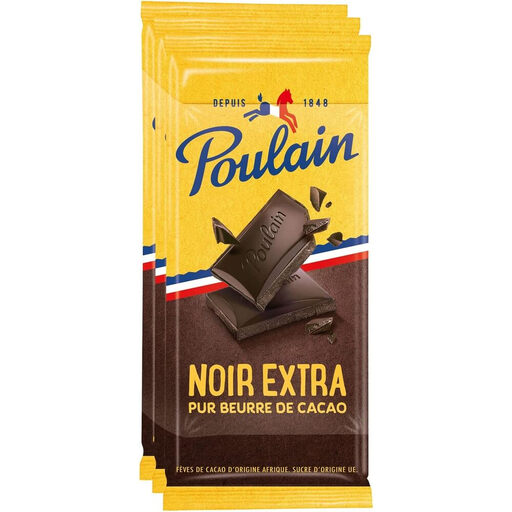 Image unavailable
POULAIN Extra Dark, 3 × 100 g
A pack of three bars if you want to add chocolate separately to your biscuit dough. The variant name alone won’t tell you how intense the flavour will be. Check the cocoa percentage and allergens on the packaging before adding it to your recipe.
View on Joybuy
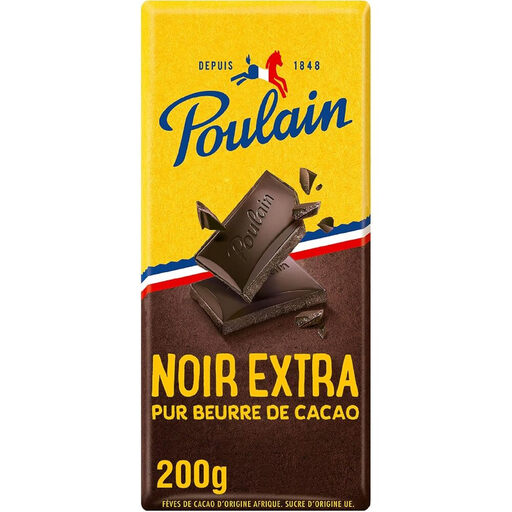 Image unavailable
POULAIN Extra Dark, 200 g
A 200 g bar for a recipe where you want to measure the chocolate separately from the other ingredients. Check the cocoa percentage and allergen list for this variant on the packaging; the name alone won’t tell you how your biscuits will taste.
View on Joybuy
Frequently asked questions
Does a ‘dark chocolate’ brioche necessarily contain a lot of cocoa?
No: the term describes the chocolate used, not the cocoa content of the whole brioche. The French Ministry of the Economy states that dark chocolate must contain at least 43% total dry cocoa solids. Carrefour’s product information for PITCH brioche, meanwhile, states that the product contains 28% dark chocolate. These percentages measure different things.
What should I look for on the packaging of a chocolate brioche?
Start with the product description and ingredients list to distinguish between chocolate chips and a chocolate bar, then check the allergens and any trace warnings for the product you’re buying. The DGCCRF reminds food businesses that allergenic ingredients must be clearly highlighted on pre-packed food labels.
Can I replace baking chocolate with a chocolate-chip brioche in biscuits?
Not like for like without changing the recipe: brioche also adds its crumb and other ingredients. If you need to measure the chocolate precisely, use it separately and follow a recipe suited to that choice. Only use brioche if the recipe calls for its crumb.
Do all chocolate brioches have the same allergen information?
No, ingredients and trace warnings vary by product. Carrefour Classic’ chocolate-chip brioche, for example, lists soya in the chocolate chips and warns that the product may contain traces of peanuts. Always check the exact packaging of the product you’re using.


