Hosts who prioritise a low fat content
You’re looking for a dessert to share and want to be able to check the claim and fat content of your chosen flavour. Sugars and allergens are separate factors to consider.


For a birthday where keeping fat content low is a priority, choose a flavour whose label or nutritional information lets you check this, rather than relying on the word ‘sorbet’ alone. In France, Regulation (EC) No 1924/2006 sets the maximum for the ‘low fat’ claim on solid foods at 3 g of fat per 100 g. Before planning what to serve, also check the sugars, allergens and container size.
You’re looking for a dessert to share and want to be able to check the claim and fat content of your chosen flavour. Sugars and allergens are separate factors to consider.
You’re considering sorbet rather than ice cream, without assuming that every sorbet meets the ‘low fat’ criteria or is suitable for every guest.
You’ll need to check the ingredients and any ‘may contain’ statements on the product being served. A plant-based recipe, a milk-free recipe and a low-fat recipe won’t necessarily meet the same needs.
When choosing between sorbet and ice cream, start with what matters most to your guests: fat content, ingredient suitability or a dessert to share. A creamy texture can guide your choice if low fat isn’t essential; the word ‘sorbet’ alone, however, doesn’t confirm the fat content.
| Criteria | What to check | Who is this for? |
|---|---|---|
| Fat | The claim and value per 100 g for the specific flavour. For solid foods, Regulation (EC) No 1924/2006 sets the threshold for the ‘low fat’ claim at 3 g per 100 g; a value per 100 mL cannot be directly compared with this threshold. | I want to be able to check this before serving dessert, even if the flavour is fruity. This could be a priority for around 50% of consumers. |
| Ingredients and allergens | The ingredients list and any ‘may contain’ statements on the product you buy, especially if a guest avoids milk or has an allergy. | A guest needs to avoid certain ingredients, so I can’t choose based on the appearance of the sorbet alone. Around 30% of consumers could put suitability first. |
| Sharing and flavour | The weight or volume of the container and the flavour, followed by sugars if that matters too: a low fat content doesn’t tell you about sugars. | I’m mainly looking for a flavour and quantity that work for the group’s planned dessert. Sharing could be the priority for around 20% of consumers. |
The recipe type and flavour don’t replace nutritional information or a claim that applies to the specific product.
Check the fat per 100 g and, if your choice depends on a claim, read the exact wording on the label.
On its product page, Carrefour lists Carrefour Extra Lemon Tub Sorbet as having ‘0% fat’ and 30 g of carbohydrate per 100 g. These figures answer different questions.
If sugars matter to your choice too, check the sugars entry in the nutritional information for the flavour you buy.
The product page for Carrefour Extra lemon sorbet warns that traces of several allergens may be present. A plant-based recipe can also contain ingredients that some guests need to avoid.
Ask about your guests’ dietary requirements, then check the ingredients and any trace warnings on every pack you serve.
These units use different bases for comparison, while the regulatory threshold for solid foods is expressed per 100 g.
If this threshold determines what you buy, look for a value per 100 g or a claim that applies to the product. Don’t convert a value per 100 mL without checking.
The product page for Carrefour Extra Lemon Tub Sorbet offers a specific example to consider when checking fat content.
Its Sicilian Lemon Sorbet and Madagascar Vanilla products are examples of two types of dessert to consider separately.
E.Leclerc’s range includes ESKISS tub sorbets in flavours such as lemon, mango and apple.
Its range of tub desserts includes both sorbets and ice creams.
The brand describes Chocolate Fudge Brownie Non-Dairy as an oat-based ice cream, making it a different option from tub sorbet.
Häagen-Dazs describes its ice cream base as including ingredients such as fresh cream, concentrated skimmed milk, sugar and egg yolks.
These fruity 488 g sorbets offer flavours to consider for a birthday dessert. If you’re specifically looking for tub ice cream, check the container type before choosing. Also review the nutritional information and allergens for your chosen flavour.
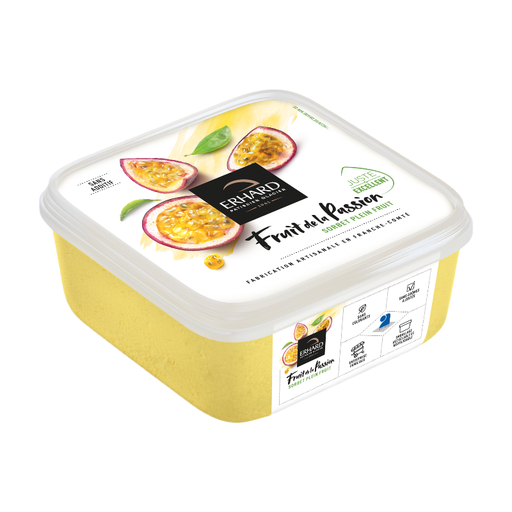 Image unavailable
A passion fruit sorbet to consider if this flavour suits your group. It weighs 488 g; before buying, check the container type, fat and sugar content, and any allergen information.
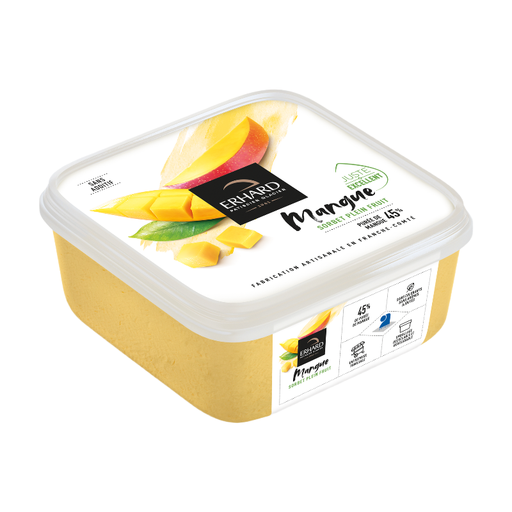 Image unavailable
A mango sorbet to consider if you’d like to share this flavour. It weighs 488 g; check the container as well as the fat and sugar content and any allergen information for the product you choose.
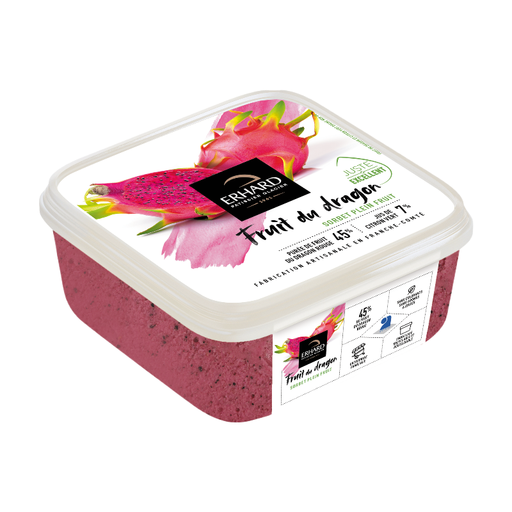 Image unavailable
A dragon fruit and lime sorbet for guests who enjoy this flavour combination. It weighs 488 g; check the container, nutritional information and any allergen details before serving.
For a solid food sold in France, Regulation (EC) No 1924/2006 allows this claim, or a claim with the same meaning, when the product contains no more than 3 g of fat per 100 g. Check the unit shown: a value given only per 100 mL cannot be directly compared with this threshold.
The word ‘sorbet’ alone isn’t enough to compare two specific flavours. Carrefour lists its Carrefour Extra Lemon Tub Sorbet as ‘0% fat’ and its Carrefour Extra Vanilla Tub Ice Cream as containing 8.7 g of fat per 100 g. Check the values for the products you actually plan to serve.
Read the ingredients and any ‘may contain’ statements on the packaging of every product you serve. Carrefour’s product page for its Carrefour Extra Lemon Tub Sorbet warns that traces of milk, eggs, soya, peanuts and tree nuts may be present, among other allergens. So, even if it’s fruity, don’t skip this check.