Hosts keeping an eye on portion sizes
You want to serve rice while keeping the energy content of each plate in mind. Compare the values per 100 g, then check the weight of the portion you’ll actually serve.


To choose a rice dish that is relatively lower in energy for a birthday party, compare the kcal per 100 g, then consider how much you plan to serve: a whole tray and a small portion do not provide the same amount of energy. Next, compare the recipes based on whether they’ll be served hot or cold, the ingredients in the dishes and storage requirements. A lower value than another product’s is not, in itself, enough to justify the regulated claim ‘low energy’.
You want to serve rice while keeping the energy content of each plate in mind. Compare the values per 100 g, then check the weight of the portion you’ll actually serve.
You’re looking for a dish that’s ready to serve or quick to heat up. Your choice will also depend on how much fridge space you have and what instructions to follow after opening.
If some guests avoid certain ingredients or have allergies, check the exact recipe, the listed allergens and any possible traces before deciding on portions.
Start with the portion and recipe you’re planning to serve, then choose a format that works for your buffet.
| Criteria | What to check | Who should consider it? |
|---|---|---|
| Energy per plate | Compare the kcal per 100 g and the weight you plan to serve. | If I want to offer a small portion, the value per 100 g alone doesn’t tell me what will be on the plate. Around 36% of consumers prioritise the amount of energy served. |
| Recipe | Read the ingredients and compare the salt content for the same amount of product. | For a buffet, I want a recipe that suits my guests’ tastes, rather than choosing based on calories alone. The dish’s ingredients would be the top priority for around 29% of consumers. |
| How it’s served | Choose between serving it hot or cold; check how to prepare it and how many portions you’ll need. | When the kitchen is busy just before the party, I’d rather serve a dish that doesn’t need complicated preparation. Ease of serving would come first for around 21% of consumers. |
| Guests and storage | Check allergens, any possible traces and storage instructions. | If guests have dietary requirements or the buffet will be left out, I need to be able to identify the dishes and plan how to store them. These considerations would be a priority for around 14% of consumers. |
According to Auchan’s product listing for Bonduelle tuna and basil rice salad, 132 kcal per 100 g works out at 420 kcal for the whole 320 g tray. So the serving weight affects the comparison.
Work out how many grams you plan to serve per guest, then compare the energy for that amount as well as the values per 100 g.
Regulation (EC) No 1924/2006, published on EUR-Lex, reserves the claim ‘low energy’ for solid foods containing no more than 40 kcal per 100 g. Having a lower energy content than another recipe is not enough.
Describe differences between products using their declared values and the same basis for comparison, without turning that difference into a regulated claim.
The rice recipes listed by Auchan and Carrefour have different ingredients, particularly when they contain fish, egg, pork or mustard.
Read the label for each product and keep it available for guests who need to check the ingredients or any possible traces.
Auchan’s listings for its egg fried rice and Bonduelle rice salad say to store them between 0 °C and +4 °C. Anses warns that breaking the cold chain can encourage bacteria to grow.
Arrange transport and serving in line with the packaging instructions, then store any leftovers as directed.
The brand offers, among other products, express wholegrain rice and paella-style rice in a pouch.
The rice with vegetables and chicken listed by Auchan comes in an express pouch and is served hot.
The Provençal-style rice salad with tuna and basil listed by Auchan is suitable for serving cold.
The retailer’s chilled egg fried rice comes in a 1 kg pack to share.
These products include prepared rice dishes and plain cooked rice. Choose according to the recipe you want, how much you plan to serve and the role of rice in your buffet. Plain rice served with a topping shouldn’t be compared with a complete dish without taking into account what you add.
 Image unavailable
This recipe combines lentils and rice and can be served hot. Work out how much to serve each guest rather than counting one pack as one portion.
Pack size: 250 g. Check the allergens and preparation instructions on the packaging.
 Image unavailable
This dish combines chickpea curry and rice, making it a good choice if you want to serve a prepared recipe rather than plain rice with toppings.
Pack size: 250 g. Check the nutritional information per portion and the storage instructions before planning how to serve it.
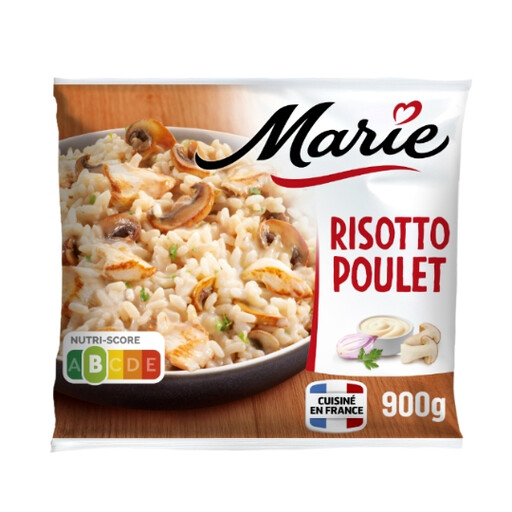 Image unavailable
You can divide this risotto between several guests if you decide how much to serve each person.
Pack size: 900 g. Check the exact recipe, storage instructions and preparation details before adding it to the buffet.
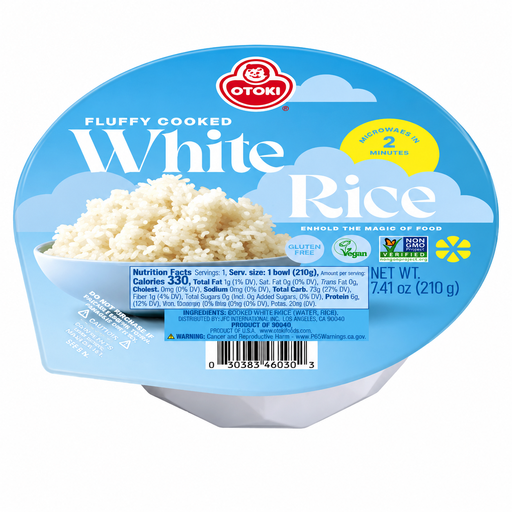 Image unavailable
This plain cooked rice lets you choose the accompaniments separately for your buffet. Bear this in mind when assessing the complete dish.
Pack size: one 210 g cup. Check the preparation instructions before serving.
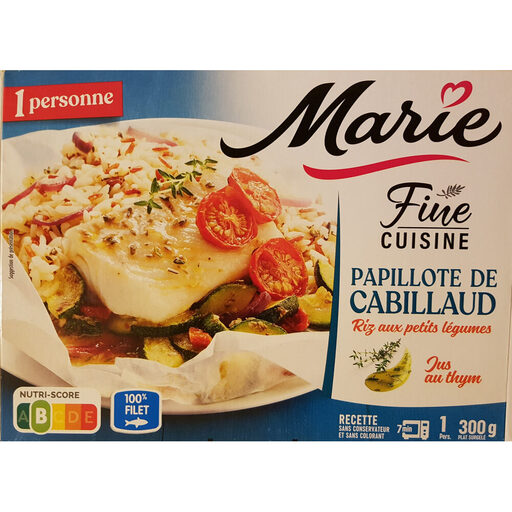 Image unavailable
This prepared dish combines fish, rice and vegetables. Label it clearly if guests are choosing dishes based on their ingredients.
Pack size: 300 g. Check the allergens, how much you plan to serve and the storage instructions.
No. A simple comparison does not allow you to use the claim ‘low energy’. For solid foods, Regulation (EC) No 1924/2006, published on EUR-Lex, sets a maximum of 40 kcal per 100 g for this claim, or wording with the same meaning. Instead, compare the declared values for the recipes you’re interested in.
Check the energy per 100 g and for the amount you plan to serve each guest, followed by the ingredients, allergens and storage instructions. The DGCCRF states that labels on prepacked foods in France include, among other things, the ingredients list, nutrition declaration, net quantity and a date appropriate to the product.
Choose according to the serving temperature and what facilities you have: an express pouch needs heating, while a ready-to-serve salad does not. According to the respective Carrefour and Auchan listings, Ben's Original express wholegrain rice takes 2 minutes to heat in the microwave, while the Bonduelle salad mentioned must be stored between 0 °C and +4 °C.
Follow the storage instructions for the salad you choose rather than leaving it out on the buffet for an extended period. Anses warns that breaking the cold chain can encourage bacteria to grow; the Bonduelle salad listed by Auchan must be stored between 0 °C and +4 °C.
No. The recipe name is no substitute for checking the ingredients and allergens for the exact product. For a group meal, also check for any possible traces listed on the packaging, and allow guests concerned to consult this information.