For a birthday spread, choose the number of bars and the total weight based on how many people you’re serving, and plan to break up larger bars before serving. If you also want to divide the multipack between several lunchboxes, individual 100 g bars mean you can keep some unopened; that doesn’t determine the portion size, though. In either case, check the ingredients, allergens and sugar content on the exact product packaging.
Who are these formats suitable for?
People organising a birthday
When putting together a platter, consider both the number of bars and the total weight of the multipack. A large bar will need breaking up before serving, while individual bars can stay sealed until you’re ready to serve them.
Parents preparing several lunchboxes
Individual bars let you use the multipack gradually without opening everything at once. However, the weight of each bar isn’t a set portion size: decide how much to put in each lunchbox and check the nutritional information for the product you choose.
People putting together a selection for their guests
Comparing milk, dark and hazelnut recipes can help you cater for different tastes, but you should check every pack if anyone has a known allergy. The Auchan product listing for Côte d’Or Lait Noisettes 2 × 180 g, for example, lists hazelnuts, milk and soya, and states that it may contain other nuts.
What sets multipacks apart?
If you’re planning a birthday followed by several lunchboxes, start with the main purpose of the multipack: how much you’ll put on the platter or whether you want to keep bars sealed individually. Then compare the recipes on the exact product packaging.
| Criteria |
What to check |
Who it’s for |
| Amount to share |
Number of bars, weight of each bar and total weight of the multipack. |
When putting together a platter, plan an amount to suit the group, and don’t confuse the weight of the multipack with the weight of an individual bar. Around 31% of consumers prioritise how much there is to share. |
| Dividing between lunchboxes |
Number of bars that can stay sealed and the amount intended for each lunchbox. |
If you’re preparing several lunchboxes at different times, keeping some bars unopened makes it easier to divide them up. This is the main requirement for around 31% of consumers. |
| Recipes and allergens |
Ingredients list and allergen information for each recipe you’re considering. |
If your guests have different tastes or one of them has a known allergy, the ingredients in each bar matter more than having a varied platter. Around 23% of consumers put this compatibility first. |
| Nutritional information |
Sugars per 100 g, followed by the amount actually served; Nutri-Score if it appears on the pack. |
When comparing two recipes sold in multipacks of different sizes, I look at the sugar content on the same basis rather than comparing the packaging weights. This is the top priority for around 15% of consumers. |
What should you check before serving?
-
Confusing the multipack weight with the weight of an individual bar
A pack of 3 × 100 g contains three 100 g bars, not three 300 g portions. This makes a difference when dividing the chocolate between a platter and lunchboxes.
Before choosing a format, note down the number of bars, the weight of each bar and the total weight separately.
-
Treating Nutri-Score as a complete label
According to Santé publique France, displaying Nutri-Score is voluntary. It doesn’t replace the nutritional values or ingredients list, and its absence tells you nothing about the chocolate’s ingredients.
If it’s displayed, use it to compare similar products, then check the sugar content and ingredients on the exact pack.
-
Serving a hazelnut recipe without checking the allergens
Allergens vary by recipe. The Auchan product listing for Côte d’Or Lait Noisettes 2 × 180 g lists hazelnuts, milk and soya, and states that it may contain other nuts.
Ask about any relevant allergies before buying, check every recipe and keep the packaging information available when you serve the chocolate.
-
Applying the ‘soda tax’ to chocolate bars
The Ministry of the Economy describes this contribution as applying to sugary drinks, not chocolate bars. It’s therefore not a factor when choosing between these multipacks.
To compare the bars, focus on their format, recipe and the sugar content listed per 100 g.
Which brands should you consider?
These brands offer a useful guide to different recipes and formats. Always check the packaging of the specific product before planning your platter.
Milka
Milka France offers milk chocolate bars and a range of recipes, including 100 g, 200 g and 276 g Mmmax formats.
- The range of recipes and formats makes it easy to choose what to serve together or save for another time.
- Check the ingredients and allergens for each recipe, especially if it contains inclusions.
Lindt
Lindt France offers the EXCELLENCE, CRÉATION and LES GRANDES ranges, including dark chocolate recipes that state their cocoa percentage.
- These ranges offer several ways to add variety to your platter.
- The cocoa percentage alone doesn’t tell you the sugar content or allergens, so check the label of the product you choose.
Côte d’Or
Auchan offers a Côte d’Or Lait Noisettes multipack of 2 × 180 g, a format you’ll need to break up before serving.
- The two large bars can be broken into squares and arranged on a platter.
- The listed recipe contains hazelnuts, milk and soya, and may contain other nuts.
Nestlé
Carrefour offers Nestlé Noir Dessert chocolate as a single 205 g bar and in a multipack of 2 × 205 g.
- The two-bar multipack is worth considering if you plan to break the bars up for a platter.
- If you’re dividing the chocolate between lunchboxes, decide on the portions you’ll prepare rather than treating each bar as a portion.
Carrefour
Carrefour offers Classic’ Lait multipacks of 2 × 100 g and 3 × 100 g, as well as Noir Dessert bars in a 3 × 200 g multipack.
- These formats let you compare the number of bars and their weight to find the right option for your plans.
- Check the ingredients and nutritional information for each recipe; you can’t work these out from the format alone.
E.Leclerc
E.Leclerc lets you browse products from different brands at your chosen store.
- Choosing a store helps you put together a list of specific products for the birthday.
- According to E.Leclerc, stock is managed locally, so confirm the product with the relevant store before planning your selection around it.
Chocolate bar multipacks to explore on Joybuy
Each of these three multipacks contains two or three 100 g bars. They can help you put together a platter while keeping some bars sealed for another occasion; choose the quantity you need based on how many people you’re serving.
 Image unavailable
Poulain Extra Dark, 3 × 100 g
This dark chocolate multipack is a good choice if you want three bars to serve on a platter or use on different occasions. It weighs 300 g in total; check the ingredients and nutritional information for this recipe before serving.
View on Joybuy
 Image unavailable
Milka Alpine Milk, 3 × 100 g
This milk chocolate multipack lets you set aside three bars for the platter or for later. It weighs 300 g in total; check the allergens and sugar content on the packaging for this recipe.
View on Joybuy
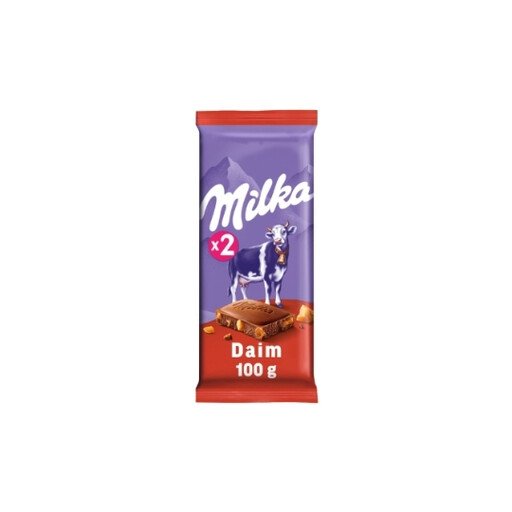 Image unavailable
Milka I737 milk chocolate, 2 × 100 g
If you’d prefer to open one bar and save the other for a later lunchbox, this multipack contains two 100 g bars. It weighs 200 g in total; check that this is enough for your planned platter and read the allergen information for the exact recipe.
View on Joybuy
Frequently asked questions
Does the ‘soda tax’ apply to chocolate bars in France?
No. The Ministry of the Economy describes this contribution as applying to sugary drinks, not chocolate bars. To choose between two bars, compare their recipes and sugar content per 100 g instead.
Does a chocolate bar have to display Nutri-Score?
No. According to Santé publique France, displaying Nutri-Score is voluntary and supplements the nutritional information. If it appears on the products you’re comparing, read it alongside the nutrition declaration and ingredients list, and don’t use it to infer allergen information.
How can you put together a selection if one of your guests has an allergy?
Ask which allergens they need to avoid, then check the label on each exact recipe before serving it. The Auchan product listing for Côte d’Or Lait Noisettes 2 × 180 g lists hazelnuts, milk and soya, and states that it may contain other nuts. Check other bars separately, even if they’re from the same brand.
Should you throw away a chocolate bar as soon as its best-before date has passed?
Not necessarily. Anses distinguishes a best-before date from a use-by date and notes that a product may lose some of its qualities after its best-before date. Follow the storage instructions on the pack and check the condition of the bar before serving.


