Hosts catering for groups of varying sizes
If guests are helping themselves at the buffet, a multipack of bars lets you break off pieces of different sizes. Check the total weight rather than relying on the number of bars alone.


For a birthday buffet where everyone takes a different amount, choose a multipack of bars to break into pieces. If you want to give each guest an individual portion or keep some back for lunchboxes, look for individually wrapped options instead. Either way, check the number of items and the total weight, sugars per 100 g and allergens for the exact recipe.
If guests are helping themselves at the buffet, a multipack of bars lets you break off pieces of different sizes. Check the total weight rather than relying on the number of bars alone.
Individual portions are easier to divide between the party and lunchboxes. Count them before you buy, and check the recipe for each product: the word ‘mini’ tells you neither the weight of each piece nor its allergens.
To compare two recipes, check the ‘of which sugars’ line per 100 g and read the ingredients list. The DGCCRF says allergens must be highlighted and that Nutri-Score is voluntary, so whether it appears or not, you should still read the label.
First decide whether you’ll break the chocolate up at the buffet or hand it out in individual portions. Then compare the recipes of the formats that suit the way you plan to serve it.
| Criterion | What to check | Who is this for? |
|---|---|---|
| Amount to share | Total net weight and number of bars or individual pieces. | When the number of guests varies, I want to know how much I’ll be able to put out at the buffet before choosing a pack. Around 31% of consumers would put the amount available to share at the top of their list. |
| Individual portions | Number of pieces and the weight of each one, if stated. | If I want to give each guest a portion and keep some back for lunchboxes, I prefer a pack that’s already divided into individual pieces. Individual portions would be the top priority for around 31% of consumers. |
| Nutritional information | Nutritional values per 100 g, especially the ‘of which sugars’ line; compare similar recipes. | If I’m choosing between two recipes, I want to be able to compare their sugar content on the same basis, rather than guessing how much to serve from the pack format alone. Around 23% of consumers would make this comparison their main criterion. |
| Allergens and recipe | Highlighted allergenic ingredients and ‘may contain’ statements on each pack. | If a guest needs to avoid an ingredient, I need to identify the exact product I’ll be serving before choosing its format. Around 15% of consumers would put this compatibility first. |
The Bulletin officiel des finances publiques describes a levy on non-alcoholic drinks containing added sugars, subject to the conditions set out for those drinks. It is not a tax on milk chocolate bars or mini bars.
When comparing chocolates, look instead at the format, ingredients and nutritional information for each product.
According to the DGCCRF, Nutri-Score is voluntary. Its absence alone doesn’t tell you whether a recipe is a good choice.
For the prepacked foods concerned, start with the nutritional declaration per 100 g and the ingredients list. Treat Nutri-Score as additional information when it’s shown.
Depending on the product, the items reviewed list ingredients such as milk, soya, hazelnuts, almonds or wheat, including in ‘may contain’ statements.
Check the highlighted allergens and ‘may contain’ statements on every pack you’ll be serving. If a guest needs to avoid an ingredient, choose a suitable product after reading its label.
A bag of eight mini bars weighing 200 g in total won’t serve the same way as a multipack of three bars weighing 300 g. Neither the number of items nor the words ‘multi-pack’ tell you how much there is per person.
If you’re handing out the items as they are, count how many you’ll need. For a buffet, start with the total weight and think about how you plan to break up the bars.
The range includes different formats for these occasions: Carrefour France lists a pack of 8 Mini Tablettes bars weighing 200 g, while the products reviewed also include multipacks of 2 × 100 g and 3 × 100 g bars.
Lindt France’s selection of milk chocolate includes bags and LINDOR formats, including a 1 kg bag. These options are better suited to serving chocolates or displaying them on a table than to breaking up bars.
One of the products reviewed is a 190 g milk chocolate bar filled with Biscoff biscuit. It’s a bar to put out or break into pieces, rather than a pack of individual portions.
E.Leclerc lists a milk chocolate product in a pack of 3 × 100 g bars, a format to break up for a buffet.
This selection includes multipacks of bars to break up and a pack of milk chocolate sweets in tubes to hand out. For a birthday party, choose according to how you plan to serve the chocolate and the recipe of each product: a tube of sweets isn’t a substitute for a bar on the buffet.
 Image unavailable
This pack of three bars weighs 300 g in total and is a good fit for a buffet where you’ll break up the chocolate before serving. The product information lists 58.5 g of sugars per 100 g. Check the ingredients and allergens on the packaging before sharing.
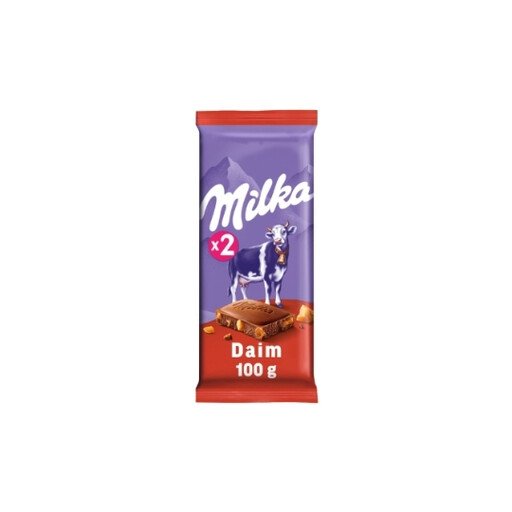 Image unavailable
These two bars weigh 200 g in total and can be broken up for serving, rather than handed out as pre-portioned pieces. If the ingredients matter to your guests, check the packaging for information about hazelnuts, soya and possible traces of other allergens.
 Image unavailable
This pack of six tubes contains 204 g of sugar-coated milk chocolate sweets and is suited to handing out by the tube. These aren’t mini bars. Check the ingredients and allergens on the pack before giving the tubes to guests.
 Image unavailable
This pack contains three bars, weighing 150 g in total. Count the bars before planning how to share them among several guests. The listed recipe includes honey and almonds; check the packaging for other allergens too.
No. The levy described by the Bulletin officiel des finances publiques applies to non-alcoholic drinks containing added sugars under the conditions set out for those drinks, not to milk chocolate bars or mini bars.
No. Nutri-Score is voluntary in France, according to the DGCCRF. For the prepacked foods concerned, check the nutritional declaration per 100 g instead, particularly to compare the sugar content of different products.
Read the ingredients list and ‘may contain’ statements for every product you’ll be serving. The DGCCRF says allergenic ingredients must be highlighted, so don’t assume that two formats from the same brand have the same recipe.
No. It lets you compare the sugar content per 100 g of similar recipes, but it doesn’t tell you how much you’ll be serving or which allergens are present. When choosing between bars and individual portions, also consider the total weight, number of pieces and ingredients list.