
Livraison le jour même ou le lendemain

Qualité garantie

Débloquez vos offres de bienvenue: Livraison GRATUITE | Jusqu'à -80 % | 30 jours d'essai gratuits à JoyPlus
Téléchargez l'application
Just a few days can be enough to see your strawberries, cherries, seedlings and young shoots disappear under a flurry of pecks. Bird netting for the garden creates a simple, effective physical barrier, but not all models are suited to every purpose. Dimensions, mesh size, material and fixing system all play a decisive role in the durability and safety of your setup.
A net that just about covers the surface of your vegetable patch leaves little room for the edges, hoops and ground fixings. If it's too taut, it risks distorting the mesh. If it's too short, birds will still be able to reach the fruit through the structure.
Measure the width, length and height of the area you need to protect. For a fruit tree or a large shrub, allow plenty of extra margin so the net doesn't rest directly on the fruit-laden branches.
A green garden net generally blends in better with the foliage, but its colour says nothing about its resistance to ultraviolet rays. A model that isn't well suited to prolonged outdoor exposure can quickly become brittle.
Instead, check for UV-stabilised polypropylene, whether the net can be cut without fraying, and the storage instructions. A tempting price can also hide an insufficient length or a mesh that's unsuitable for your intended use.
A net simply laid over plants can lift at the first gust of wind or leave a gap underneath its edges. Loose sections can also pose a snagging risk for animals.
The installation should remain taut without being overstretched, with the edges securely held in place by pegs, ties or suitable clips. The net must never be used as a load-bearing support, a climbing fence or a trapping device.
The mesh determines the size of the openings, but also the circulation of air, light and water. A 10 × 10 mm mesh net is suitable for many uses: protecting fruit, vegetables, seeds and small shrubs. Some Ortoflex models use a square mesh of 10 × 12 mm.
The right choice depends on the crops you're protecting and the birds in your area. Always check the product description rather than relying on a general label like "reinforced protection".
Polypropylene netting is lightweight, easy to handle and well suited to seasonal installation. An anti-UV treatment helps the material retain its properties during repeated outdoor use, though it doesn't replace careful maintenance.
After harvesting, remove any leaves and debris, rinse the net if necessary, let it dry completely, then store it rolled or folded in a dry place away from direct sunlight.
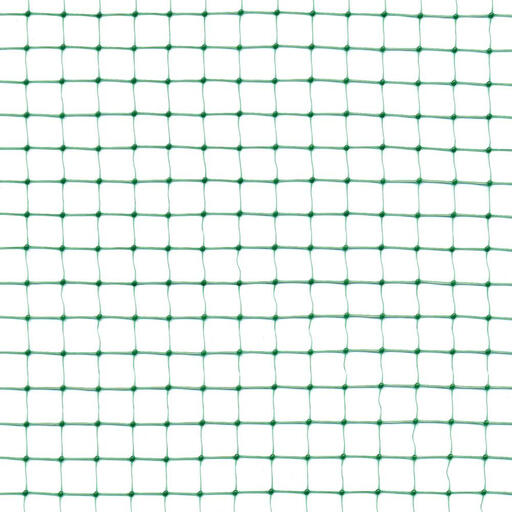
Why this choice suits this profile: Its 2 × 5 m format is easy to handle for a small raised bed, a square vegetable plot or a few shrubs.
Its format reduces the risk of buying an oversized roll for a small area. The description states a 10 × 10 mm mesh and UV-stabilised material.
Lightweight polypropylene, a discreet green colour and the ability to cut it to fit the area you need to cover.
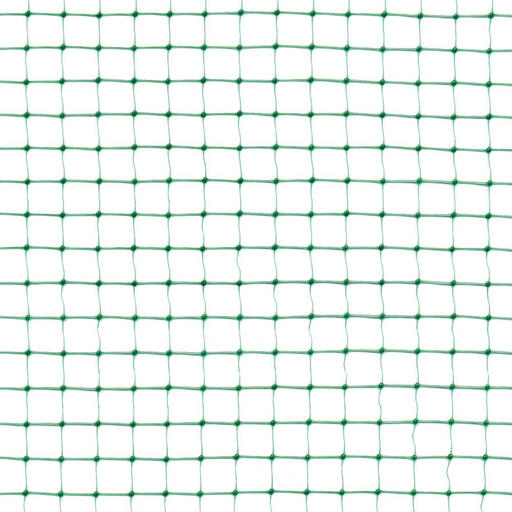
Why this choice suits this profile: With a width of 4.80 m and a length of 200 m, this roll is aimed at large orchards, extensive plots and installations on a structure.
Its great length minimises joins, which are often the source of gaps in the protection. It also provides more margin around your crops.
A large-capacity roll, a stated 10 × 10 mm mesh and a UV-stabilised polypropylene construction.
Why this choice suits this profile: This 4 × 250 m roll is suitable for market gardeners, fruit growers and owners of multiple growing areas.
The roll format makes it easier to plan rows and avoids having to use lots of small pieces that are difficult to keep in place.
A stated square mesh of 10 × 12 mm, which allows air, water and light to circulate, for direct laying or use on a support.
We've put together a comprehensive list, updated in real time, of products that meet these strict selection criteria and European safety regulations.
A mesh of around 10 × 10 mm or 10 × 12 mm is commonly offered for protecting fruit, vegetables, seedlings and shrubs. Still, check the bird species in your area and the actual size of the openings before buying.
Tension the net without forcing it and secure each edge to the ground or the structure. Space the pegs, ties and clips evenly. Inspect the installation after strong winds, making sure there are no pockets or gaps underneath the net.
Its lifespan depends on exposure, handling and storage conditions. A UV-resistant net can be reused according to the manufacturer's instructions, provided you avoid friction, excessive tension and storing it in a damp place. Inspect it before each new installation.