
Livraison le jour même ou le lendemain

Qualité garantie

Débloquez vos offres de bienvenue: Livraison GRATUITE | Jusqu'à -80 % | 30 jours d'essai gratuits à JoyPlus
Téléchargez l'application
Watching your cherries, strawberries, or young seedlings get devoured by birds is a frustration every gardener knows. Bird netting stands out as the simplest solution, but be warned—not all models are created equal. Making the wrong choice is easy?: at best, it's a waste of time and money; at worst, it's a dangerous trap for garden wildlife.
To avoid throwing your money away, it's essential to know the most common pitfalls. Too many gardeners, even passionate ones, get caught out by making one of these three classic mistakes?:
This guide is here to help you decode the features that really matter and choose a net that will effectively protect your vegetable patch and fruit trees.
To make your purchase a worthwhile investment and ensure its effectiveness, focus on three technical criteria. This is your guarantee for saved harvests, year after year.
The mesh size is probably the most critical factor. It determines the effectiveness of your barrier.
A square mesh of around 10?x?10?mm or 10?x?12?mm is an excellent compromise. It's small enough to block most fruit-eating birds while still allowing water, air, light, and bees to pass through. This is the benchmark size for fruit tree netting or a vegetable garden.
The lifespan of your netting is directly linked to its material and treatment. A garden protection net is constantly exposed to the elements.
Polypropylene (PP) is a choice material for its lightness, flexibility, and strength. But the absolutely essential feature is UV treatment. Without this stabilisation, the sun's rays degrade the plastic, making it as brittle as glass in just one or two seasons. A UV-treated net, like the Tenax Ortoflex netting, can be reused for many years, making it a much more cost-effective and eco-friendly investment in the long run.
For complete protection, the netting must entirely envelop the area you want to protect, whether it's a tree, a raised bed, or a row of currant bushes. Before buying, measure the length, width, and height of the area. Always allow for extra material so the net can be stretched taut and securely fastened to the ground or a structure, without being in direct contact with the fruit. A loose net is a bad idea in disguise?: birds can still peck at the fruit through the mesh.
A lightweight and flexible bird mesh will be easier to handle and install, whether you're draping it directly over low shrubs or mounting it on hoops for taller crops.
Every garden needs a different solution. We've selected models that tick all the boxes (durability, effectiveness) and cater to various uses.
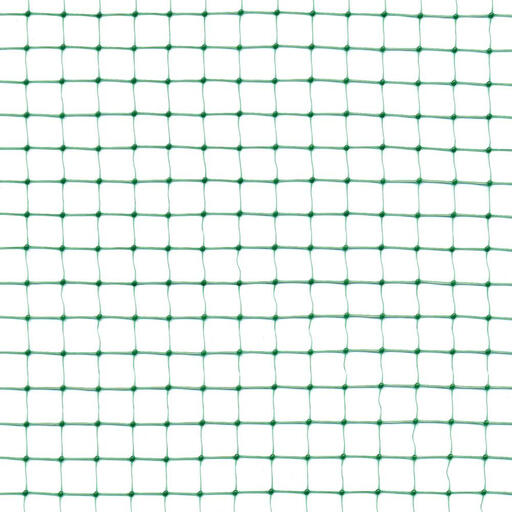
Why we recommend it : Perfect for protecting a strawberry patch, a solitary raspberry bush, or a few vegetable plants. Its compact dimensions make it incredibly easy to handle and install, even on your own.
At 2x5 m, it's perfectly sized for small areas. No waste or headaches from dealing with an oversized roll.
UV-treated polypropylene, 10x10 mm mesh : it ticks all the boxes. Designed to be reused for many seasons, it's a sustainable investment.
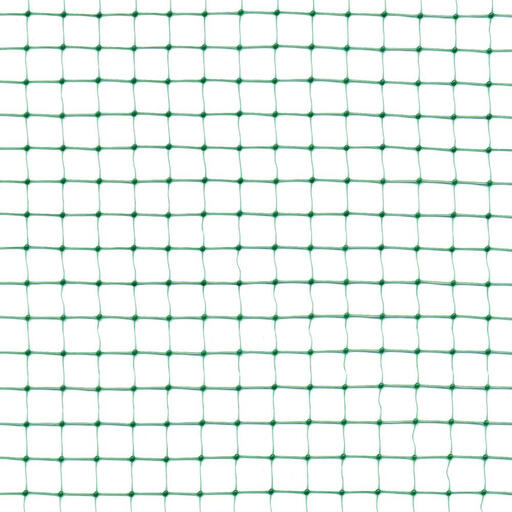
Why we recommend it : Its generous dimensions are perfect for enveloping one or more medium-sized fruit trees (cherry, apple) or large berry bushes, ensuring complete coverage.
Its 10x10 mm mesh and UV treatment are the winning combination for effective, long-lasting protection. No more nets that tear after the first season.
Despite its large size, it remains lightweight and manageable. It's easy to install on a frame or drape directly over the treetops.
Why we recommend it : This large-format roll is aimed at market gardeners, vintners, or seasoned gardeners who need to cover long rows (vines, berries) or vast vegetable patches professionally and uniformly.
The roll format allows you to cut the exact length needed for each row. The result : optimised use and zero waste.
10x12 mm square mesh and UV treatment : the guarantee of consistent performance over very large areas, and for many years to come.
Discover our complete selection of products that meet our criteria for quality and durability.
For maximum effectiveness and for the safety of wildlife, the netting must be kept taut. Above all, do not let it flap in the wind or lie on the ground, where birds and small mammals could get entangled. Secure it to a structure (hoops, stakes, wooden frames) to keep it suspended above the crops. Ensure the edges are firmly anchored to the ground with pegs, stones, or dedicated staples.
Yes, and the difference is huge. Untreated polypropylene netting can lose up to 50% of its strength after just one season of sun exposure. The UV treatment stabilises the material, allowing it to retain its flexibility and strength for several years, even in the sunniest regions. It's a non-negotiable criterion for a long-term investment.
Yes, high-quality polypropylene nets, like those in the Tenax Ortoflex range, are knitted in a way that prevents them from fraying when cut. This allows you to create custom-sized protection for different areas of your garden from a single roll. A simple pair of scissors is all you need.