
Livraison le jour même ou le lendemain

Qualité garantie

Débloquez vos offres de bienvenue: Livraison GRATUITE | Jusqu'à -80 % | 30 jours d'essai gratuits à JoyPlus
Téléchargez l'application
What gardener hasn't despaired at the sight of their cherries, strawberries, or young lettuce shoots devoured by birds? The solution seems simple: install bird netting. However, behind seemingly identical products, the market is full of pitfalls that can turn a good idea into a waste of time and money. To ensure you don't regret your purchase, it's crucial to know the common mistakes to avoid.
As the Head of Product Recommendations at Joybuy, I'm here to separate fact from fiction. Here are the essential points to check before you head to the checkout.
To ensure you make the right choice, focus on these few objective characteristics. They are what truly separate a short-lived gadget from a long-term investment for your vegetable garden protection netting or orchard.
The lifespan of your netting depends directly on its material. The two most common options are:
Regardless of the material, the "UV-treated" label is non-negotiable. It is the only guarantee that the plastic will maintain its flexibility and strength against the sun, season after season.
Mesh size is crucial: it determines the effectiveness of your barrier. For versatile use (vegetable gardens, small fruits, anti-pigeon netting), a square or diamond mesh of about 10 x 10 mm to 19 x 19 mm is an excellent compromise. It is small enough to block most seed- and fruit-eating birds while allowing air, water, light, and pollinators to pass through.
Before buying, precisely measure the area you need to cover. For fruit tree netting, allow enough extra material for the net to reach the trunk or be secured to the ground, without being stretched so tightly that it touches the fruit. For a vegetable garden, ensure the width covers your rows. Nets sold on a roll, which can be cut cleanly without fraying, are far more practical and versatile.
Because every garden is unique, here are three reliable options that meet our quality standards, each tailored for a specific use.

Why we chose it: Ideal for a raised bed, a row of strawberries, or a few berry bushes. It's the perfect simple and cost-effective solution to get started.
Made from UV-treated polypropylene, it is designed to last for several seasons. Its 10x10 mm mesh is a proven standard that blocks birds while allowing pollinators to pass through.
Lightweight and manageable, it can be cut to size without fraying, making installation much simpler.
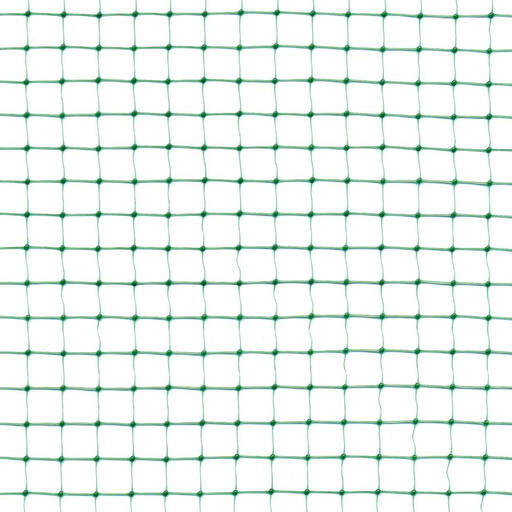
Why we chose it: With its generous dimensions (40 m?), it is perfect for completely enveloping a cherry tree, an apple tree, or several large shrubs, ensuring total protection.
Its single-piece design avoids risky joins, which create entry points for birds. Its UV treatment ensures excellent long-term durability, even on a fixed structure.
It covers large volumes in one piece, leaving no chance for birds to get in.
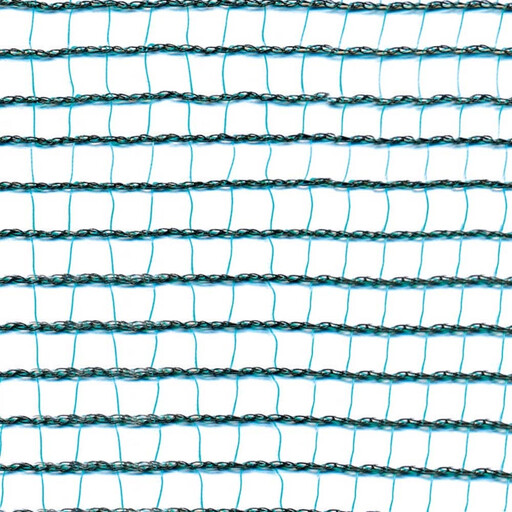
Why we chose it: Designed for near-professional use, this ultra-durable woven HDPE net offers dual protection: hail and birds. It is perfect for large vegetable gardens, vineyards, or small-scale farms.
Its run-proof woven structure and reinforced edges give it unparalleled mechanical strength, far superior to conventional nets. It is built to withstand impacts and the high tension of long-span installations.
Its dual function (anti-hail and anti-bird) and exceptional durability make it a cost-effective long-term investment for intensive use.
We have selected a full range of products that meet this quality charter and current regulations.
For maximum effectiveness and for the safety of wildlife, the netting must be kept taut and should not rest directly on the fruit or leaves. Use hoops, stakes, or a frame to create a gap of a few centimetres between the net and the plants. Above all, ensure the edges are securely fastened to the ground (with pegs or stones) or tied to the trunk to prevent birds from getting underneath. A loosely installed net is a potential trap for wildlife.
The lifespan depends mainly on the quality of the material and its UV treatment. A high-quality, well-maintained net can last from 3 to 5 seasons, or even longer. To maximise its longevity, remove it after the harvest, clean off any plant debris, and store it in a dry place away from sunlight during the winter.
Yes, if the mesh is too fine or if the netting is installed before the flowering period. For crops that require insect pollination (strawberries, fruit trees, zucchini, etc.), choose a mesh size of at least 10 mm, which will not stop bees and other pollinators. You can also install the netting just after flowering, once the fruits begin to form, or temporarily open it during the hours when pollinators are most active.