
Livraison le jour même ou le lendemain

Qualité garantie

Débloquez vos offres de bienvenue: Livraison GRATUITE | Jusqu'à -80 % | 30 jours d'essai gratuits à JoyPlus
Téléchargez l'application
Whether you're out and about, dealing with mealtimes or changing nappies, Biolane baby wipes serve different purposes depending on the area you need to clean and how sensitive your baby's skin is. Yet packaging can sometimes be misleading: a formula marketed as gentle isn't necessarily suitable for every situation, and a bulk pack is only economical if the wipes stay moist until the very last one.
Here are the key factors to check before buying baby cleansing wipes, along with a selection organised by use.
Baby face and hand wipes are designed for quick, everyday clean-ups. They're handy after a meal or when you get back from a trip, but that doesn't mean they're a substitute for a nappy-changing product. To clean your baby's body or bottom, look for an explicit indication on the packaging.
The phrase hypoallergenic baby wipes refers to a formula designed to minimise the risk of a reaction, but it's not a personal guarantee. Check the ingredients list, particularly for any fragrance, and avoid using these products on irritated or broken skin. If a reaction occurs, stop using them immediately and seek advice from a healthcare professional.
Packs of 3, 6 or 12 often reduce the cost per wipe, but a poorly sealed lid can lead to gradual drying out. Close each pack carefully after use and store it between 15 °C and 25 °C, as stated on the product sheets. Used wipes must never be flushed down the toilet.
For versatile use, baby body and bottom wipes can clean the nappy area, body and face without rinsing, depending on the product's instructions. Water wipes for babies are particularly popular with families looking for a short, fragrance-free formula.
For nappy changes, liniment is another option. Biolane olive oil liniment, applied with a cotton pad, cleans the nappy area and leaves a protective film, according to the manufacturer's description. It's not a wipe, but it's an interesting choice if you want to reduce your use of disposable products.
Compare the stated features rather than relying on general claims:
Sensitive skin can react to various components. The phrase "from birth" appears on some references, but use should always follow the precautions stated on the pack.
To compare two offers, divide the pack price by the total number of wipes. A pack of 48 is ideal for trying a formula or slipping a few packs into a changing bag. A bulk pack of 144, 216, 576 or 864 wipes is better suited to households that already know the product and have a dry storage space.
Finally, compostable does not mean flushable. Pure Water wipes, certified OK COMPOST HOME, are compostable according to the product sheet, while their packaging is not. Check local guidelines and your compost's acceptance conditions.
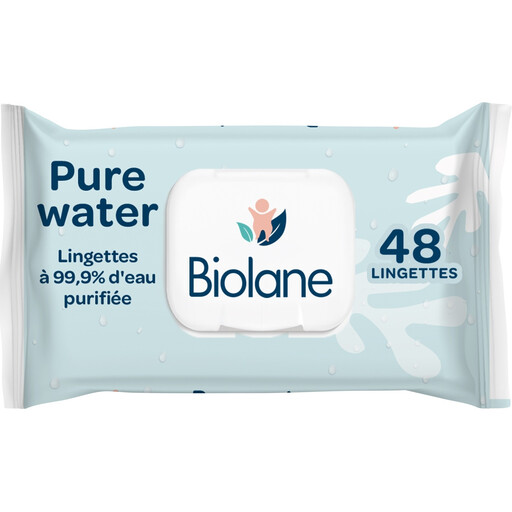
Why this suits this profile: The 48-wipe pack lets you try a fragrance-free formula before moving to a larger size. It's also ideal for a changing bag or occasional use.
The limited quantity reduces the risk of packs drying out in storage. The sheet states 99.9% purified water and a fragrance-free formula.
48 wipes, plant-based fibres and OK COMPOST HOME certification for the used wipe. The packaging remains non-compostable.
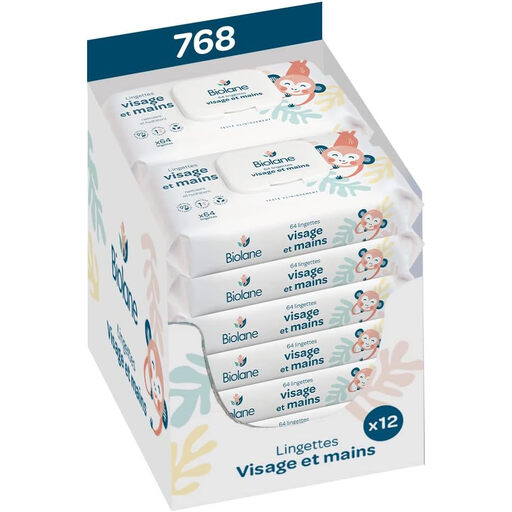
Why this suits this profile: This large pack is designed for families who regularly use face and hand wipes at home, in the car or on the go.
The use is clearly targeted at face and hands, so you won't accidentally pick a nappy-changing product to clean your baby after a meal.
768 wipes in total, plant-based fibres, balanced pH and 97% naturally derived ingredients, according to the product sheet.
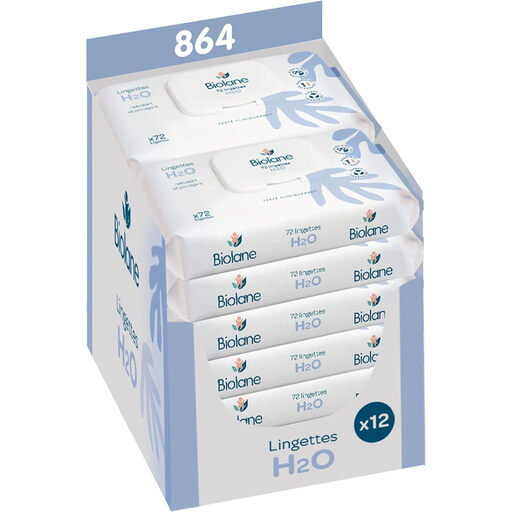
Why this suits this profile: The pack of 864 wipes is ideal for households that want to stock up for frequent nappy changes, outings and daily cleaning.
The 12-pack format makes stock rotation easy: you can keep packs sealed and only open one at a time.
72 wipes per pack, no-rinse use, balanced pH and alcohol-free formula, according to the manufacturer's instructions.
We've put together a comprehensive, real-time updated selection of products that meet these exacting criteria and comply with European safety regulations.
Some references are stated as suitable from birth, particularly Pure Water and H2O wipes. However, always check the label of the product you choose, as formulas and areas of use can vary. If your baby has very reactive skin, test the product on a small area first and stop using it at the first sign of irritation.
They can be a handy solution when you're out and about, after a meal or for a quick nappy change, but they don't systematically replace a full wash. In daily use, alternate according to your routine with water, a suitable cotton pad or a cleansing product designed for bath time.
The duration depends on the instructions on the packaging. In practice, close the lid after each use, keep the pack away from heat and direct light, and check that the wipes are still sufficiently moist before using them. Adjust the number of packs to your consumption to avoid storing them for too long.