
Livraison le jour même ou le lendemain

Qualité garantie

Débloquez vos offres de bienvenue: Livraison GRATUITE | Jusqu'à -80 % | 30 jours d'essai gratuits à JoyPlus
Téléchargez l'application
For a quick nappy change, a trip to the park or simply cleaning up after mealtimes, Biolane baby wipes can be a real lifesaver. But you need to pick the right product: the formula, the number of wipes per pack and the area of use all vary from one product to another.
A careful look at the label can help you avoid a few ill-advised purchases: choosing scented wipes for reactive skin, confusing a compostable wipe with compostable packaging, or opting for a large pack that might dry out before you finish it. Here are the points to check before choosing your Biolane cleansing baby wipes.
The phrase sensitive skin baby wipes isn't enough to tell two products apart. Instead, look at the ingredients list, check whether perfume is present and identify the intended area of use. A formula designed for the face and hands can be different from one made for the nappy area and body.
Always use wipes according to the instructions. If the skin is irritated or grazed, the product sheets recommend not using them and seeking medical advice if necessary.
Some water baby wipes contain a very high proportion of purified water, but that doesn't mean they're made of water alone. The Biolane Pure Water products featured here contain 99.9% purified water and just two ingredients in their formula. They are also fragrance-free.
This formula is different from a more classic composition that may contain glycerine, a preservative or perfume. The full ingredients list is therefore the best way to compare.
A family pack of baby wipes means fewer refills, as long as you store it properly. Close the lid or resealable tab carefully after each use to slow down drying. On the other hand, a smaller pack fits more easily into a changing bag, but you may need to buy more often.
For everyday use, look for a specific indication: face and hands, body and nappy area, or a specific use for changing. Wipes for the face and hands are particularly handy after meals or a walk. For the nappy area, a well-soaked wipe makes cleaning easier, though it doesn't replace a water wash when that's possible.
The Biolane H2O products selected here can be used on the nappy area, body and face, without rinsing according to the instructions. The face and hand wipes are, as the name suggests, intended for those two areas.
If your child has sensitive skin, compare the following in particular:
The term hypoallergenic refers to a formula designed to reduce the risk of an allergic reaction. It does not guarantee that no child will react to the product. When using them for the first time, proceed with caution and stop immediately if you notice any unusual reaction.
Some Biolane wipe product sheets mention plant-based or plant-derived fibres. The Pure Water products are described as home compostable, with an OK COMPOST HOME certification stated by the manufacturer. This certification applies to the used wipe, not the sachet or packaging.
Even when described as compostable, wipes should never be flushed down the toilet. Always follow your local recycling and composting guidelines.
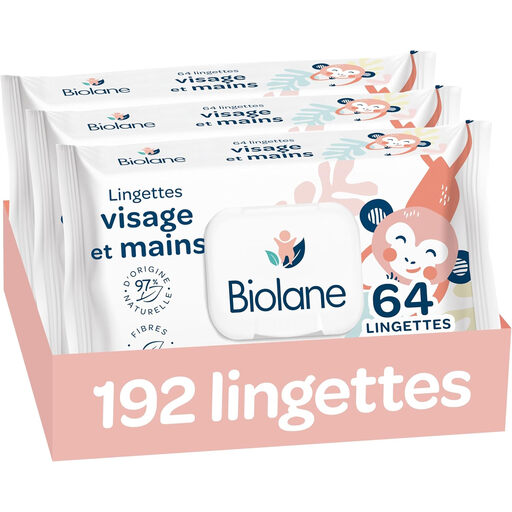
Why this choice suits this profile: With 3 packs of 64 wipes, you get a sensible amount for outings and everyday cleaning, without building up an excessive stock.
The area of use is clearly limited to the face and hands. So there's no need to buy a large stock for a targeted need.
192 wipes in total, 97% naturally derived ingredients stated and plant-based fibres made in France.
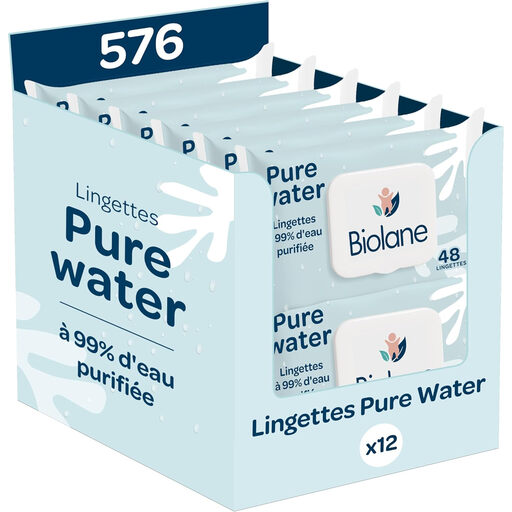
Why this choice suits this profile: Fragrance-free, this formula is aimed at families who want to keep ingredients to a minimum and have a generous stock at home.
The product sheet clearly states that the packaging is not compostable. This helps avoid mistakenly attributing that feature to the whole product.
99.9% purified water stated, plant-based fibres and an OK COMPOST HOME certification mentioned for the wipes.
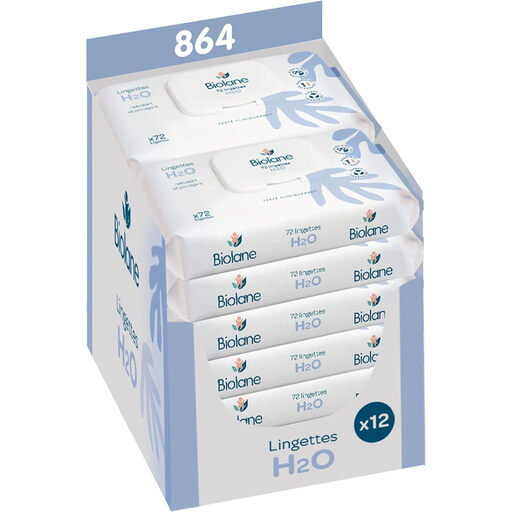
Why this choice suits this profile: The large pack size is ideal for frequent nappy changes, nursery use or families who want to split packs between home and the changing bag.
The multiple packs reduce the risk of running out. Each sachet can also be sealed separately to help keep the wipes moist.
864 wipes, usable on the face, body and nappy area, without rinsing according to the instructions.
We've put together a complete, real-time updated list of products that fully meet these strict selection criteria and European safety regulations.
No-rinse baby wipes should be used by gently wiping the wipe over the area in question. For nappy change models, clean without rubbing, then let the skin dry if necessary before putting on a fresh nappy.
A few precautions are worth keeping in mind:
The shelf life depends mainly on how well the pack is sealed and how often it's used. A large pack is only worthwhile if you can store it in a dry place at a suitable temperature, opening the packs as you go.
Some products in this selection are labelled from birth, particularly the water wipes and Pure Water models. However, always check the product sheet for your chosen item and monitor the skin's reaction during the first few uses.
The Pure Water products carry an OK COMPOST HOME certification for the wipes. The product sheet does state that the packaging is not compostable. Other models should not be considered compostable unless specifically stated.
A pack of 12, such as the 576 or 864 wipe options, can be good value for heavy use. For testing a formula, stocking a changing bag or reducing the risk of drying out, a pack of 3 is more sensible. Compare the total price and the number of wipes, and don't forget to consider the formula and the area of use.