
Livraison le jour même ou le lendemain

Qualité garantie

Débloquez vos offres de bienvenue: Livraison GRATUITE | Jusqu'à -80 % | 30 jours d'essai gratuits à JoyPlus
Téléchargez l'application
Urban cycling is an increasingly popular choice. It's practical and eco-friendly, but safety remains a central concern for many cyclists. Between marketing promises and sometimes superfluous gadgets, it's easy to end up with ineffective gear. This guide's mission is to separate fact from fiction and help you build a reliable safety kit, focusing on the essentials for both your daily commutes and leisurely rides.
Before you check out, it's best to know the common mistakes that can be costly—both for your wallet and your safety.
To build a cohesive bike safety kit, you need to focus on a few technical features that make all the difference in daily use.
A good cyclist gear setup starts with high-performance lighting. Beyond just having a light, here are the points to check?:
bike brake light, which brightens during deceleration, is highly effective at alerting road users behind you. It's a real safety asset in dense traffic.LED bike helmets, now integrate lighting, positioning the light high up for maximum visibility.Safety is about protecting your most valuable asset (yourself!) and, of course, your bike.
bike commuting, where the bike is often parked unattended, a bike alarm is a highly relevant solution. Triggered by movement, it produces a much more effective audible deterrent than a simple mechanical lock.Safety also means being able to handle the unexpected.
portable bike pump is therefore indispensable.Here is our selection of accessories that cater to different user profiles, based on the performance and practicality criteria we've just discussed.
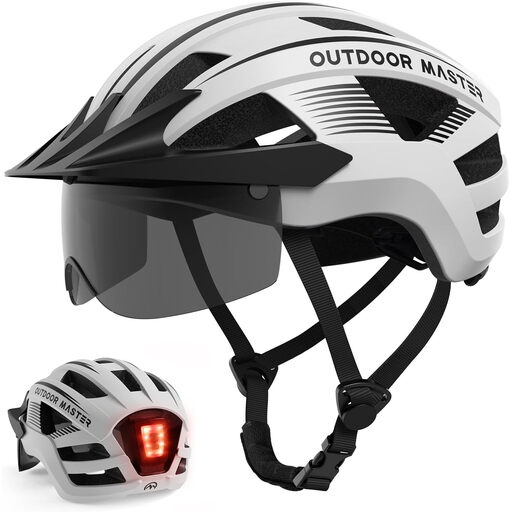
Why we chose it: Ideal for home-to-work commutes that often extend past sunset. It combines the certified protection of a helmet with the visibility of an integrated rear LED light, all in one piece of gear. Its removable magnetic visor and goggles make it adaptable to all weather conditions.
It directly addresses the "passive visibility" pitfall by integrating an active, rechargeable LED light positioned high up for optimal visibility.
3-in-1 solution : head protection, active visibility, and eye protection. In-Mold construction certified by CPSC and ASTM.
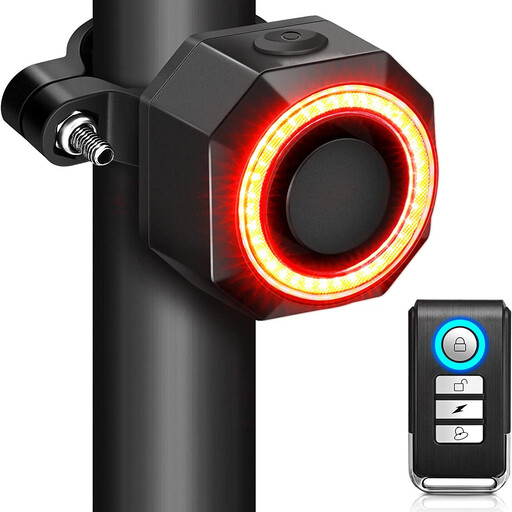
Why we chose it: Perfect for those who park their bike in public places and are as concerned about theft as they are about visibility. This device combines a smart brake light and a powerful audible alarm, all controlled by a remote.
It tackles the "false security" pitfall of basic locks by adding active, deterrent-based protection. The smart brake light also goes far beyond simple passive lighting.
Dual function : smart bike brake light and bike alarm. IP65 waterproof rating for use in all weather conditions.

Why we chose it: For the cyclist who leaves nothing to chance. This compact, rechargeable compressor lets you maintain optimal tyre pressure anywhere, ensuring performance and safety. It's just as useful for car tyres, balls, or air mattresses.
It solves the problem of "neglecting basic maintenance" by offering a simple and effective solution for a fundamental aspect of bike safety: tyre pressure.
Powerful portable bike pump (up to 10.3 bar) with a battery, LCD screen, auto-stop, and preset modes. A versatile tool for all your inflation needs.
We have compiled a comprehensive and up-to-date list of products that meet our strict selection criteria and safety regulations.
Most manufacturers recommend replacing a bike helmet every 3 to 5 years, even without any visible impact. Materials like EPS foam can degrade over time due to sweat, UV rays, and temperature changes. Most importantly, it is imperative to replace it immediately after any impact, even if it shows no apparent cracks.
The two modes are complementary. A flashing light is very effective at attracting the attention of other road users and signalling your presence from a distance. A steady beam, on the other hand, is essential for properly illuminating the road ahead and seeing obstacles. The ideal setup is to combine a front light in steady mode and a rear light in flashing mode, or to choose a device that offers both options.
The recommended pressure is usually indicated on the tyre's sidewall as a range (e.g., 50-75 PSI or 3.5-5.2 Bar). The optimal pressure depends on your weight, the type of terrain, and your comfort preferences. Higher pressure provides better efficiency on smooth roads, while slightly lower pressure improves grip and comfort on rougher surfaces. A portable compressor with a digital gauge is the ideal tool for adjusting this pressure with precision.