
Livraison le jour même ou le lendemain

Qualité garantie

Débloquez vos offres de bienvenue: Livraison GRATUITE | Jusqu'à -80 % | 30 jours d'essai gratuits à JoyPlus
Téléchargez l'application
Whether you're commuting or riding for leisure, cycling in the city demands constant vigilance. Your safety depends first and foremost on your visibility—a critical factor as soon as the light fades, from dawn to dusk. The bike helmet with an integrated light stands out as a remarkably effective two-in-one solution to signal your presence to other road users.
This guide is designed to demystify the market and provide everything you need to find the perfect model for your rides and your budget.
Before we dive into our top picks, there are a few essential criteria to check to ensure you make the right choice.
This is its primary purpose: a helmet must, above all, protect your head in the event of an impact. It is imperative to verify that the model that catches your eye complies with current standards. In Europe, the benchmark certification is CE EN 1078. The presence of American labels like CPSC or ASTM is also a mark of the manufacturer's commitment to quality. This crucial information can be found on the packaging, the label inside the helmet, or its technical sheet.
Luminous efficiency is, of course, at the heart of the matter. Most helmets integrate a red LED at the rear to be seen. Some models go a step further by also offering a white light at the front for 360° visibility.
A few points to check:
A helmet, even the safest in the world, is useless if it stays in the closet. Comfort is therefore essential to ensure you instinctively wear it on every ride. Several factors come into play:
We have selected three models that tick all the boxes, each with its own strengths to meet different needs and budgets.
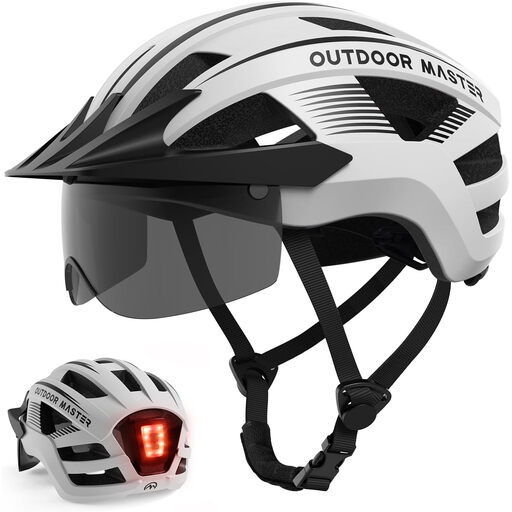
What sets it apart: Its versatility. This is the Swiss Army knife of urban helmets: it combines a rear light, a small cap-style peak, and a large magnetic visor. An all-in-one solution to tackle any weather and light conditions.
Key Features:
Who is it for? The quintessential bike commuter, male or female, looking for a do-it-all helmet for a hassle-free experience. A highly relevant choice for city bike or e-bike users who want maximum comfort and practical features for daily use.
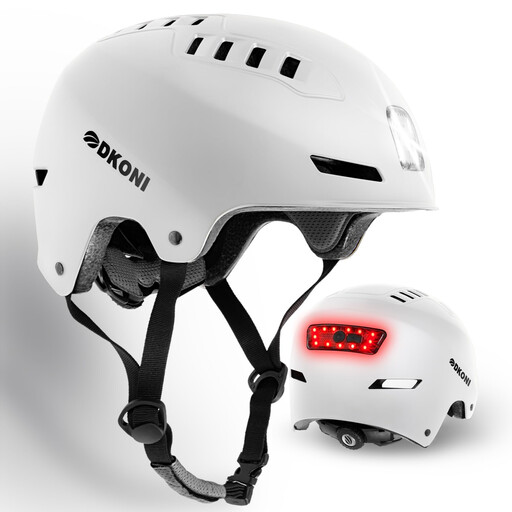
Its key advantage: Its dual front/rear lighting. With 5 white LEDs at the front and 13 red LEDs at the rear, it ensures 360° visibility, not only allowing you to be seen from a distance but also to minimally light your path in the dark.
Key Features:
Who is it for? For the cyclist who puts safety above all else. It's perfect for commuters who ride very early in the morning or late at night, including users of electric bikes or road bikes who face low-light conditions.
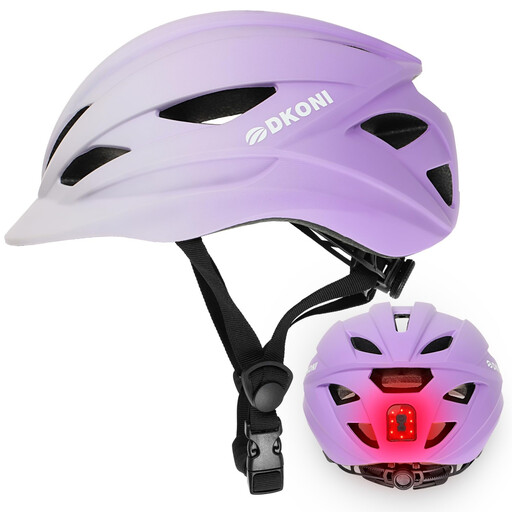
The essentials, no frills: This model gets straight to the point: lightweight and simple. It includes the essentials—namely, certified protection and a removable rear light—all at a very accessible price point.
Key Features:
Who is it for? The occasional cyclist or commuter looking for a simple, lightweight, and effective solution without breaking the bank. Its minimalist approach makes it an excellent first piece of gear or a smart choice for those who prefer the essentials.
A helmet with a light is perfect for being seen. But to see where you're going on unlit roads or bike paths, that's another story. In that case, it's essential to supplement your gear with a powerful front light mounted on your handlebars.
To complete your setup or explore other solutions, take a look at our selection of bike lights.
To be seen, yes, a helmet with a rear light (ideally flashing) is an excellent device. It effectively alerts vehicles behind you. However, to see the road ahead on a route without public lighting, it won't be enough. It is then imperative to invest in a proper front headlight (over 300 lumens) to mount on your handlebars. Reminder: Wearing a certified high-visibility vest is mandatory at night outside of built-up areas (or during the day if visibility is poor).
It couldn't be simpler. A soft, damp cloth with a little soapy water is all you need for the outer shell. Above all, never use solvents or aggressive cleaning products that could damage the structure. Remember to recharge the battery via the USB cable whenever necessary. If the light is removable, take it off before cleaning. Finally, store your helmet in a dry place, away from heat and direct sunlight.
Yes, and this is non-negotiable. Even if the helmet appears undamaged on the surface, its internal structure (the EPS foam) is designed to deform and absorb the energy of a single impact. Once it has fulfilled this purpose, even after a low-speed fall, it no longer offers effective protection. Think of it like an airbag: it's single-use. Replacing it is imperative for your safety.