
Livraison le jour même ou le lendemain

Qualité garantie

Débloquez vos offres de bienvenue: Livraison GRATUITE | Jusqu'à -80 % | 30 jours d'essai gratuits à JoyPlus
Téléchargez l'application
Whether for commuting to work or a weekend ride, cycling has become a staple of our daily lives. But while its benefits are well-established, safety—and especially visibility—remains a key concern for many cyclists. The adult bike helmet with an integrated light stands out as a modern and effective solution. It combines the essential protection of a helmet with active lighting, ensuring you are finally visible to everyone on the road.
With an overwhelming number of options on the market, it can be hard to know where to start. This guide is here to provide clear benchmarks and practical advice to help you find the perfect model for your needs, whether you're a dedicated bike commuter or a casual weekend rider.
Before you jump on the first model you see, let's review the criteria that truly make a difference. Here are the key points to check to ensure you make the right choice.
This is obviously the standout feature of these helmets: their lighting system. A good LED bike helmet offers more than just a single red diode on the back. Look for models that feature:
Let's not forget the primary function of a helmet: to protect your head. Beyond the mandatory certification (CE EN 1078 standard in Europe), certain technologies add an extra layer of protection. This is the case with the renowned MIPS (Multi-directional Impact Protection System). This technology consists of a thin, low-friction inner layer that allows for a slight rotational movement of the head inside the helmet during an angled impact. The goal? To better dissipate rotational forces and reduce the risk of brain injury.
No matter how safe a helmet is, it will end up collecting dust if it's uncomfortable. For an urban bike helmet intended for daily use, here are the points you shouldn't overlook:
To move from theory to practice, here are three models that have caught our eye, analysed based on their technical specifications, versatility, and user feedback.

Why it stands out: This model incorporates MIPS technology, making it the sensible choice for cyclists who refuse to compromise on safety and protection against multi-directional impacts. Its versatile design makes it equally at home in the city and on mountain bike trails.
Key Features:
Who is it for? The all-around cyclist who wants a secure helmet for bike commuting during the week and for their MTB or road rides on the weekend.
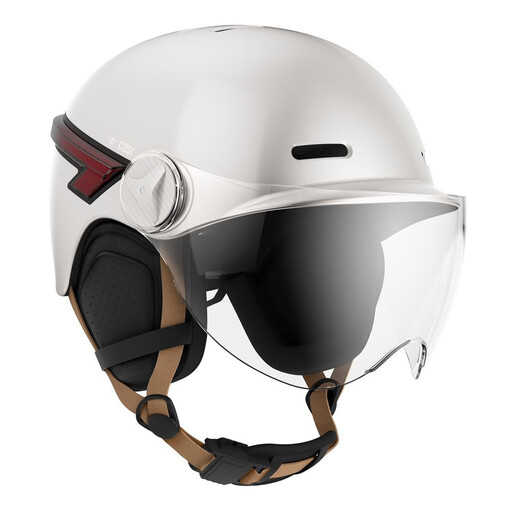
Why it stands out: Its concept is one-of-a-kind: a fully translucent shell that diffuses light 360°, ensuring perfect visibility from all angles. The addition of remote-controlled turn signals on the handlebar makes it a powerful ally for safely navigating the urban jungle.
Key Features:
Who is it for? The hardcore bike commuter who navigates dense traffic and for whom being seen is not an option. Its futuristic look will also appeal to those for whom style matters as much as safety.
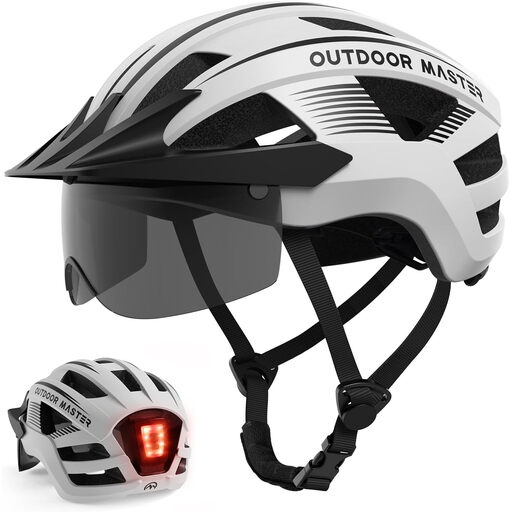
Why it stands out: This helmet is truly packed with features. It includes a rechargeable rear LED light, magnetic protective goggles, and a classic visor. It's a complete, adaptable, and competitively priced solution.
Key Features:
Who is it for? The pragmatic cyclist looking for an all-in-one, ready-to-use solution that can adapt to weather and light conditions without the hassle of multiple accessories.
Our selection focuses on models with integrated lighting. But if your absolute priority is a feather-light weight while still maintaining certified protection, other options are available.
To discover models focused on light weight, feel free to browse our selection of lightweight helmets. You might find an alternative or a great addition to your gear.
An acronym for Multi-directional Impact Protection System, MIPS is an additional safety technology. In practical terms, it's a thin liner inside the helmet that can move 10 to 15 mm in any direction during an angled impact. According to its creators, this movement helps to better absorb and redirect rotational forces that would otherwise be transmitted directly to the brain.
Absolutely not. In many regions, traffic laws are very clear: they require regulated lighting on the bike itself (a white light at the front, a red one at the back, reflectors, etc.). A helmet light is an excellent safety supplement to boost your visibility—especially because it's positioned higher up and follows your head movements—but it is in no way a substitute for the mandatory equipment on the bike.
For the shell and accessories, a soft cloth, warm water, and neutral soap are all you need. Above all, never use solvents or harsh chemicals that could degrade the plastics and compromise protection. The inner pads are almost always removable: wash them by hand and let them air dry, away from any direct heat source (radiators, hair dryers, etc.). Finally, regularly check that the light is working and recharge the battery according to the manufacturer's recommendations.