
Livraison le jour même ou le lendemain

Qualité garantie

Débloquez vos offres de bienvenue: Livraison GRATUITE | Jusqu'à -80 % | 30 jours d'essai gratuits à JoyPlus
Téléchargez l'application
A professional bidirectional OBD2 scanner isn't just for turning off an engine warning light. It can communicate with multiple ECUs, display live data, control certain components and, depending on the vehicle, carry out ECU coding or service operations. For a British motorist, an independent mechanic or a small garage, the right choice depends mainly on real-world compatibility, the functions available and the long-term cost.
A simple car code reader typically communicates with the engine control unit. It can read or clear certain emissions-related codes, but it often cannot access the ABS, SRS, gearbox, air conditioning or body control modules.
A full-system diagnostic tool offers wider coverage. However, be aware: the term "all systems" usually means "all systems that are available and supported on the vehicle in question." So before ordering, check the make, model, year of manufacture and, if possible, the VIN number.
Bidirectional active testing, ECU coding, DPF regeneration or battery reset do not work the same way on every vehicle. ECUs, trim levels and communication protocols can vary considerably.
A product page may list dozens of automotive reset functions. That does not mean each one will be available on your car. If you need a specific operation, such as injector coding or automatic gearbox adaptation, ask for compatibility confirmation using the VIN.
Lifetime free updates may cover the app, basic functions or the entire software coverage, depending on the model. Some devices also include a limited period of full updates, after which you need to renew to keep advanced features.
On certain FCA vehicles, access to the SGW module requires FCA AutoAuth. The corresponding account or subscription may need to be purchased separately. This cost must be added to the price of the tool and should not be confused with the device itself.
For versatile use, look for access to the main systems: ABS, SRS, engine, transmission, EPB, TPMS, BMS, steering and air conditioning, where the vehicle makes them accessible for diagnostics. Generating a full report also lets you keep a record of the vehicle's condition before and after a repair.
Support for the CAN FD protocol applies to certain newer vehicles and allows handling of larger data frames. The DoIP protocol, where available, is designed for architectures that use Ethernet for diagnostics. These standards do not automatically make a tool compatible with all brands: software coverage remains the deciding factor.
During a bidirectional active test, the tool sends a command to the ECU to observe how an actuator responds. Depending on the vehicle, this could be a fan, an ABS pump, an air conditioning relay, a solenoid valve, an electric window or an injector.
This function helps pinpoint the source of a fault, but it does not replace electrical measurements, mechanical checks or the manufacturer's documentation. A stabilised power supply for the vehicle is strongly recommended during coding or programming operations.
Compare the functions that are genuinely useful for the vehicles you maintain: oil reset, EPB, SAS, BMS, TPMS, ABS bleed, throttle adaptation, injector coding, gearbox adaptation or DPF regeneration.
Also check:
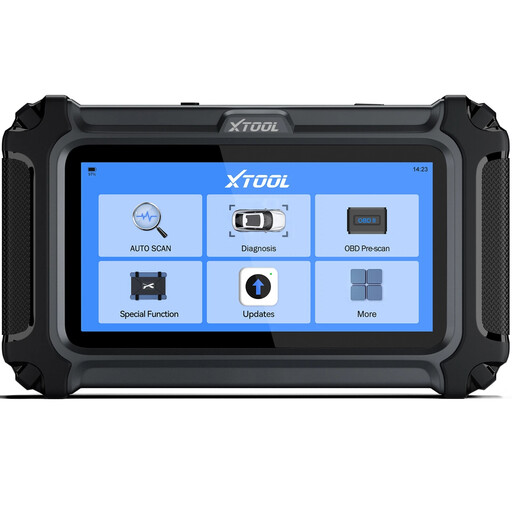
Why it suits this profile: Its compact screen, guided menus and essential functions make it a good choice for routine maintenance on a family car or as a first diagnostic tool.
The product page states that functions vary by vehicle and recommends checking beforehand. Lifetime free updates also help keep recurring costs down.
Diagnostics for engine, transmission, ABS and SRS, display of four live data graphs and PDF report generation.
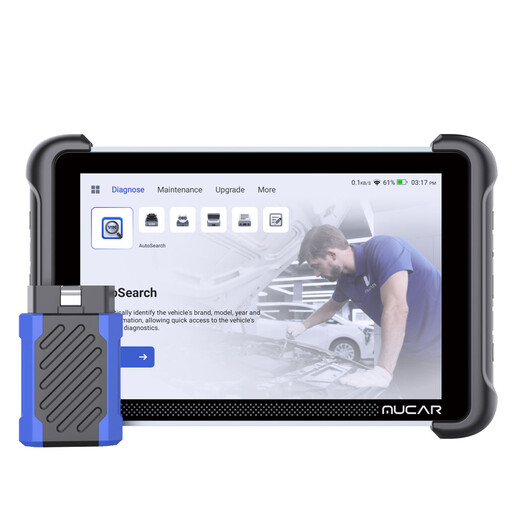
Why it suits this profile: Its 8-inch tablet, magnetic VCI interface and upgrade potential meet the needs of a workshop that works on several vehicles.
The product page distinguishes between listed functions and their availability by vehicle, and states that the warranty is limited to one year.
ECU coding, bidirectional tests, CAN FD and DoIP protocols, plus over 34 service functions, depending on vehicle compatibility.
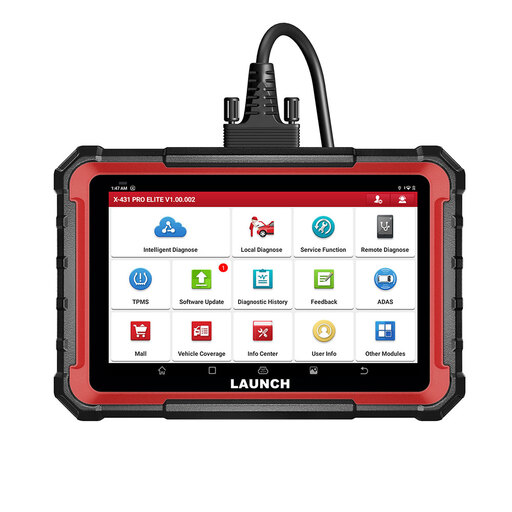
Why it suits this profile: It is aimed at garages and mechanics who need coding, active tests and the ability to add diagnostic accessories.
The product page states the update duration and clarifies that ECU coding depends on the VIN. Any future costs are therefore easier to anticipate.
8-inch screen, full-system diagnostics, CAN FD, DoIP, FCA AutoAuth and numerous service functions depending on the model.
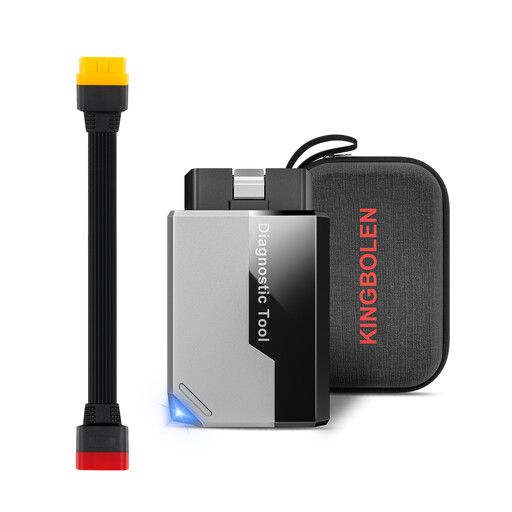
Why it suits this profile: This Bluetooth module turns a smartphone or tablet into a diagnostic interface. It is particularly well suited to home visits and maintaining several vehicles.
The activation and download of the app are clearly required. This requirement is known before purchase, unlike some devices where software costs remain unclear.
Bluetooth, diagnostics for available systems, 15 listed service functions and CAN FD support depending on the vehicle.
We have listed products that genuinely meet these demanding selection criteria, while also taking European safety regulations into account. The list is updated in real time.
Plug the connector into the OBD2 port, usually located under the dashboard, then turn on the ignition. With a Bluetooth model, install the official app and pair the VCI with your phone or tablet. Then download the software corresponding to the vehicle's make. An internet connection is often required for activation and updates.
It depends on the battery, the quality of the connectors, storage conditions and software support. A model with lifetime free updates can remain usable for longer without a subscription. However, check the exact terms on the product page, as this description may exclude certain advanced functions.
No. ECU coding, module programming and active tests are limited by the make, model, year of manufacture, electronic configuration and, sometimes, the manufacturer's secure access systems. Before buying, provide the VIN and the operation you need to get a more reliable compatibility check.